
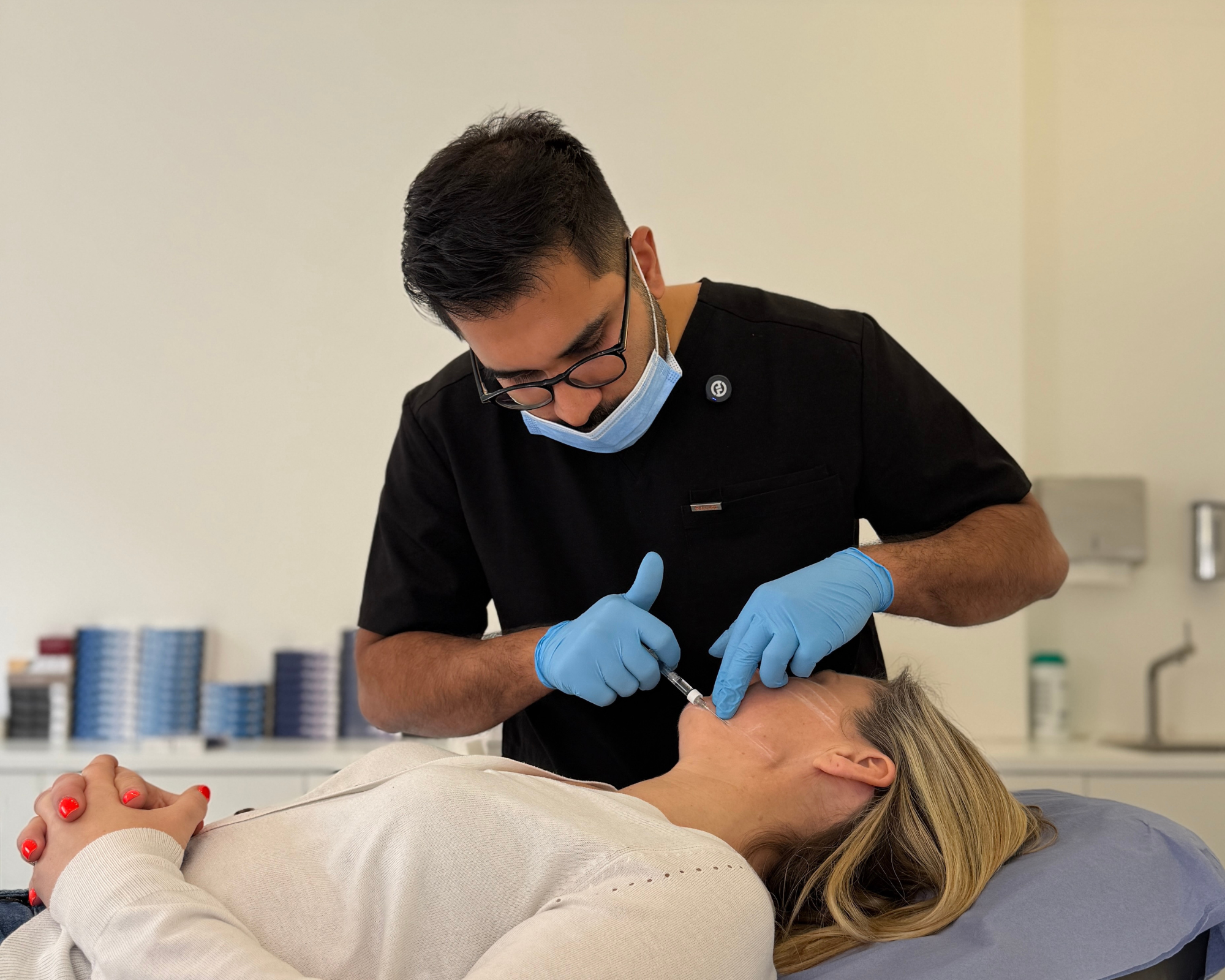
Chin & Jawline Fillers
What Makes a Jawline Masculine or Feminine?
The features that read as masculine or feminine in the lower face are surprisingly specific.
A masculine chin is typically wider, squarer and more projected, with a flat, squared off base. The jaw itself is broader, the angle behind the ear is sharp and sits close to a right angle, and a strong, straight border runs from the ear to the chin. Together these create the sharp, chiselled look associated with a strong male jawline.
A feminine chin is narrower and gently rounded, tapering to a soft point that gives the lower face a heart shaped or oval outline. The jaw is slimmer, the angle behind the ear is softer and more open, and the transition from jaw to chin is a smooth curve rather than a hard line.
These are the landmarks Dr Karwal works to when treating this area. For men, filler is used to build width, squareness and a sharper angle to the jaw. For women, it is used to refine and balance without adding bulk, keeping the contours soft while still improving definition. The same product, placed differently, produces two very different results.
What Can Chin and Jawline Fillers Treat?
A weak or receding chin is one of the most common reasons patients seek this treatment. Adding projection to the chin strengthens the side profile, improves the balance between the chin and the nose, and can make the whole face look more proportionate.
A poorly defined jawline can be sharpened and sculpted with filler placed along the border of the jaw. This creates a cleaner edge to the lower face and better separation between the face and neck.
Facial asymmetry is more common than most people realise, and the jawline is often where it shows most. Filler can be used to even out differences between the left and right sides for a more balanced appearance.
Early jowling, where the skin along the jawline begins to sag and soften the border of the jaw, can also be improved with carefully placed filler that restores structure and support. Where jowls are more established, Endolift may be more suitable, and the two treatments can also be combined.
You can see results from real patients on our portfolio page.

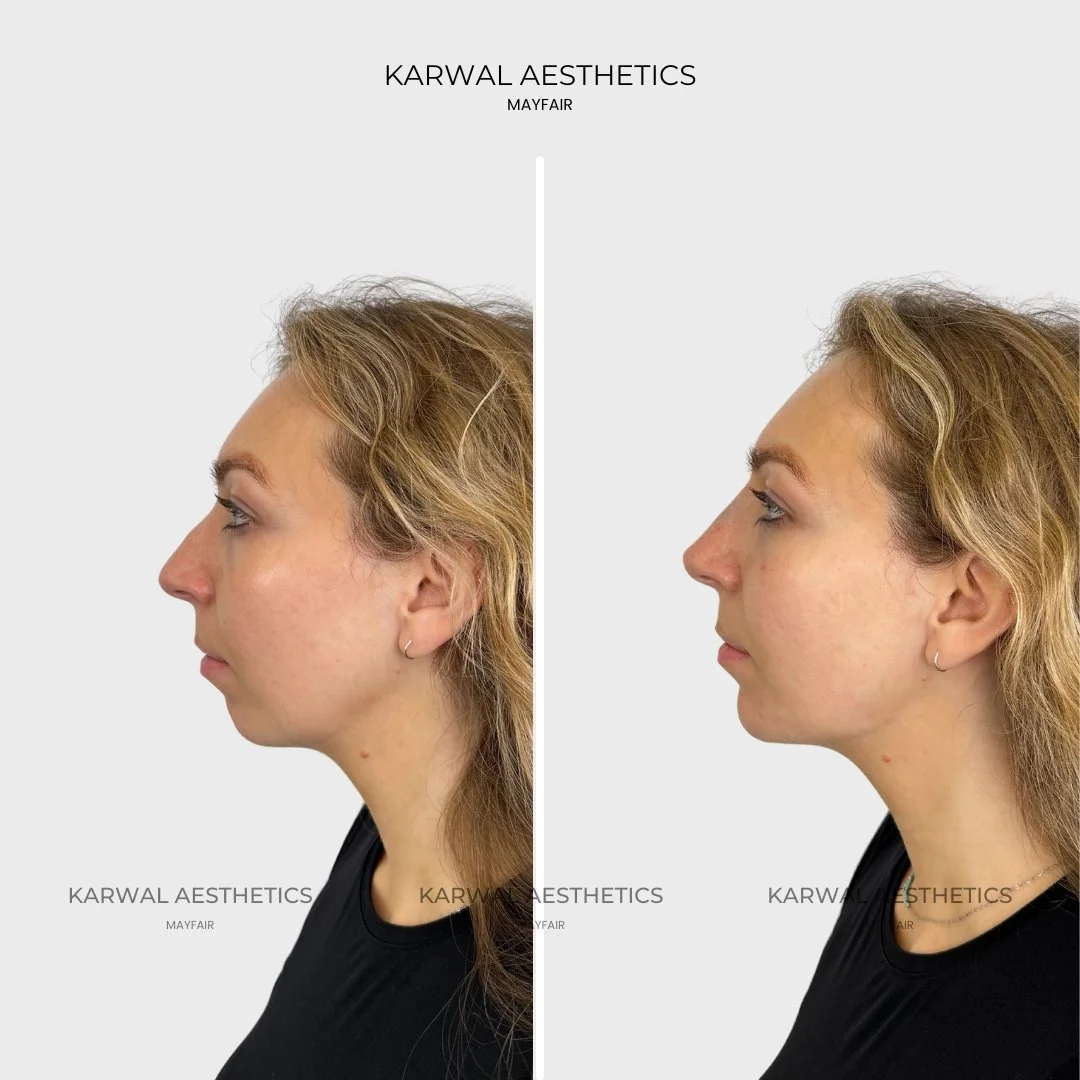
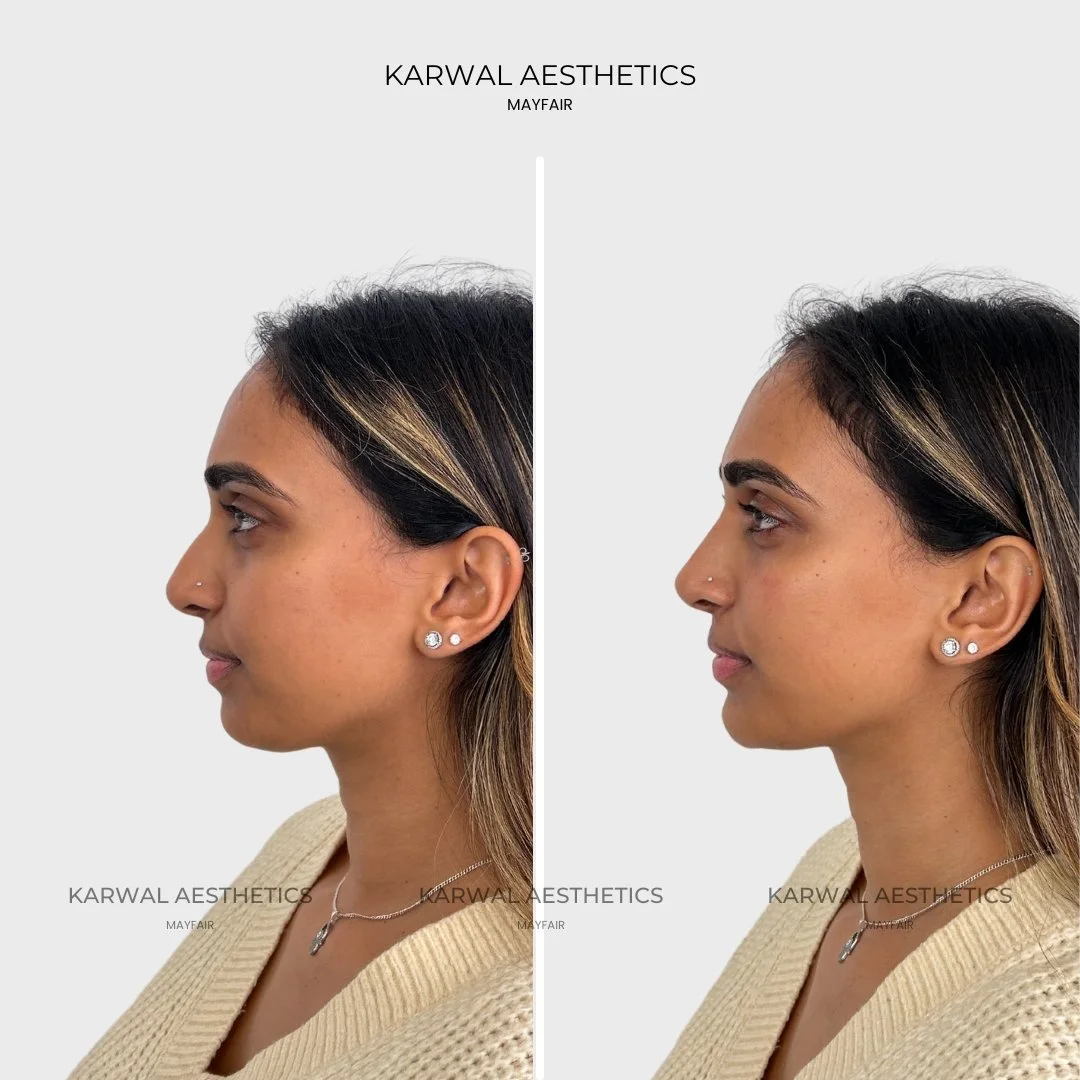
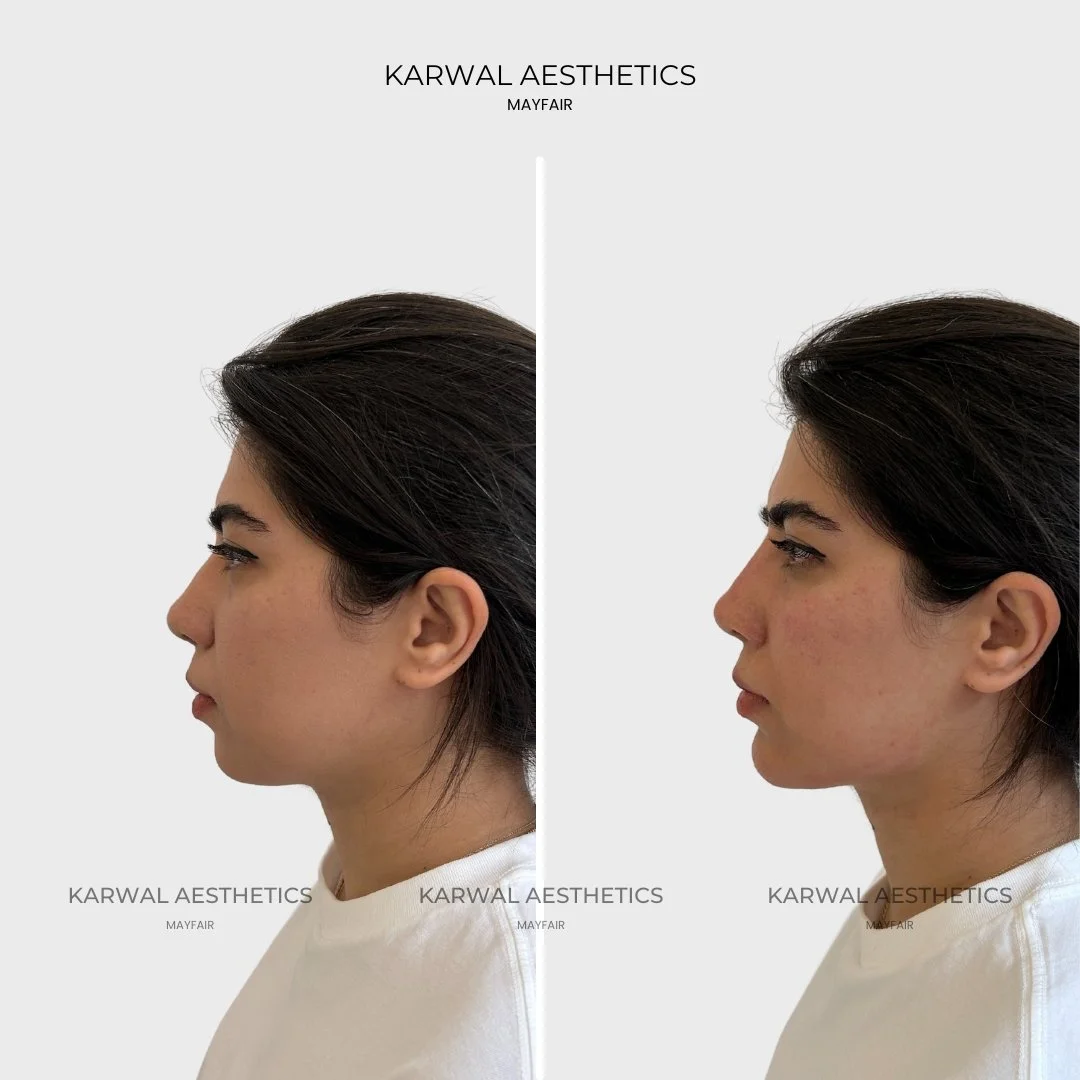

Treatment Goals
For men, treatment usually focuses on building a strong, squared jawline with sharper angles and a well projected chin. Emphasising the angular structure of the lower face creates a more masculine appearance, and higher volumes of filler are typically used to achieve this, on average between 4ml and 10ml.
For women, the aim is usually a more tapered, V shaped or gently oval jawline with softer contours. The chin is balanced rather than heavily projected, improving definition while keeping the overall look feminine. Lower volumes are typically used, on average between 2ml and 6ml.
Who Is Suitable for Chin and Jawline Filler?
Chin and jawline filler suits healthy adults who want to improve the definition of the lower face without surgery. You may be a good candidate if you feel your chin is weak or set back, you would like a sharper or more defined jawline, your face appears asymmetrical, or you have noticed early jowling and a loss of the clean jawline you once had.
Realistic expectations matter. Filler can create a significant improvement, but it works best when the changes needed are structural rather than caused by more advanced skin laxity. Dr Karwal will assess your face at consultation and will be honest about whether filler, another treatment or a combination approach will give you the best result. The treatment is suitable for both men and women, though the approach and aesthetic goals differ between the two.
Our Prices
-
£450
-
£850
-
£1200
-
£1550
-
£1900
For prices above 5ml, please visit our prices page.
FAQs
-
Most patients find the treatment very comfortable. Because dense fillers are placed at a deep level to recreate structure, the sensation is usually described as pressure rather than pain. A combination of needle and cannula techniques is used to keep discomfort and bruising to a minimum. The appointment takes around 30 to 45 minutes, and you can carry on with the rest of your day as normal.
-
Not directly. Filler adds structure and definition rather than reducing width. If your jaw looks wide because of enlarged masseter muscles, often linked to teeth grinding or jaw clenching, the more suitable option is usually anti-wrinkle injections into the masseter, which relax the muscle and gradually slim the lower face over a few months. We offer this treatment at the clinic, and in some cases the two are combined, with masseter treatment to slim and filler to define. Dr Karwal will advise which approach fits your face at consultation.
-
No. Hyaluronic acid fillers are temporary by design. They are gradually broken down and absorbed by the body over time, with results typically lasting between 12 and 24 months in the chin and jawline area.
This is actually one of the advantages of HA fillers. The filler can be dissolved with an enzyme called hyaluronidase if ever needed, and it can also be adjusted and refined at subsequent appointments as your face changes with age.
Permanent fillers do exist, but they carry significantly higher risks and are not something we use or recommend at Karwal Aesthetics. If complications arise with a permanent filler, they're far more difficult (and sometimes impossible) to correct. The safety and reversibility of hyaluronic acid is a core reason we use it exclusively.
-
Results typically last between 12 and 24 months, though this varies depending on several factors.
The chin tends to hold filler well because it's a relatively low movement area and the filler is placed deep, close to the bone. Many patients find chin filler lasts towards the upper end of that range, sometimes longer.
The jawline can be slightly more variable because the tissue along the mandibular border is subject to more facial movement and the filler is distributed over a larger area. Results here may begin to soften a little earlier, though with the right product and technique, 12 months or more is typical.
It's worth noting that filler doesn't disappear overnight. The breakdown is very gradual, so you won't suddenly lose your result. Most patients find they can comfortably go 12 to 24 months between treatments, and some choose to top up before the filler has fully dissolved to maintain a consistent look.
-
Several factors influence the longevity of chin and jawline filler.
The product used. Thicker, more cross linked hyaluronic acid fillers are specifically designed for structural areas like the chin and jaw. They resist movement and compression better than softer products, which is why product choice matters so much in this area. Dr Karwal selects the appropriate filler based on the specific area, the depth of placement, and the result you're looking for.
Your metabolism. Everyone breaks down hyaluronic acid at a different rate. People with faster metabolisms, or those who exercise very intensively, may find their filler doesn't last quite as long. This is a natural biological variation and isn't something you can easily change.
The volume placed. Adequate volume in the right location tends to last longer than very small amounts spread thinly. This is why the initial treatment plan matters so much. Underfilling to save cost often means the result doesn't hold as well and you end up needing more frequent top ups.
Lifestyle factors. Smoking, excessive alcohol consumption, and chronic sun exposure can all accelerate the breakdown of filler, as well as ageing the skin independently.
Injection technique. Filler placed at the correct depth, in the right tissue plane, and with proper technique integrates better with the surrounding tissue and tends to last longer. This is where practitioner experience makes a real difference.
-
You'll see an immediate difference when you leave the clinic. The chin will have more projection, the jawline more definition, and the overall contour of the lower face will look sharper and more structured.
However, what you see on day one is not your final result. There will be some swelling, which is completely normal and can make the area look slightly fuller or heavier than the intended outcome. This typically peaks around 24 to 48 hours after treatment and gradually subsides over the first week or two.
Minor bruising is possible, particularly along the jawline, though it's not guaranteed and tends to be small and easily concealed. Some tenderness when touching the area is normal and usually resolves within a few days.
Your final, settled result will be visible at around the two week mark, which is when Dr Karwal schedules a follow up appointment to assess how everything has settled and determine whether any adjustments are needed.
-
Proper aftercare helps ensure the best possible result and reduces the risk of complications.
For the first 24 to 48 hours, avoid touching, pressing, or massaging the treated area. Sleep on your back if possible to avoid putting pressure on the filler while it's settling. Avoid intense exercise, alcohol, and excessive heat (saunas, steam rooms, hot yoga) for at least 48 hours, as these can increase swelling and bruising.
For the first two weeks, avoid dental work if possible, as prolonged pressure on the jaw can affect filler placement. Be gentle when washing your face and avoid any facial treatments or massages.
Ongoing care is simple. Protect your skin from excessive sun exposure and maintain a good skincare routine.
-
Yes, to a degree. Strategically placed filler along the jawline can restore the straight, defined border of the mandible and camouflage the appearance of mild jowling by lifting and supporting the tissue above it.
However, it's important to be realistic. Filler can improve the look of early jowls, but it's not a replacement for a surgical facelift in cases of significant sagging. In more advanced cases, filler alone may not be enough, and Dr Karwal will be honest with you about whether a different treatment, or a combination approach, would serve you better.
For some patients, combining jawline filler with treatments like Endolift (a minimally invasive laser tightening procedure) can address both the structural and skin laxity components of jowling more effectively than filler alone.
-
You'll find us at 2nd Floor, 15 Dover Street, London W1S 4LP, in the heart of Mayfair, Central London. We're ideally situated for clients travelling from across London and beyond, with excellent transport links nearby. Book your consultation today.