

Forehead Filler
Flat and Concave Foreheads
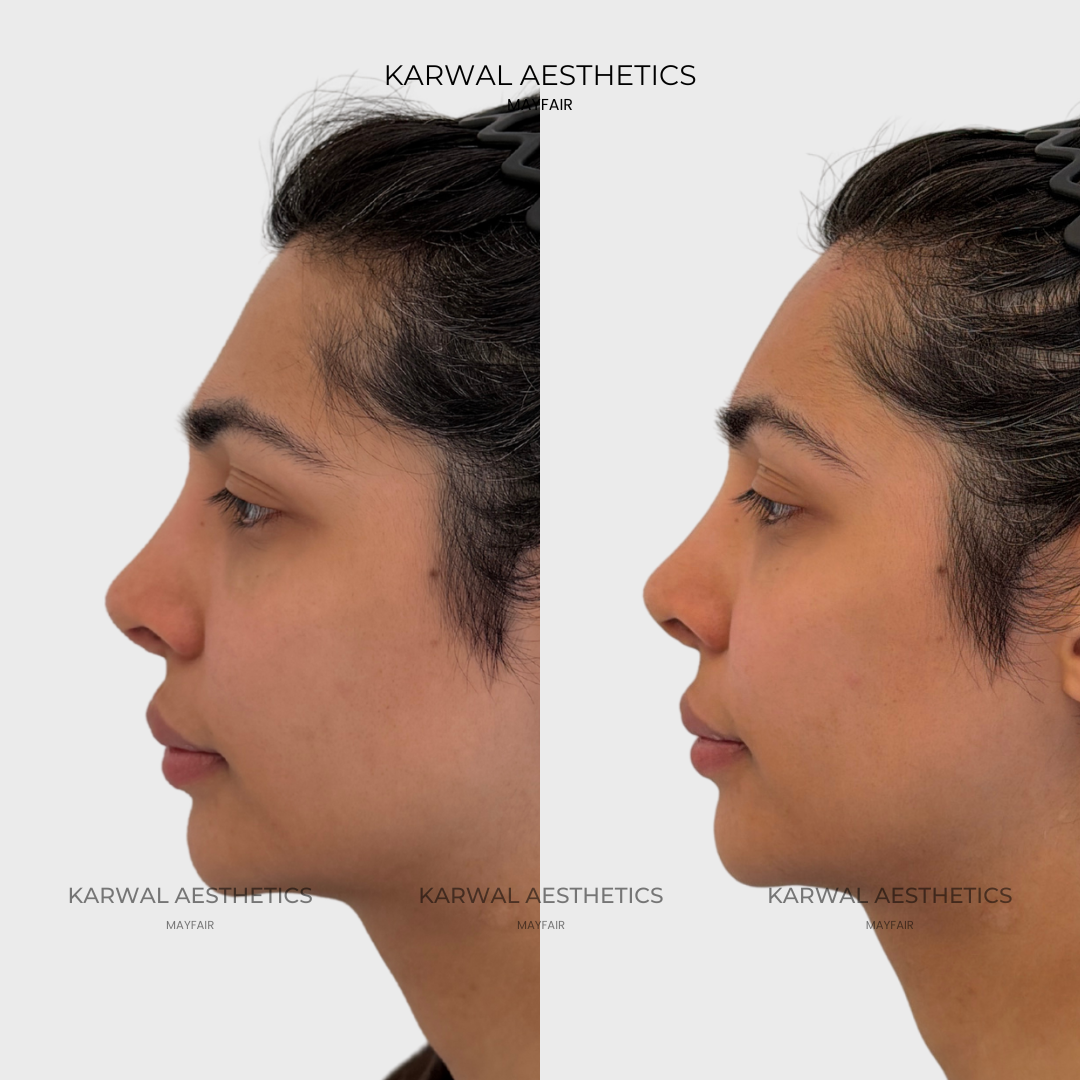
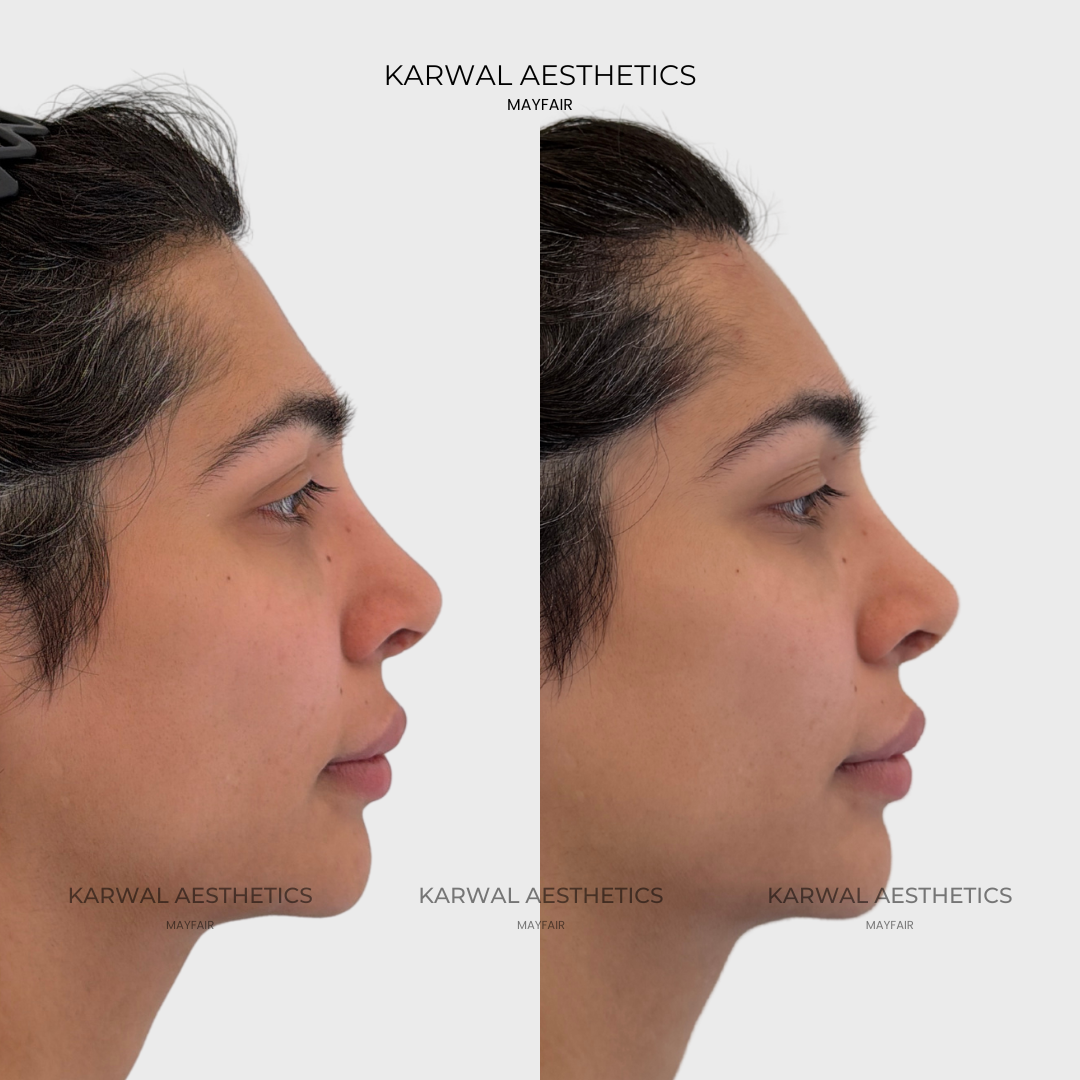
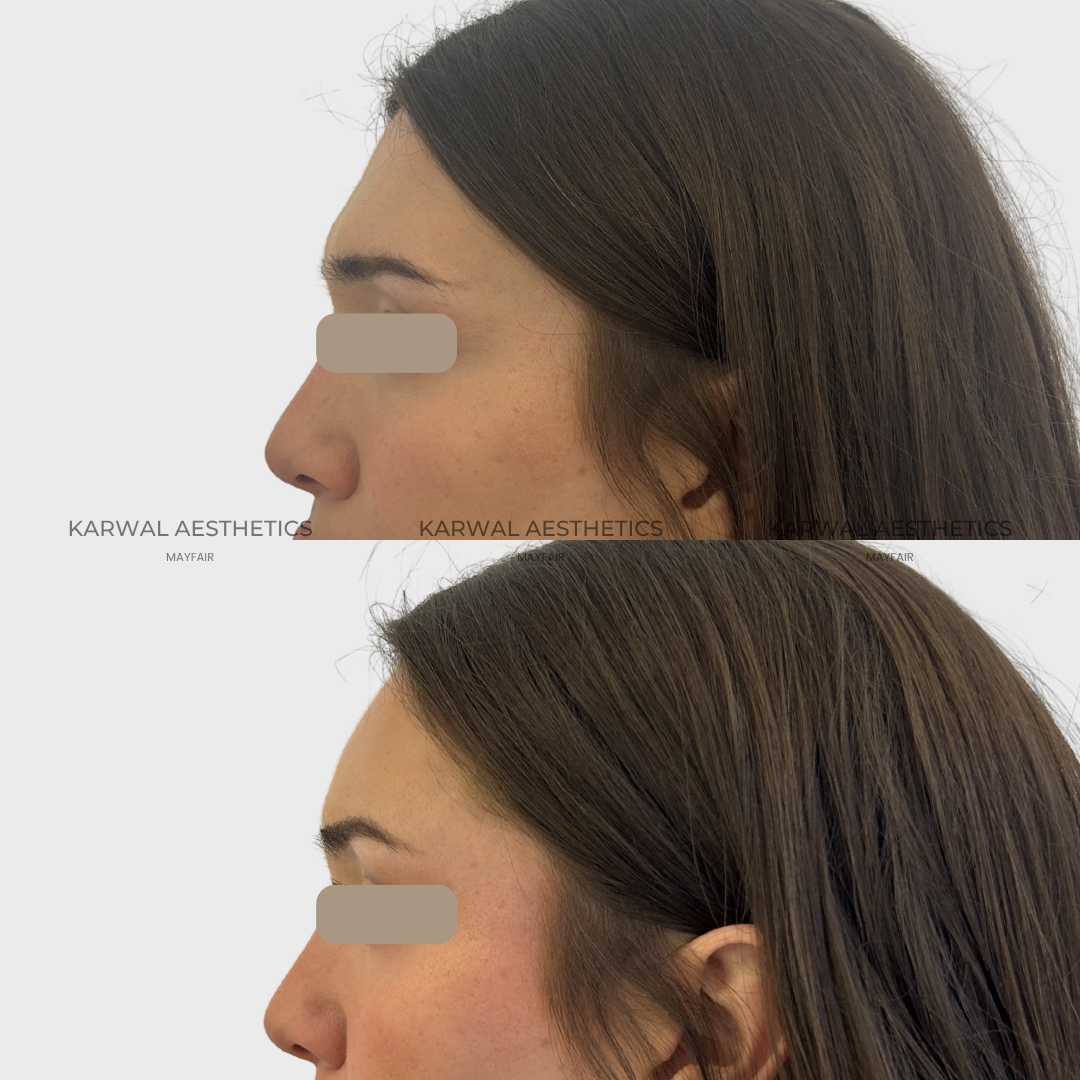
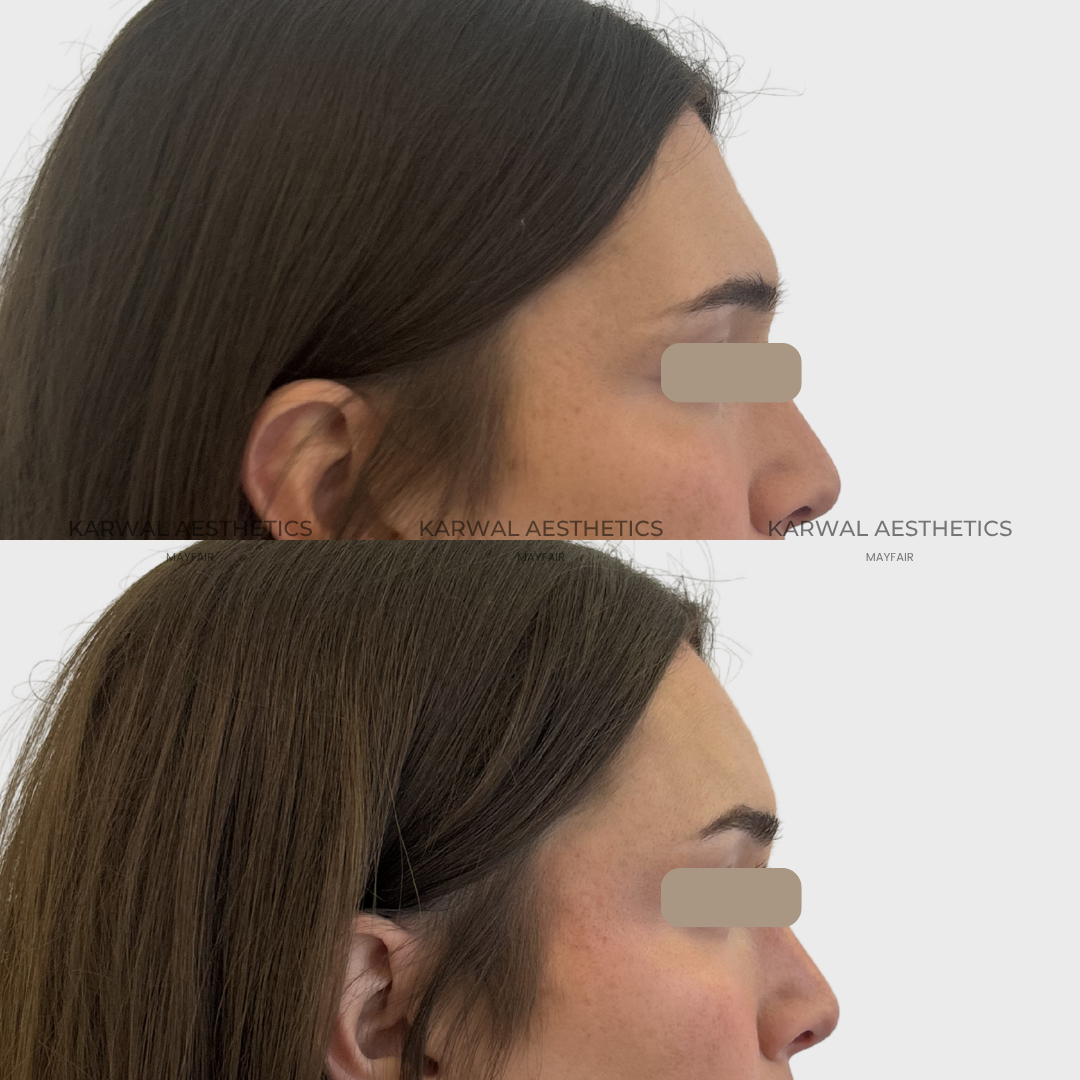
Most people who come to us about their forehead are not concerned with lines. They are concerned with shape. A well-proportioned forehead has a natural convexity, a gentle outward curve that gives the profile projection and makes the upper face feel balanced. When that curve is missing, the face can look structurally off in a way that is hard to explain but easy to see, particularly in side-on photographs.
A flat forehead lacks forward projection. The transition from hairline to brow loses its arc, and the nose and chin can appear more prominent by comparison, not because they are too large, but because the upper face is not providing the counterbalance it should. A concave forehead is more pronounced still. The surface curves inward, which can make the brow ridge look heavy and the forehead recessed.
These are structural concerns. Time will not resolve them and anti-wrinkle injections cannot address them. They need volume, placed precisely, to correct the shape.
What Forehead Filler Does
Forehead filler uses hyaluronic acid dermal filler to restore or create the natural convexity of the forehead. It adds forward projection, smooths uneven or irregular areas, and corrects the flat or concave profile that many patients are born with or develop with age. The aim is not a forehead that looks filled. It is a forehead that finally looks right, with the brows sitting more naturally, a side profile that has the structure it was lacking, and an upper face in proportion with the rest.
Product choice matters here. The forehead needs a soft, low-density filler that spreads evenly and moves naturally with expression, so it integrates with the thin tissue over the bone rather than sitting in visible pockets. The firmer fillers used in the chin or jawline would look and feel wrong in this area. Dr Karwal selects products specifically suited to the forehead.
Our Prices
-
£650
-
£1050
-
£1450
The amount of filler needed depends on the shape of your forehead and what you want to achieve, and is confirmed at your consultation.
How the Forehead Changes With Age
The forehead is supported by bone, fat and soft tissue, and all three change with age. The frontal bone remodels and loses volume, the fat beneath the skin thins, and the skin becomes less able to compensate for what is happening underneath. The result is a forehead that does not just develop lines but loses its roundness and projection, developing hollows and irregularities along the way. Similar volume loss often affects the temples at the same time, which is why the two areas are usually assessed together. For patients who never had ideal forehead convexity, filler provides the structure they never had. For patients where the change has happened over time, it restores what has been lost.
Forehead Filler for Deep Lines
Anti-wrinkle injections work well for dynamic lines, the ones created by muscle movement that soften at rest. Once a line has become permanently etched into the skin, relaxing the muscle no longer removes it. The groove is already there. Filler placed beneath a deep static line supports it from below and creates the smooth surface that anti-wrinkle injections alone cannot.
The two treatments work well together. Anti-wrinkle injections manage the muscle activity that would otherwise fold the skin over the filler, which helps the result last longer, and filler corrects the structural deficit that anti-wrinkle treatment has reached the limit of its ability to address. For patients who have been increasing their anti-wrinkle dose year after year without getting the smooth result they want, filler is usually the piece that has been missing.
FAQs
-
Results typically last between 9 and 24 months before a top-up is needed. The forehead is a mobile area, so combining filler with anti-wrinkle injections can help results last longer.
-
Treatment area: areas with more muscle movement break down filler faster. The forehead moves every time you raise your brows.
Metabolism: people with a faster metabolism break down filler more quickly.
Lifestyle: sun exposure, smoking, saunas and intense physical activity can reduce longevity.
Injection technique: what technique is required can affect how long results last.
Type of filler: denser fillers tend to last longer than soft fillers, and the forehead requires a soft filler.
-
Discomfort is minimal. A numbing cream is applied before treatment and the filler itself contains a local anaesthetic. Most patients describe a brief pinch or a feeling of pressure and find the treatment more comfortable than they expected.
-
The change in shape is visible immediately. The settled result is best assessed at two weeks, once any minor swelling has resolved and the filler has fully integrated. You should see a smoother, gently convex forehead, a more balanced side profile and brows that sit more naturally.
-
Yes. Hyaluronic acid filler can be dissolved with hyaluronidase if ever needed. Dr Karwal performs all dissolving under ultrasound guidance.
-
Most patients need between 1ml and 2ml, with up to 3ml for a more pronounced concave forehead. The exact amount depends on the shape of your forehead, the quality and thickness of your skin and what you want to achieve, and is confirmed at your consultation.
-
The appointment takes around 30 to 45 minutes, including numbing time.
-
Mild swelling, tenderness and occasional small bruises at the injection sites are normal. These symptoms resolve over the next 2 to 7 days, and it may take two weeks for all swelling to settle, so we do not re-treat the area until then. For 24 hours avoid touching or pressing on your forehead, applying makeup, and skincare with active ingredients. For 48 hours avoid intense physical activity, sleeping on your side or front, spas and saunas, massage and facials, tight hats or headbands that press on the forehead, and alcohol.
-
Our clinic is in Mayfair, central London, at 2nd Floor, 15 Dover Street, W1S 4LP, a short walk from Green Park station. Please note the clinic is on the second floor with stair access only. All treatments begin with a consultation with Dr Karwal, which you can book online.
-
Yes, and this is the most impactful use of the treatment. Filler placed to add forward projection and restore natural convexity can noticeably change the side profile and bring the upper face into better proportion. It is not about adding visible volume. It is about recreating the shape the forehead should have.
-
When performed correctly, forehead filler should be undetectable. The products used are chosen for their softness and their ability to spread evenly, and the technique is focused on a forehead that looks properly shaped, not treated.
-
In most cases, yes. Dr Karwal usually recommends having anti-wrinkle treatment first and waiting two weeks before placing filler, so the movement-related lines are already managed and the remaining structural concerns can be assessed accurately. Whether this applies to you is decided at your consultation.