
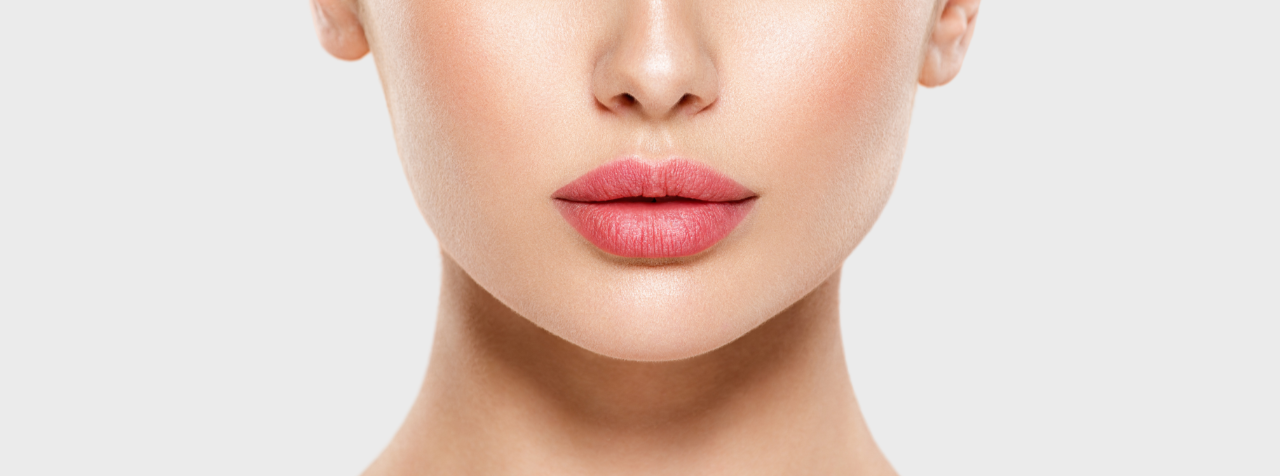
Lip Fillers in London
What Can Lip Fillers Achieve?
Lip fillers are injectable treatments using hyaluronic acid, a substance that occurs naturally in the body, to add volume, definition and hydration to the lips. But lip filler is more versatile than simply adding volume.
Volume enhancement is the most commonly requested outcome, adding fullness to lips that feel thin or that disappear when you smile. Beyond volume, filler can define the cupid's bow for greater shape and structure, balance asymmetry between the upper and lower lip, soften perioral lines, sometimes called smokers' lines, without adding noticeable volume, support downturned corners of the mouth, and improve the overall projection and pout of the lips.
Lips also change with age. Volume gradually reduces, the border softens and the upper lip can lengthen and thin. For many patients, treatment is less about creating something new and more about restoring what was naturally there ten or fifteen years ago.
Because everyone's lip anatomy is slightly different, Dr Karwal focuses on enhancing your lips in a way that is natural to your face, refining what is already there rather than imposing a generic shape.
Will Lip Fillers Look Natural?
This is the most common concern we hear, and a completely understandable one. The overdone, disproportionate look is not what lip filler has to be. It is the result of too much product, poor placement, or treatments that have accumulated over time without proper assessment. It is avoidable, and at Karwal Aesthetics, it is avoided.
Dr Karwal works with your anatomy, not against it. Every treatment is planned around your lip shape, your facial proportions and what will genuinely suit you, not a trend or a template.
So what does a natural result actually look like? The lip border stays crisp rather than blurred. The balance between the upper and lower lip is preserved, and the lips stay in proportion with the rest of your face rather than dominating it. Your lips still move normally when you speak and smile, and they still feel like your own. People should notice that you look well, not that you have had filler.
The goal is simple: lips that look like yours, only better.
Why We Use Small Amounts of Filler
There is a simple anatomical reason behind our conservative approach: the lips can only hold so much. Lip tissue has a natural capacity, and once filler is pushed beyond it, the product has nowhere to go but outwards, which is where blurred borders and puffiness begin. Working within that capacity is what keeps a result crisp and defined, and it is why a well-placed 0.5ml will always look more elegant than 2ml applied without anatomical consideration.
Small volumes also behave better over time. Hyaluronic acid attracts water and integrates with your own tissue in the weeks after treatment, so a result that looks subtle on the day often looks fuller once settled. Injecting a large amount in one sitting ignores this, and it is one of the most common reasons patients end up with more volume than they ever wanted.
For most patients, Dr Karwal starts with 0.5ml and rarely uses more than 1ml in a single session. If you would like more fullness once your result has settled, more can be added at a later appointment. Adding filler gradually is straightforward. Correcting an overfilled lip is not, and usually means dissolving everything and starting again. Building slowly protects you from ever being in that position.
Lip Filler Migration and How We Avoid It
Filler migration means product moving away from where it was placed. In the lips it often shows as a blurred lip border, a shelf-like appearance above the upper lip, or diffuse puffiness rather than a defined shape.
It usually happens when too much product is injected into an area that cannot accommodate it, typically in less experienced hands. It can also occur when filler is placed too superficially, when a firm product is used where something softer is required, or when product builds up gradually over years of repeated treatment.
Staying within what the lip can naturally hold is the single best protection, which is exactly why small volumes sit at the centre of how we work. Technique matters too. Dr Karwal uses both fine needles and blunt-tipped cannulas, choosing based on the area treated: a cannula glides through the tissue rather than piercing it repeatedly, reducing bruising and the risk of injuring a blood vessel, while a needle gives pinpoint precision where fine definition is needed.
Our Prices
-
£500
Already Have Lip Filler From Elsewhere?
Many patients come to us with existing filler that has migrated, or with product built up from previous treatments. In these cases Dr Karwal may recommend dissolving what is already there before placing anything new. Starting from a clean foundation allows a far more natural, precise and defined result than layering new product on top of displaced filler.
Not all fillers can be dissolved. We regularly see patients seeking dissolving treatment only to discover that the product used elsewhere was not hyaluronic acid based and cannot be removed. If you are considering lip filler anywhere, ask your practitioner to confirm the exact product and whether it is hyaluronic acid based before your procedure. It is a simple question that could save you significant difficulty later. At Karwal Aesthetics we use hyaluronic acid fillers only, and we offer ultrasound guided assessment and dissolving in clinic.
Why Choose Karwal Aesthetics for Lip Fillers?
Karwal Aesthetics is a doctor-led clinic in Mayfair, London. Every lip filler treatment is carried out personally by Dr Arun Karwal, a GMC-registered doctor with a background in emergency medicine. His approach is deliberately conservative: natural proportions, precise placement and results built gradually rather than overfilled in a single sitting. Ultrasound guided dissolving is available in clinic should it ever be needed, and you are supported after your treatment, not just during it.
FAQs
-
Lip filler typically lasts 12 to 24 months, though this varies considerably between individuals. Some patients find their results last towards the shorter end of this range, whilst others enjoy longer-lasting results.
-
Several factors influence how long dermal fillers last:
Treatment area: the lips are one of the most mobile areas of the face, so filler here tends to break down faster than in less mobile areas
Metabolism: individuals with faster metabolisms break down filler more quickly
Lifestyle: smoking, high sun exposure and intense exercise can shorten longevity
What technique is required: placement depth and method affect how long results last
Type of filler: different products break down at different rates
-
We will be honest with you. The lips are one of the most sensitive areas of the face, and lip filler is one of the more uncomfortable aesthetic treatments. We would rather set that expectation clearly than have you caught off guard in the treatment room. A strong topical anaesthetic cream is applied and left to take full effect before any injections begin, and the fillers we use contain a local anaesthetic, so the area becomes progressively more numb as treatment goes on. Most patients find it very tolerable once the numbing takes hold, and if you feel uncomfortable at any point Dr Karwal will pause.
-
You will see a change in volume and shape straight away, but this is not your final result. The lips swell after treatment, sometimes significantly, which can mask the true outcome. Your settled result is visible around two to four weeks after treatment, once the swelling has resolved and the filler has fully integrated. What you should expect is a natural enhancement of your own lip shape: added fullness, better definition and improved balance, without an overfilled look.
-
Yes. We use hyaluronic acid fillers only, which can be dissolved with hyaluronidase if ever needed. Be aware that some products used at other clinics are not hyaluronic acid based and cannot be dissolved, so always confirm what is being used before any treatment. We offer ultrasound guided dissolving at the clinic.
-
Most patients need less than they expect. Dr Karwal typically works with conservative volumes of 0.5ml to 1ml, building gradually over more than one session where needed rather than overfilling in a single sitting. The exact amount depends on your anatomy and your goals, and is confirmed at your consultation.
-
Some swelling, tenderness and mild bruising in the first few days is completely normal. The lips are a highly vascular area and respond to injections accordingly, so swelling can be noticeable at first. Most of it settles within 2 to 7 days, with your true result visible once everything has fully settled at around two to four weeks. Any assessment or further treatment waits until then.
For the first 24 hours:
Avoid lipstick, lip liner and makeup on the treated area
Do not touch or massage your lips
For the first 48 hours:
Avoid alcohol and strenuous exercise
Avoid hot drinks and drinking through a straw
For a longer period:
Avoid saunas, steam rooms and other excessive heat for two weeks
-
Karwal Aesthetics is at 2nd Floor, 15 Dover Street, Mayfair, London W1S 4LP, a short walk from Green Park station. Please note the clinic is on the second floor with stair access only.