
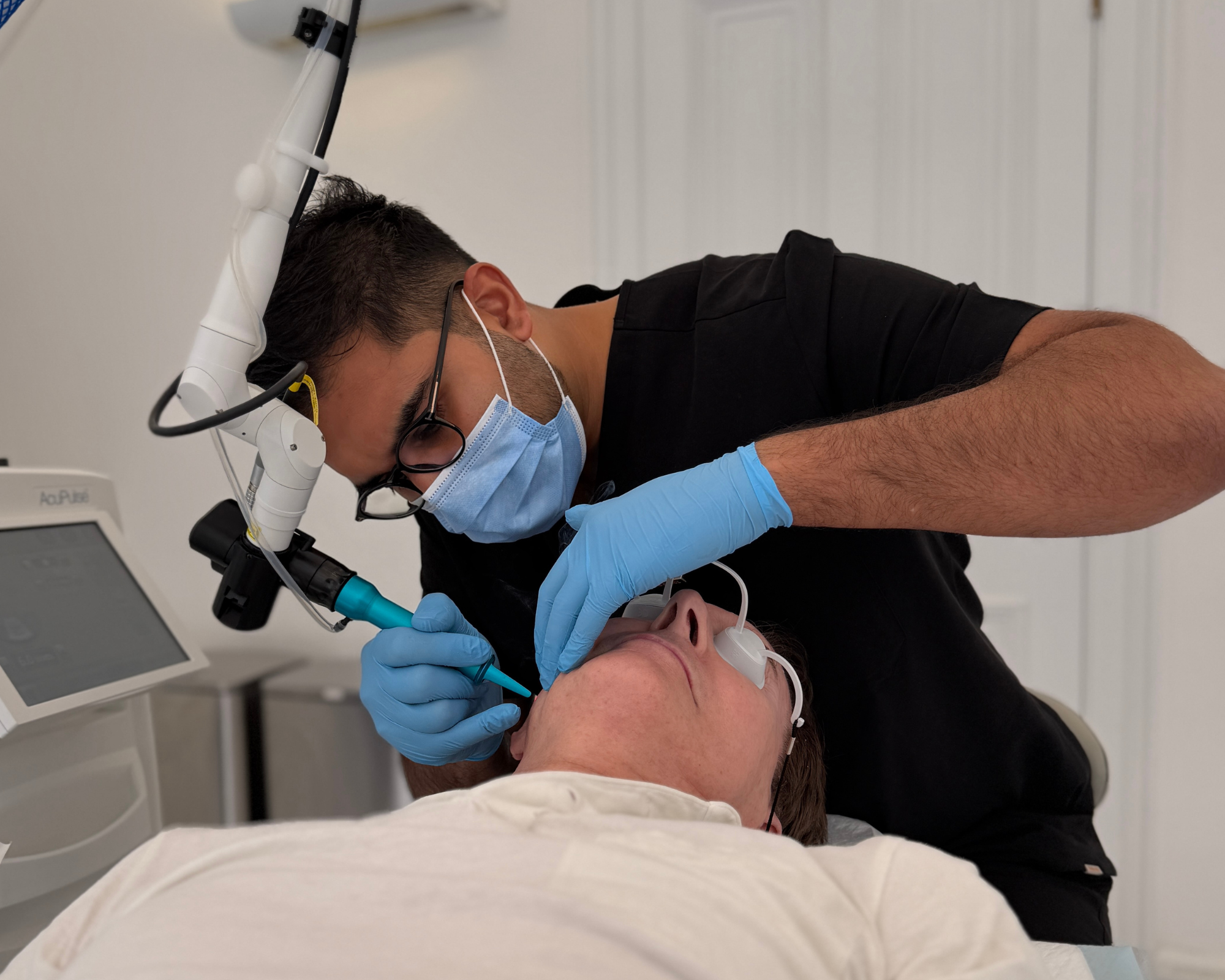
Fractional Ablative CO2 Laser Resurfacing
Doctor-led CO2 laser resurfacing with the Lumenis AcuPulse.
What is fractional CO2 laser resurfacing?
At Karwal Aesthetics we use the Lumenis AcuPulse, a fractional ablative CO2 laser. Ablative means the laser removes tissue. Fractional means it treats thousands of microscopic columns of skin rather than the whole surface at once. The skin between these columns stays intact, which makes healing faster and safer than with older CO2 lasers.
Removing those tiny columns triggers a controlled healing response. The skin clears away damaged tissue and rebuilds fresh collagen and elastin in its place. Over the following weeks and months this shows as smoother texture, tighter skin and a real improvement in scarring, lines and tone.
What can CO2 laser resurfacing do?
Fractional CO2 resurfacing is one of the most versatile treatments in skin rejuvenation because it works on the architecture of the skin itself rather than masking a single concern. Most patients come to Dr Karwal for one main reason and are surprised by how much else improves alongside it.
In terms of texture and ageing, the laser softens fine lines and deeper wrinkles, particularly around the eyes and mouth where movement lines are stubborn. It improves crepey, sun-damaged and weathered skin, refines enlarged pores and restores a smoother, more even surface. By stimulating fresh collagen it also produces a gradual tightening effect, which can subtly lift and firm skin that has begun to lose its structure. On tone and pigment, it helps with sun spots, mottled discolouration and the dull, uneven complexion that years of environmental damage leave behind.
Its most valued role, though, is in the treatment of scarring, where few other treatments come close. Because the laser can reach the deeper layers where scar tissue forms and remodel that tissue over time, it is a genuine option for scars that have not responded to anything else. The sections below look at the main scar types in turn, because each behaves differently and deserves its own explanation.
CO2 laser for acne scarring
Acne scars form when inflammation damages the deeper layers of the skin. The repair process pulls the surface inward or builds it up unevenly, leaving ice pick pits, rolling depressions or sharper-edged boxcar scars. Many people have a mixture of all three. Creams cannot reach the depth these scars sit at, which is why they so often disappoint.
The AcuPulse works differently. It breaks up the tethered scar tissue holding each depression in shape and stimulates new collagen that lifts and smooths the skin from beneath. The change builds over weeks and months, and it lasts, because the skin is rebuilt rather than disguised. Scarring is improved rather than erased, and deeper scarring usually needs a course of sessions spaced several weeks apart. Dr Karwal will always be honest about what is achievable for your skin.
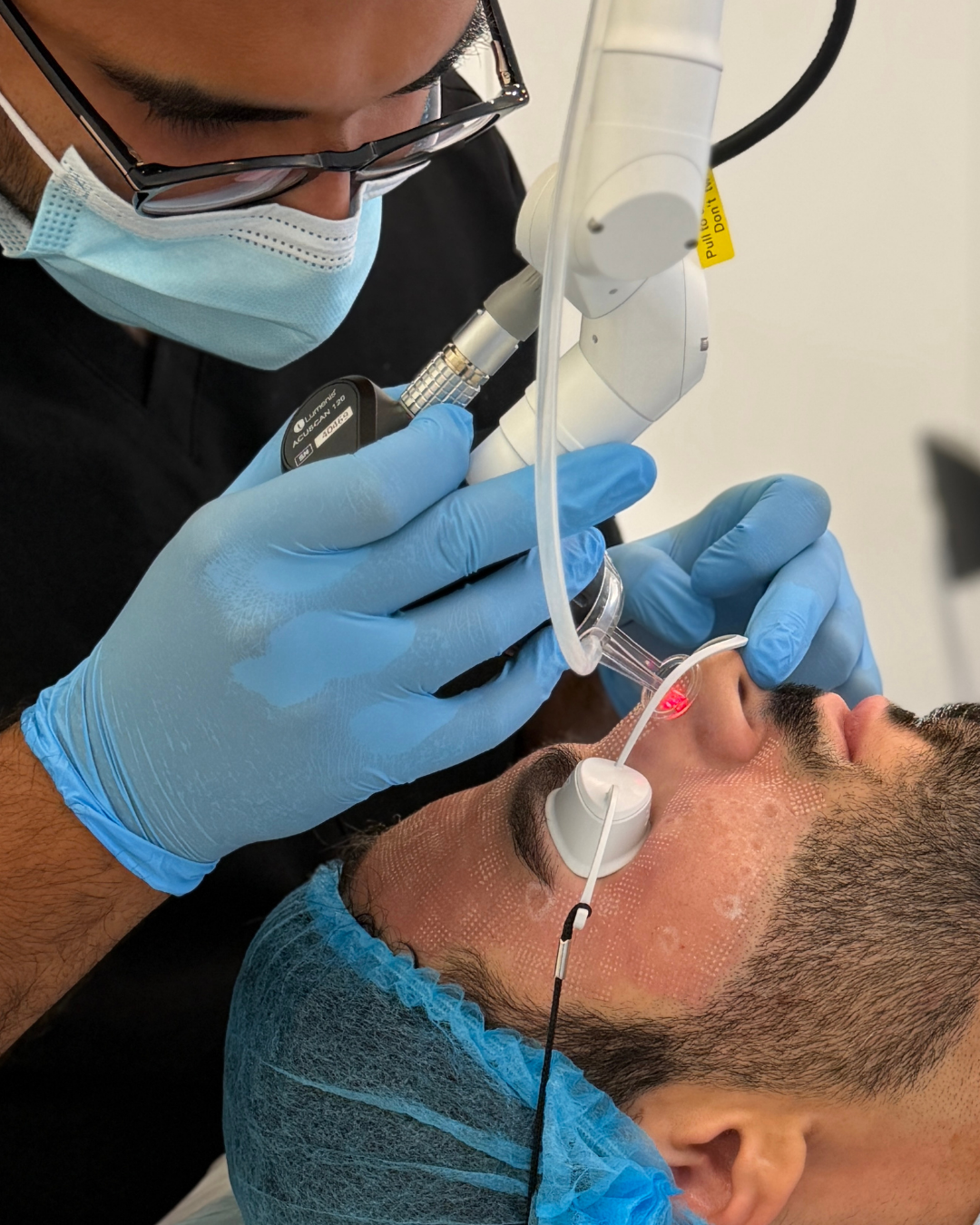
CO2 laser for surgical scars
A caesarean scar, a thyroidectomy line or a scar from abdominal, orthopaedic or breast surgery can stay raised, tight or discoloured long after the wound has healed. Fractional CO2 laser is a well-established treatment for improving how these scars look and, in many cases, how they feel.
The laser remodels the dense collagen that makes a scar stand out. It can flatten a raised scar, soften its texture, blend its colour into the surrounding skin and improve tightness over a course of sessions. Timing is individual, as some scars respond best once they have matured and others are treated earlier, so every plan starts with an in-person assessment.
CO2 laser for traumatic and other scars
Scars from injuries, accidents, burns and skin conditions respond to the same approach. The laser remodels the underlying scar tissue to soften its texture, refine the contour and reduce the contrast with the surrounding skin. The AcuPulse has a wide range of settings, so the depth and intensity are matched to the exact scar being treated, which matters in delicate or high-movement areas.
Raised, lumpy keloid scars are the exception. Laser is generally avoided where there is a history of keloid scarring, so these always need careful assessment first.
What to expect: treatment and recovery
Your consultation
Every CO2 treatment starts with a consultation with Dr Karwal. He assesses your skin, reviews your medical history, sets honest expectations and plans the number of sessions and the AcuPulse settings for your skin. Preparation starts at least four weeks before treatment, and longer for skin types that need a prescribed preparation cream first, so treatment is never booked at short notice.
On the day
A numbing cream goes on first so you are comfortable throughout. Active treatment takes around twenty to thirty minutes depending on the area. You will feel warmth as the laser passes over the skin, and most people describe it as very manageable. Afterwards the skin feels hot and tight, like a strong sunburn, which is expected and settles over the days that follow.
Recovery
Plan for around seven days of visible recovery after a light or medium treatment, and two weeks after a deep one. The skin is red at first, then bronzed, then flakes and peels as it renews. Swelling peaks around day two or three, especially around the eyes. A pink tone can linger for a few weeks and is easily covered with makeup once the skin has closed. Full guidance is on our post care information page.
Results
Fresher, smoother skin shows once the peeling settles in the first couple of weeks. The bigger change is gradual. New collagen keeps building, so texture, lines and scarring continue improving for two to three months and beyond. The final result is not what you see at week two but what emerges over time.
Our prices:
CO2 laser resurfacing
-
£2600
-
£2000
-
£1000
-
£1000
-
£2000
-
£2000
-
£3400
-
£3900
CO2 laser for scarring
-
£2000
-
£1200
-
£700
-
£1250
-
£1850
FAQs
-
It depends on your concern. Sun damage, lines and general texture can improve markedly after a single session. Deeper acne scarring and established scars usually need a planned course spaced several weeks apart. Dr Karwal will give you a clear answer at your consultation.
-
A numbing cream is applied first, so most people describe warmth rather than pain. Afterwards the skin feels hot and tight, like a strong sunburn, which settles over the following days.
-
Smoother skin shows once the peeling settles in the first two weeks. Because the treatment builds new collagen, texture, lines and scarring keep improving for two to three months and beyond.
-
No treatment can. Fractional CO2 laser significantly improves the look and often the feel of scars, but it improves rather than erases them. Dr Karwal will be honest about what is achievable for your scarring before you commit to treatment.
-
Yes, across a broad range of skin tones. Deeper skin tones have a higher chance of temporary darkening afterwards, which is managed with tailored settings, careful preparation and strict sun protection. For some patients, Dr Karwal may first treat a small test area to see how the skin responds before treating the full area.
-
The AcuPulse is made by Lumenis, a pioneer of CO2 laser technology. Its SuperPulse technology reaches deep into the skin while leaving less excess heat behind, which supports comfort, safety and a more predictable recovery. Its range of settings also lets Dr Karwal match the treatment depth precisely to your skin.
-
Not immediately. CO2 laser is generally avoided for around six to twelve months after isotretinoin, often known as Roaccutane or Accutane, because the skin needs time to restore its normal healing response. Tell Dr Karwal your full history at consultation so the right timing can be planned.
-
Yes. The face is our main focus, but the AcuPulse also treats the neck, décolletage and scars anywhere on the body, and other body areas can be discussed at your consultation with Dr Karwal.
-
Preparation starts at least four weeks before treatment, and longer for skin types that need a prescribed preparation cream first, so please do not book at short notice. During this time you avoid all sun exposure and tanning of any kind, wear SPF 50 daily, pause other treatments in the area and stop active skincare one week before. You will be given a full pre and post care guide covering everything in detail.
-
For the first five days you cleanse gently and keep the skin covered with petroleum jelly, with nothing else on the skin and no picking or peeling. You stay out of the sun completely until the skin has closed, then start daily SPF 50 and strict sun protection. Most people take a week away from work after a light or medium treatment and two weeks after a deep one. Full details are on our post care information page.