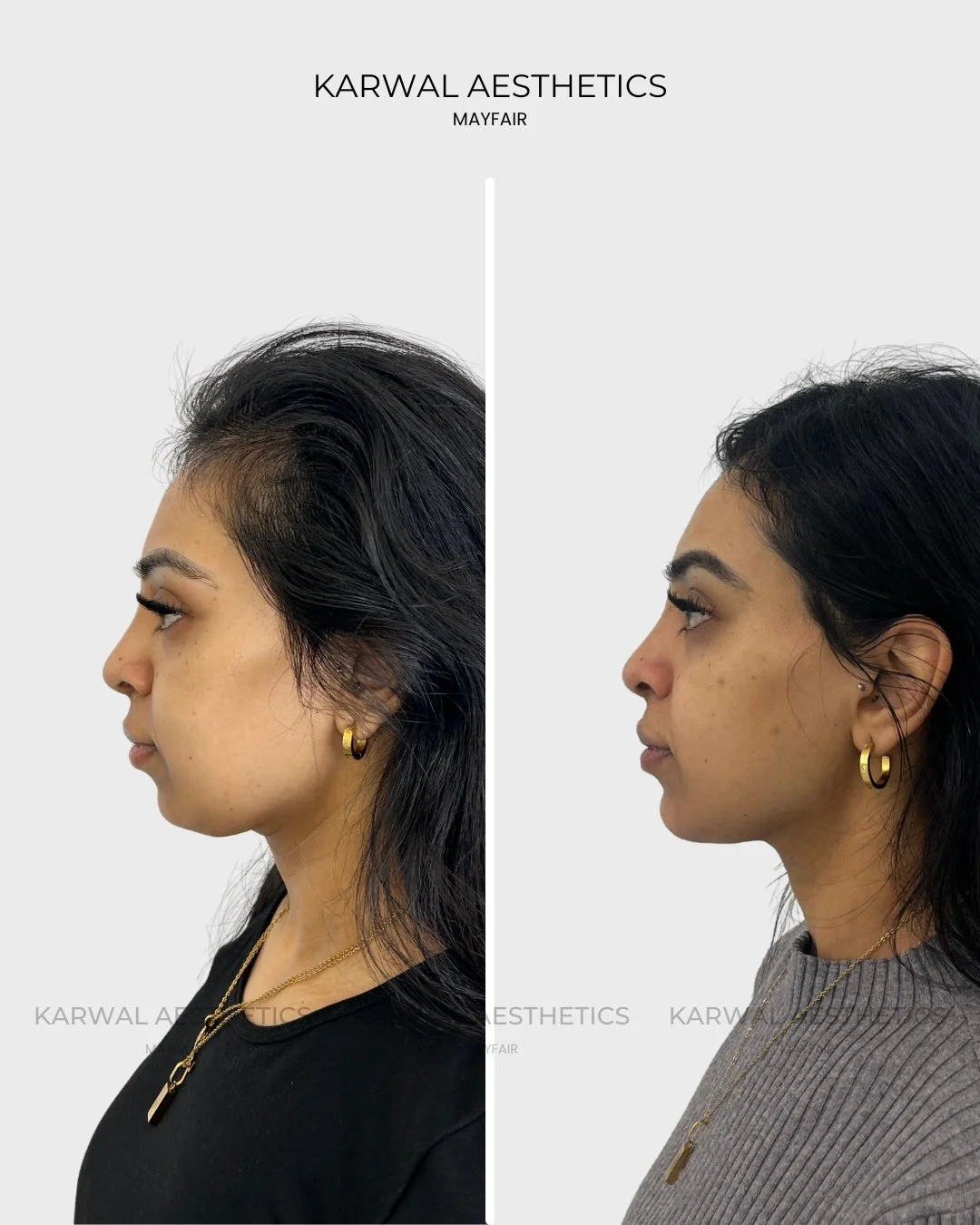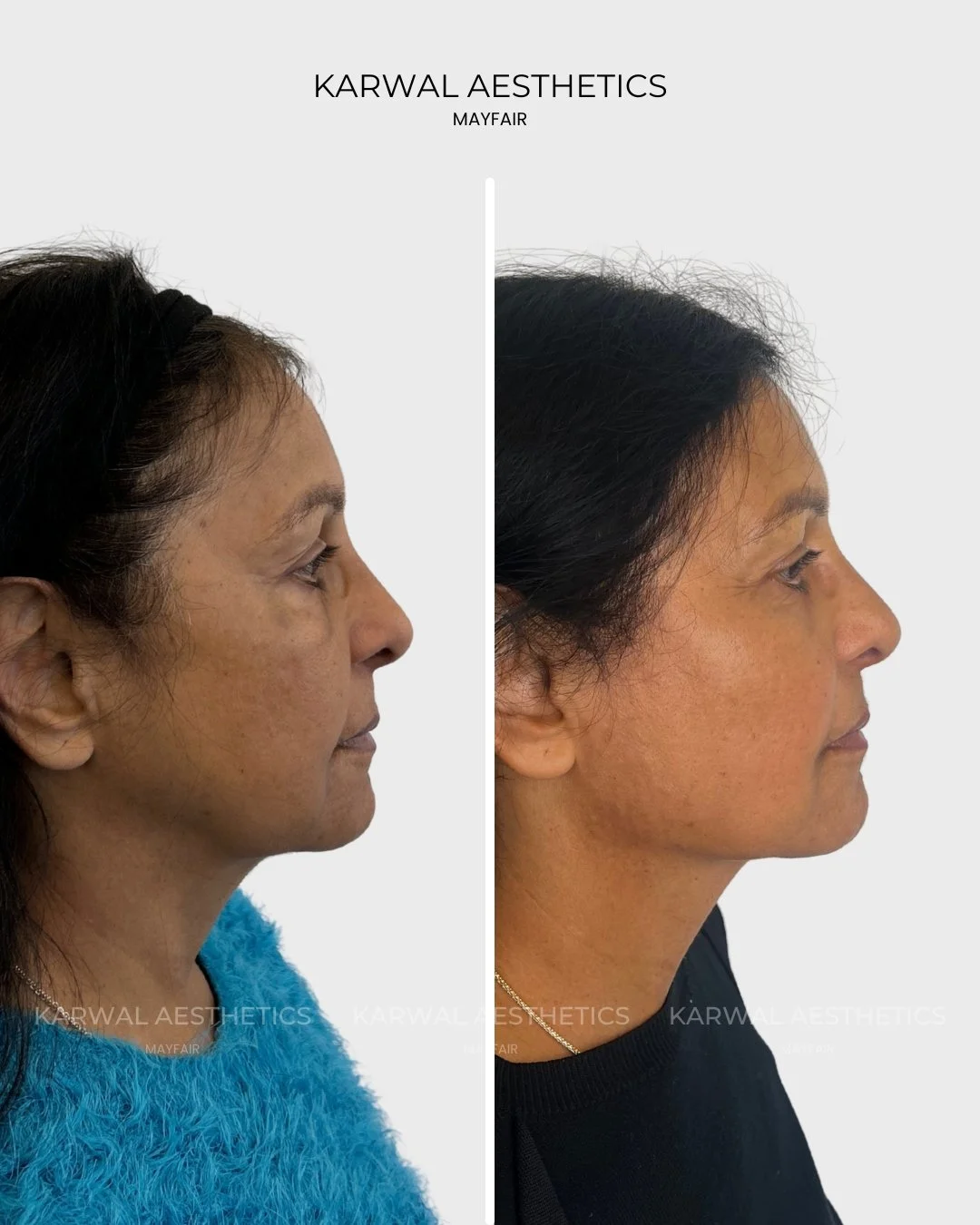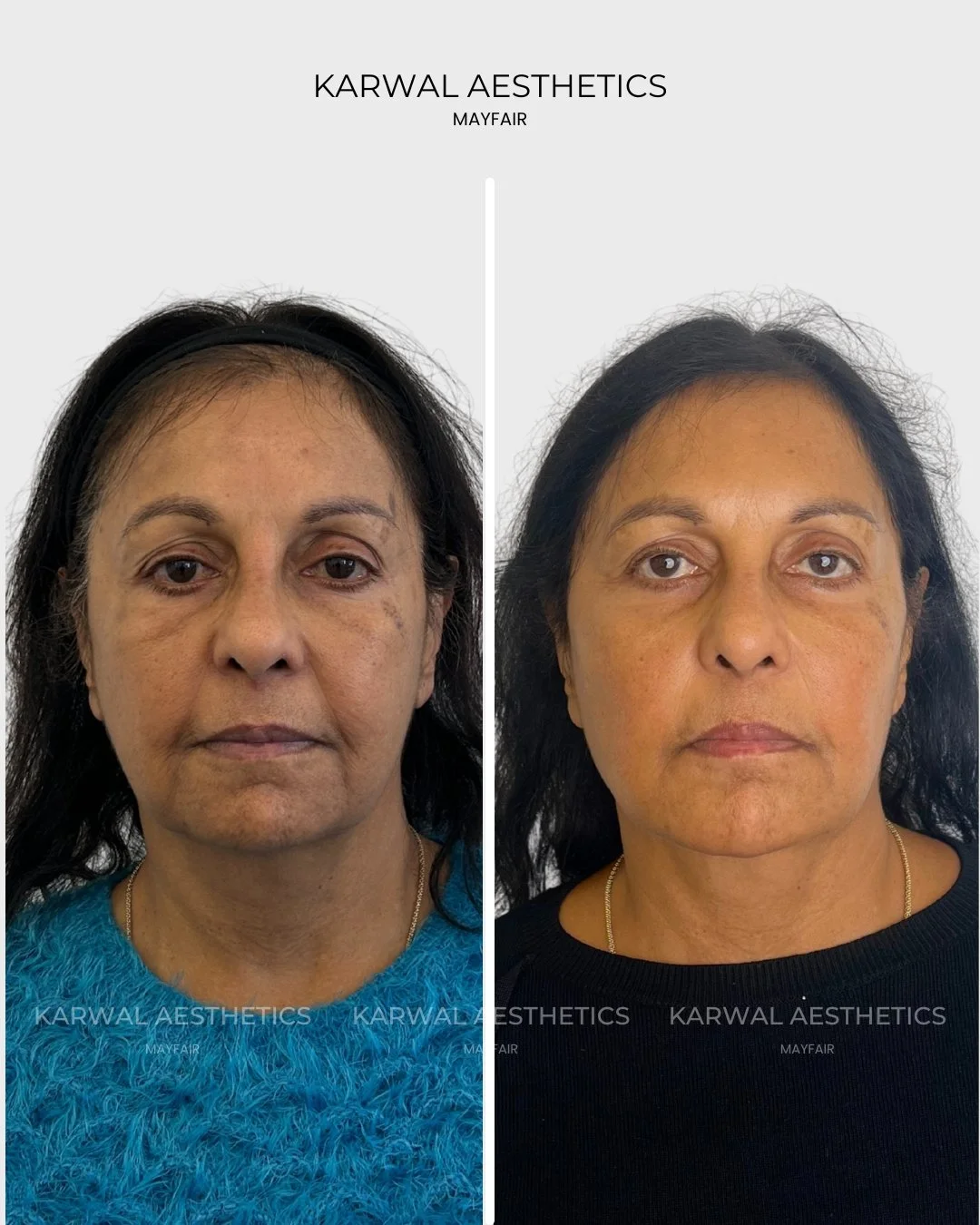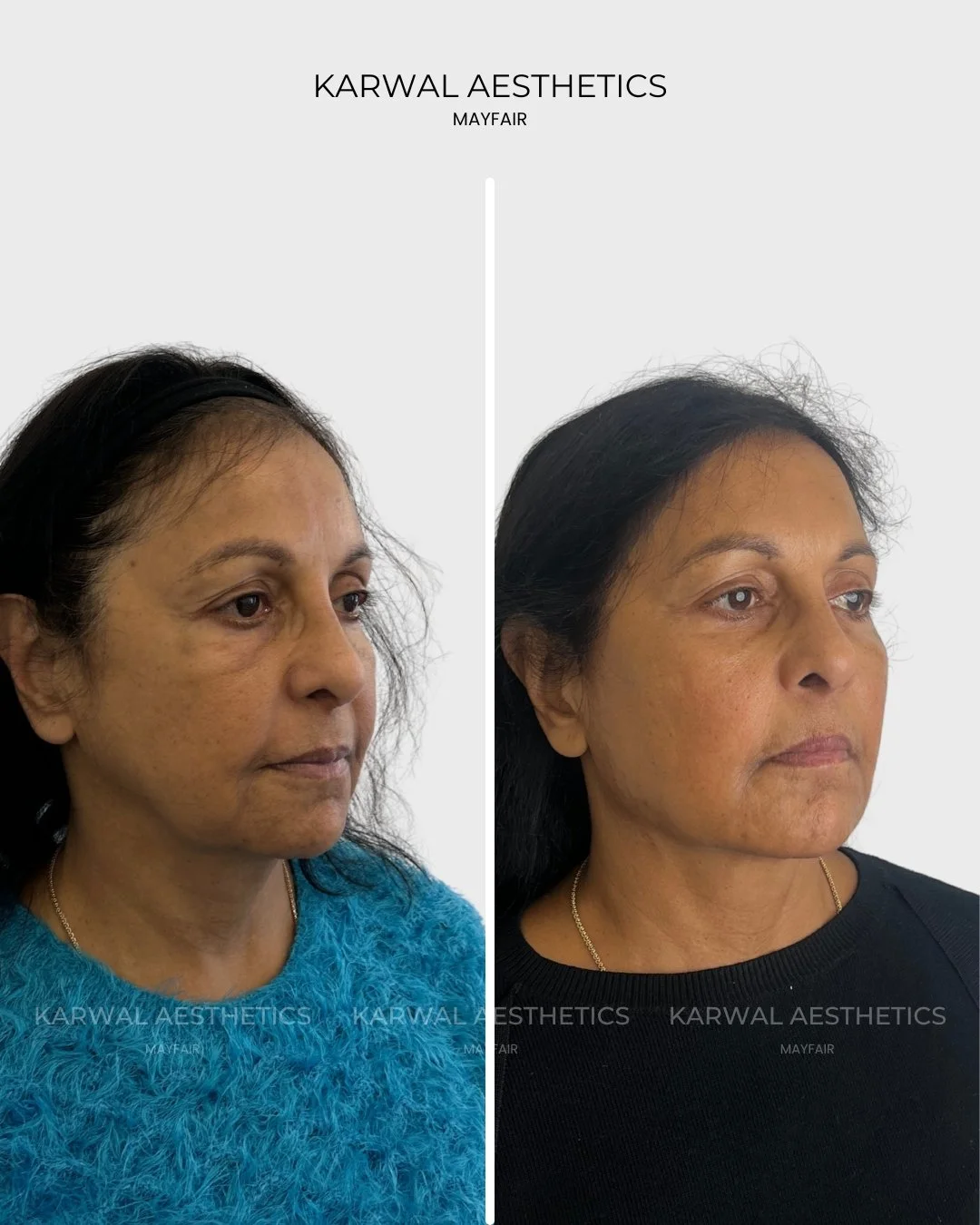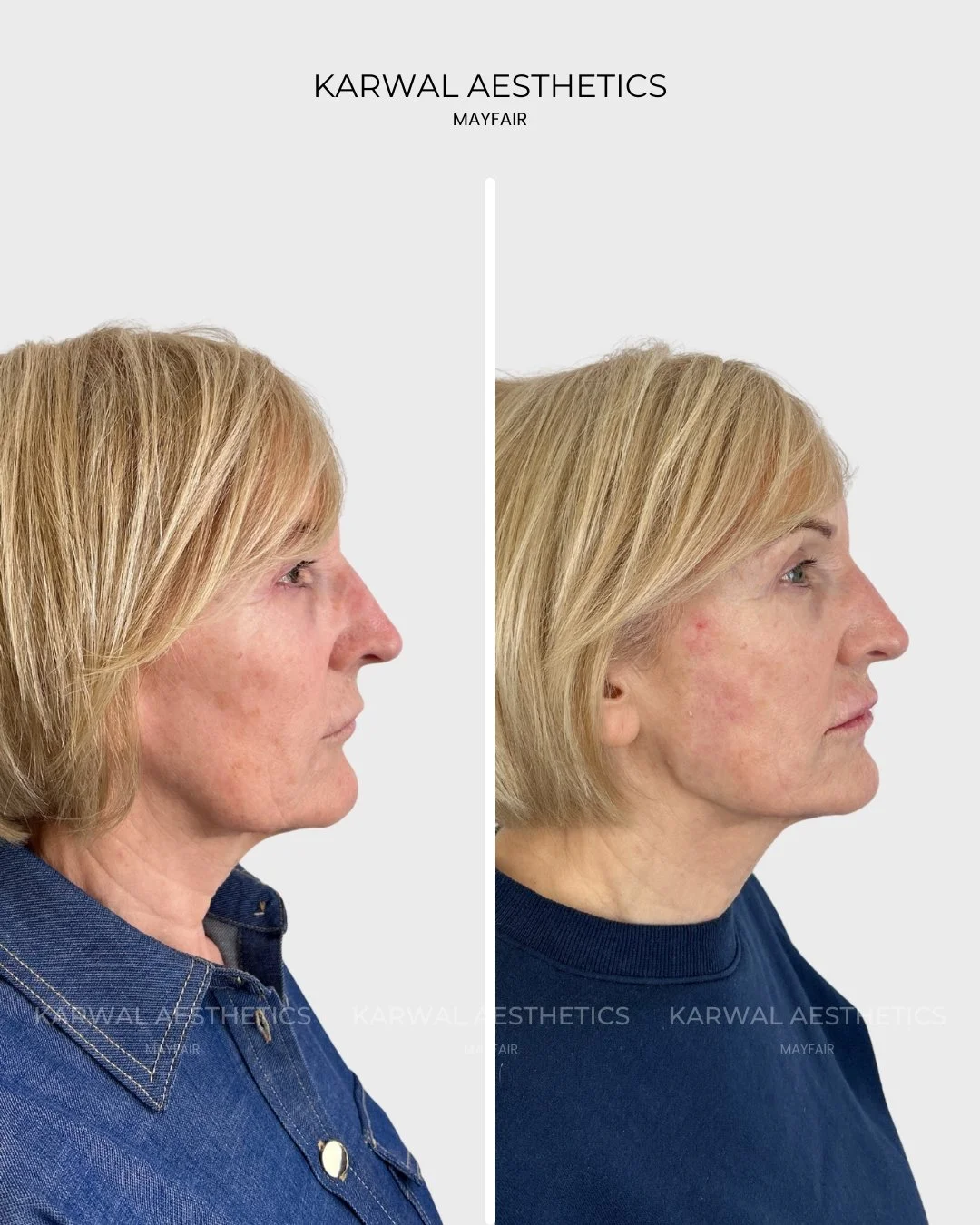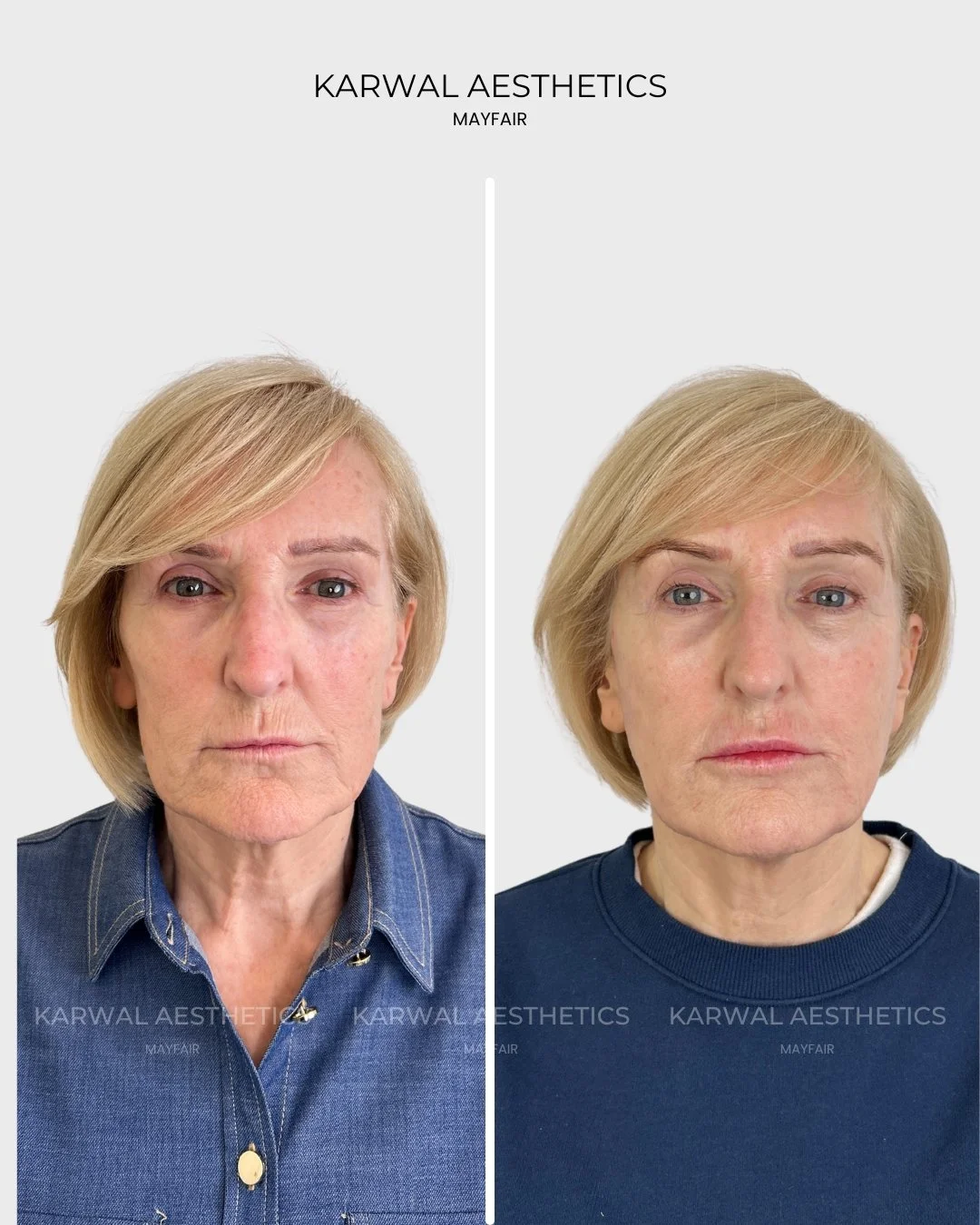
ENDOLIFT®
Skin Tightening Laser Treatment in London by Dr Karwal
What is Endolift?
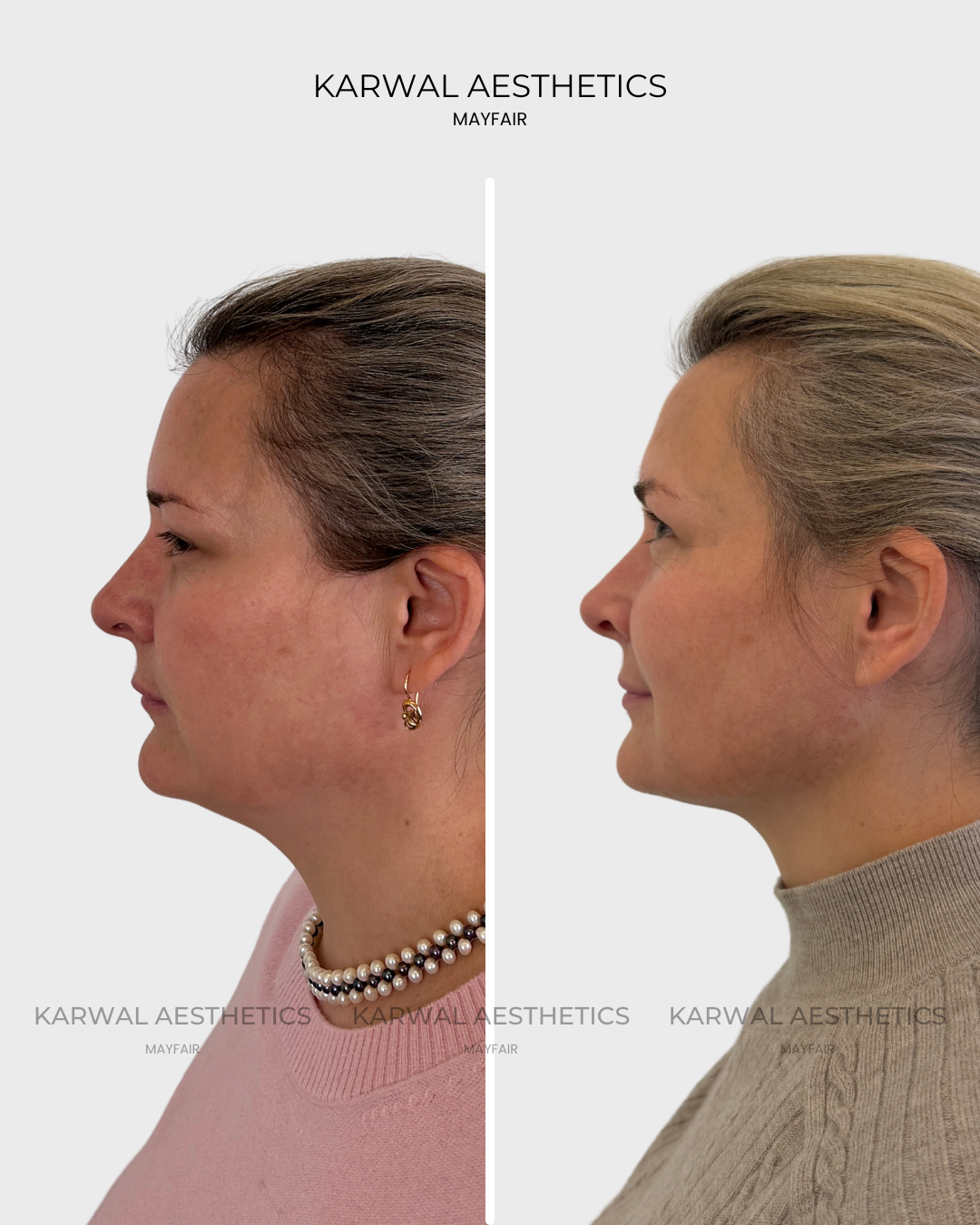
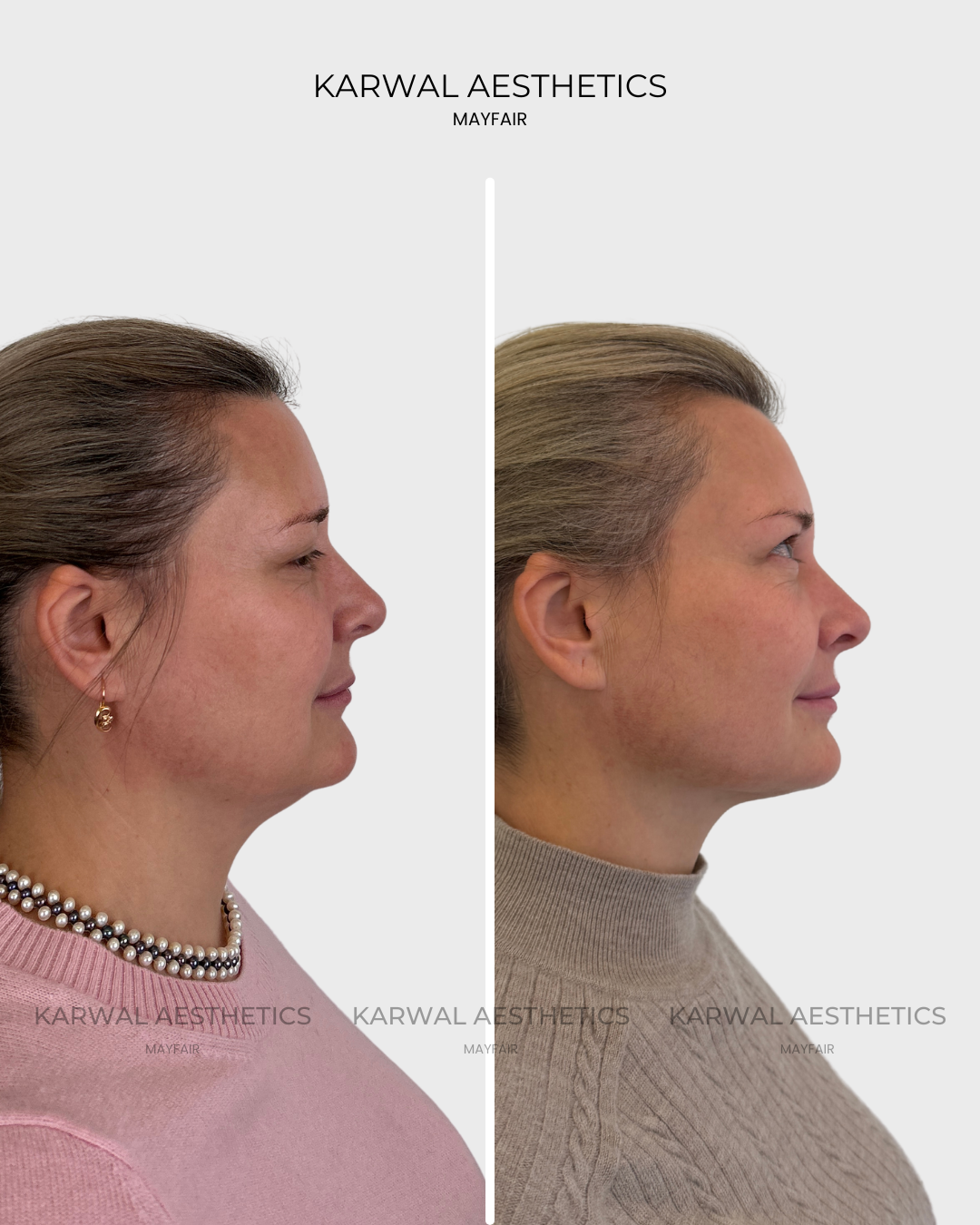
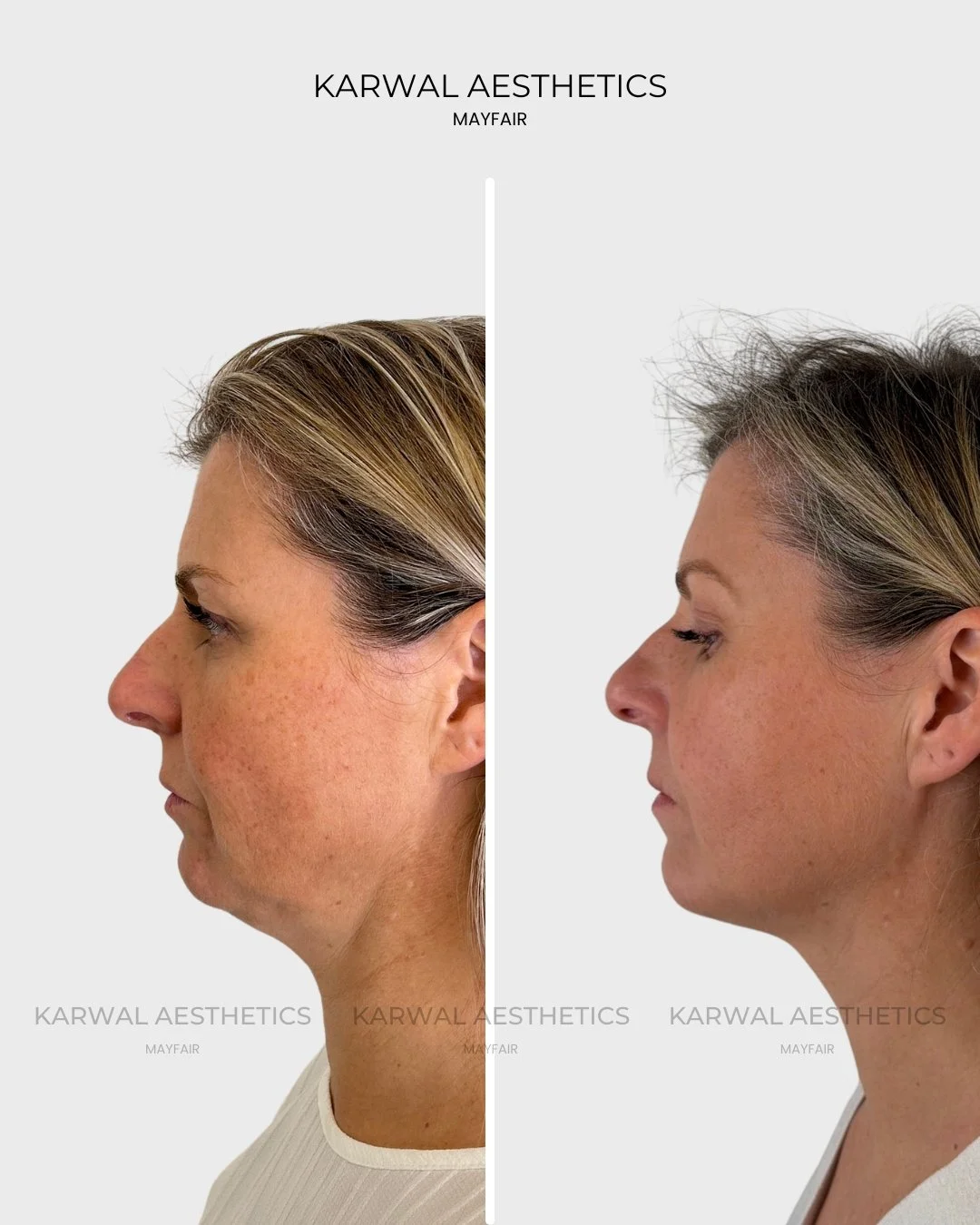
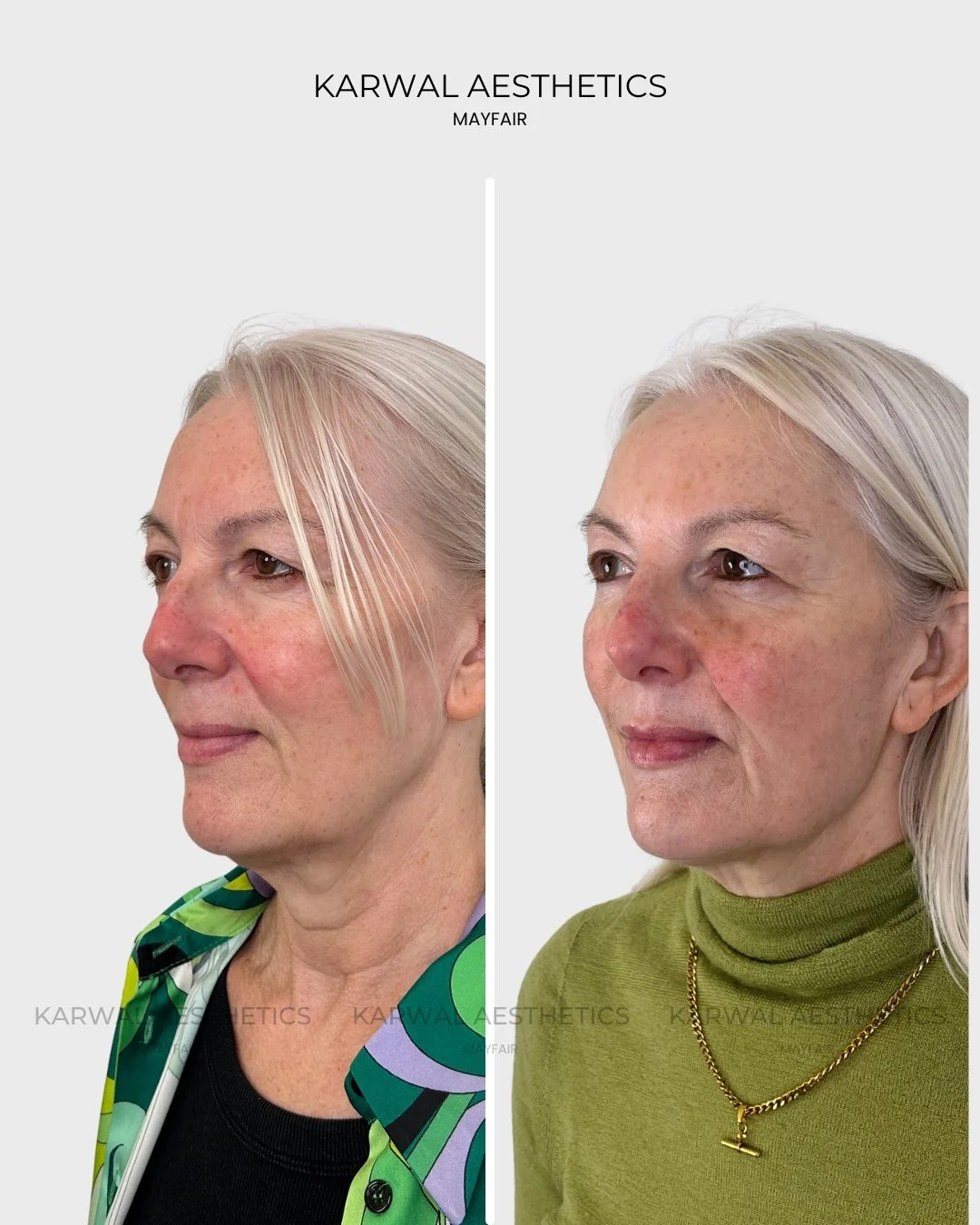
Endolift is a minimally invasive laser treatment that uses an ultra-fine optical fibre to deliver controlled laser energy beneath the surface of the skin. Its primary purpose is skin tightening: the laser causes existing collagen fibres to contract and stimulates the production of new collagen and elastin over the months that follow, firming and lifting areas of mild to moderate laxity.
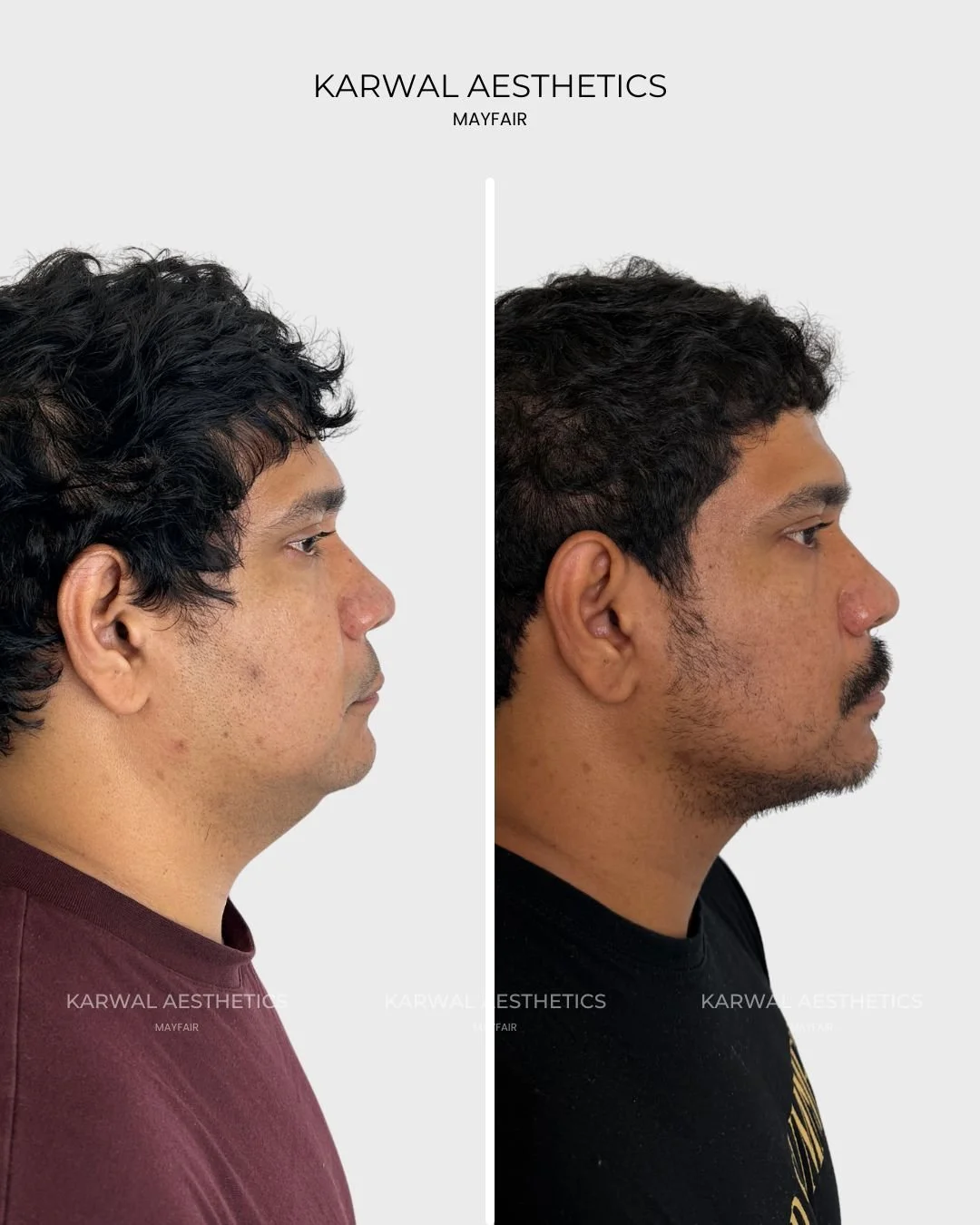
Where a small, stubborn pocket of localised fat is contributing to the problem, such as fullness under the chin, the same laser energy can be used to gently reduce it at the same time. This is a secondary, targeted effect rather than the main goal of treatment. Endolift is not a fat removal or weight loss procedure, and Dr Karwal will always be honest at consultation about whether your concern is one that Endolift can genuinely improve.
Is Endolift right for you?
Endolift gives its best results in patients with mild to moderate skin laxity. Typically this means people in their late thirties to mid sixties who have noticed early jowling, a softening jawline, looseness under the chin or crepey skin on the neck, and who want a meaningful improvement without surgery, general anaesthetic or an extended recovery.
It is equally important to understand what Endolift is not. It is not a surgical facelift, and where there is significant excess skin, surgery will give a better result. It is also not a weight loss or fat removal treatment. If your main concern is generalised fullness in the face or neck rather than skin laxity with a small stubborn pocket of fat, Dr Karwal will tell you honestly, and will discuss whether another approach would serve you better. This candour is central to how we practise, and it is the reason a consultation always comes before any commitment to treat.
Where Can Endolift Be Used?
One of the strengths of Endolift is its versatility. The treatment can be applied to a wide range of areas on the face and neck, making it suitable for patients with a specific concern in one area or those looking for a more comprehensive result across multiple zones.
Endolift works best for patients with mild to moderate skin laxity. It is not designed to replicate the results of a surgical facelift and is most effective where there is meaningful skin looseness but not the degree of excess skin that would require surgical correction.
Treatment areas include:
Lower face and jowls
Jawline
Under the chin (double chin)
Neck and décolletage
Malar bags
For patients with more widespread laxity, Endolift can also be carried out across combined areas in a single appointment, such as the full face and neck, the lower face and under-chin together, or any other combination suited to your concerns.
At your consultation, Dr Karwal will assess your skin, discuss the areas you would like to address, and advise honestly whether Endolift is the right treatment for the degree of laxity you have.
Endolift can also be used on the body for areas such as the upper arms, abdomen and inner thighs. You can read more on our dedicated Endolift Body page.
How Does Endolift Work?
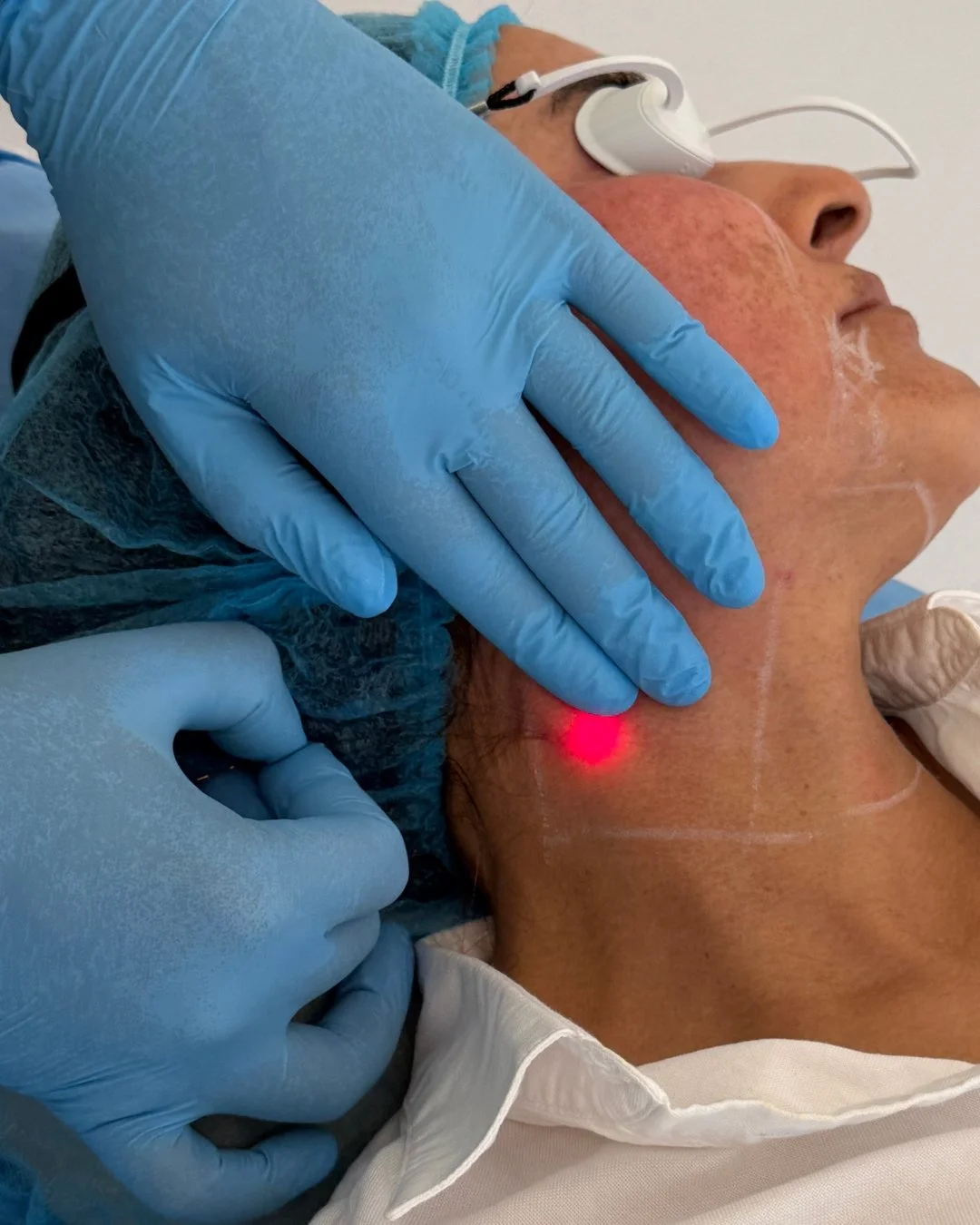
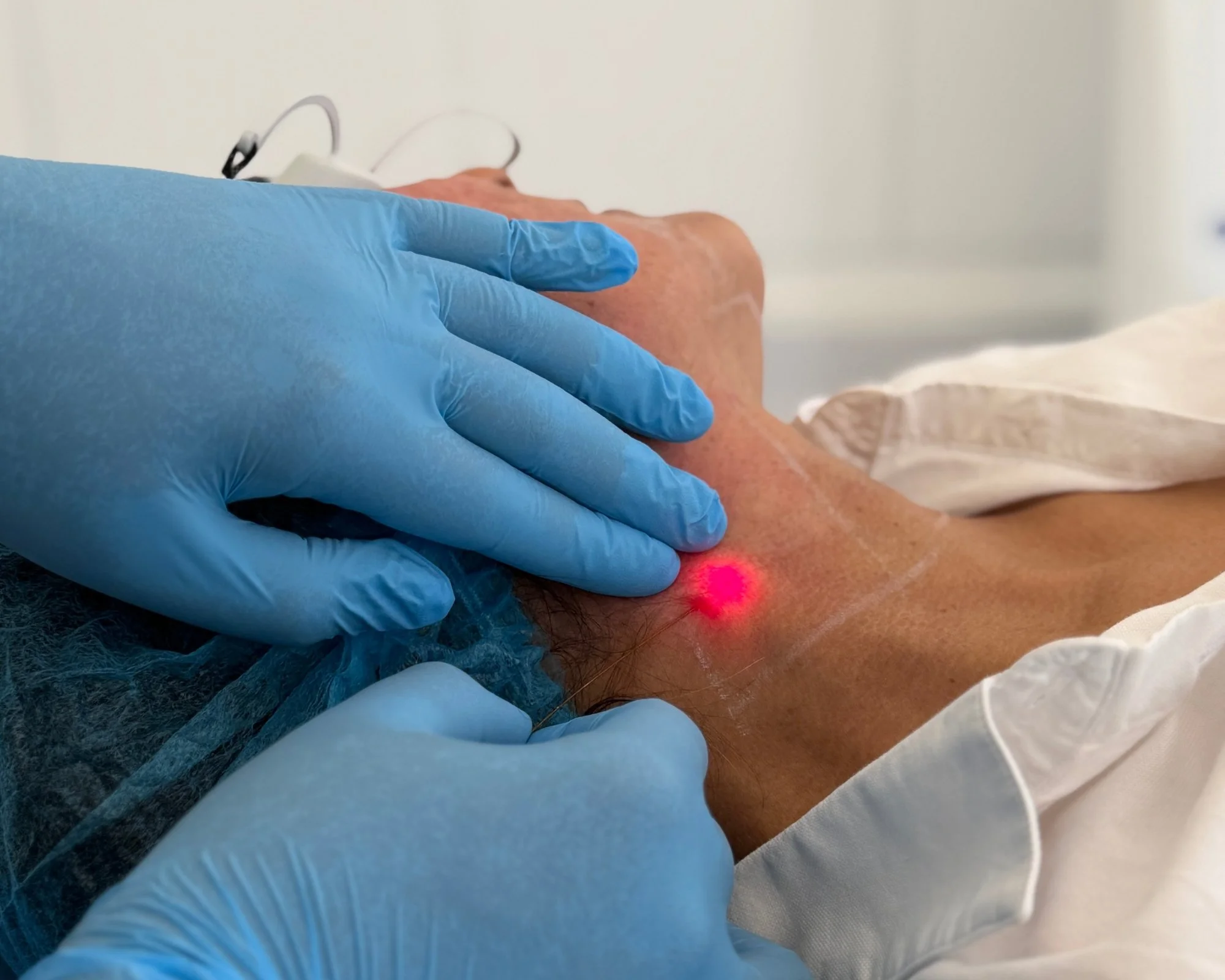
Endolift works by delivering controlled laser energy directly beneath the surface of the skin, targeting the deeper layers of tissue where structural changes have the most impact. A very fine optical fibre is introduced through a tiny entry point in the skin, with no incisions and no stitches, and the laser energy is emitted precisely where it is needed.
The tightening happens on two levels. The heat generated by the laser causes an immediate contraction of existing collagen fibres, producing an initial firming effect that can often be seen straight after treatment. At the same time, the controlled thermal stimulus triggers the body's own healing response, prompting the production of new collagen and elastin over the weeks and months that follow. This is why Endolift has a reputation for results that continue to improve after treatment rather than peaking immediately and fading.
Where a small pocket of localised fat is part of the picture, for example under the chin, the laser can selectively disrupt fat cells in that specific zone. The body then processes and clears them naturally over the following weeks, refining the contour alongside the tightening effect. This element of the treatment is always targeted and conservative. Endolift is not designed to remove significant volumes of fat and is not a substitute for weight loss.
The outcome is a remodelling of the tissue from within: skin that is firmer, tighter and better supported by the underlying structure.
Our Prices
-
£2600
Includes cheeks, buccal region, jawline, jowls, under chin and upper neck
-
£2800
Includes 'Full Face' option and full neck
-
£2200
Includes jawline, under chin and upper neck
-
£1800
Includes jawline.
-
£1800
Includes under chin and upper neck
-
£1900
Includes full neck with upper chest
-
£1800
The Endolift Process Explained:
Step 1: Immediate Skin Tightening
The laser energy is delivered through an ultra-fine optical fibre introduced beneath the skin. The heat causes existing collagen fibres to contract and coil, creating an instant firming effect in the treated area.
Step 2: Long-Term Collagen Remodelling
The controlled heat also activates fibroblasts, the cells responsible for producing collagen. Over the following 3 to 6 months these cells build new collagen and elastin fibres, forming a denser, more organised support network within the skin. This is where the majority of the visible improvement comes from, which is why results continue to develop for months after treatment.
Step 3: Targeted Fat Reduction (where appropriate)
In areas where a small, stubborn pocket of localised fat is contributing to the concern, such as under the chin, the laser can be used to disrupt fat cells in that specific zone. This is a conservative, targeted element of the treatment rather than its main purpose.
Step 4: Natural Clearance and Contour
Any treated fat is processed and eliminated gradually by the body's lymphatic system over the following weeks. Because the skin is tightening at the same time, it contracts to fit the refined contour beneath it, avoiding the looseness that can follow fat reduction alone.
The entire process works from the inside out, strengthening the skin's structural foundation for a firmer, more lifted appearance.
What is the downtime for Endolift?
Endolift does involve a recovery period, and we believe you should know exactly what to expect before you book. Swelling and bruising are a normal part of the healing process. Most patients experience mild to moderate swelling in the first three days, which then gradually reduces, with most visible signs of treatment resolved by day 14. Some patients experience more pronounced swelling or temporary lumps that take longer to settle, and this is a normal part of healing rather than a cause for concern.
Aftercare plays an active role in your result. A compression garment is worn continuously for the first three days, then at night for up to a month. You will also be shown how to firmly massage the treated areas, which must be done daily to support lymphatic drainage and reduce swelling. Alongside this, we ask you to sleep with your head elevated, avoid strenuous exercise for 7 to 14 days, stay away from saunas, steam rooms and very hot showers for at least a week, follow a low-sodium diet and keep well hydrated, and avoid smoking and alcohol while you heal.
Many patients return to desk-based work within the first week, but if your role is public facing you should plan around the compression garment and the two-week settling period. Full written aftercare guidance is provided on the day, follow-up appointments are included, and Dr Karwal remains directly contactable throughout your recovery.
FAQs
-
Endolift is a safe procedure with a low risk profile when performed by an experienced doctor, and Dr Karwal will talk you through all possible risks, side effects and complications at your consultation, with a detailed list provided in your consent form. The most common effects are temporary swelling, bruising and tenderness in the treated area, which settle as part of normal healing. A rare but important complication is bruising of the marginal mandibular nerve, which sits in the lower face on either side of the angles of the mouth. In a very small number of cases this nerve can become irritated by laser heat, causing temporary lip asymmetry on the affected side. Where this occurs, some patients are given a short course of oral steroids and vitamin B tablets to help speed up recovery, and it usually resolves fully within 8 to 10 weeks. To minimise this risk, treatment close to the angles of the mouth is avoided, and Dr Karwal's use of ultrasound guidance allows the depth and position of the fibre to be monitored with far greater precision than treating by feel alone.
-
There is very little you need to do before your Endolift appointment, but a few simple steps help everything run smoothly. Avoid any other facial laser treatments for at least four weeks beforehand, and stop using peel-based or active skincare such as retinol for one week prior, as these can leave the skin more sensitive to heat. On the day of treatment, arrive with clean skin free of make-up if possible, and remove earrings before your appointment. If you take any regular medications or have had recent treatments elsewhere, mention these at your consultation so Dr Karwal can confirm you are ready to go ahead. You can eat and drink normally beforehand, as the procedure is performed under local anaesthetic, and most patients are able to drive themselves home afterwards.
-
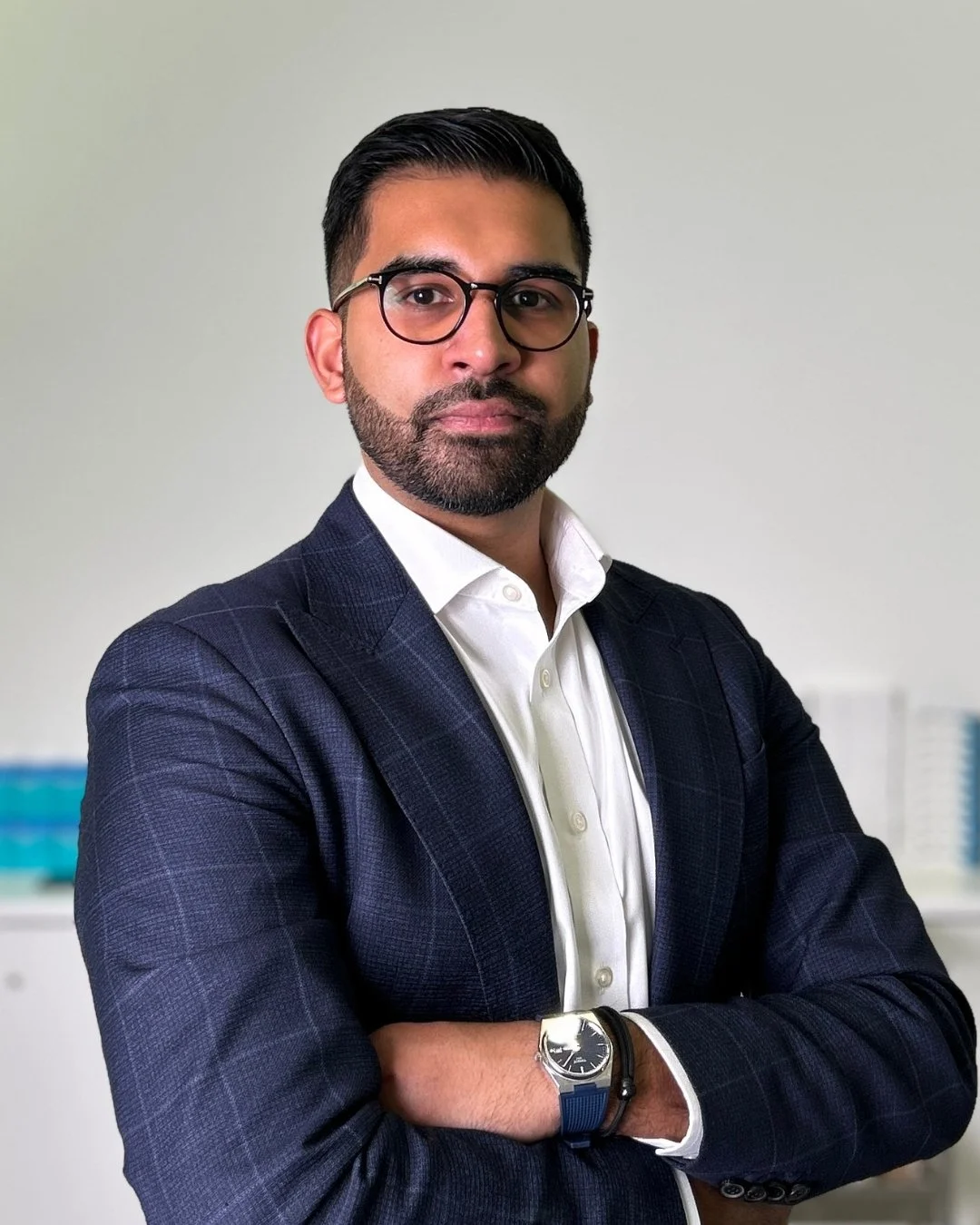
Endolift is a technique-dependent treatment, and the outcome rests heavily on the judgement and skill of the person holding the fibre. At Karwal Aesthetics, every Endolift procedure is performed personally by Dr Arun Karwal, a GMC-registered doctor with a background in emergency medicine. You will never be passed to a junior practitioner or a therapist.
Consultations are unhurried and honest. If Endolift is not the right treatment for your degree of laxity, Dr Karwal will say so and explain your alternatives, whether that is a different treatment with us or a surgical referral. Our clinic is located on Dover Street in Mayfair, a short walk from Green Park station, and 0% finance is available on all treatments from £500 through our Payment Plan.
-
Morpheus8 and HIFU deliver energy through the surface of the skin from the outside, which limits how precisely and how deeply the energy can be placed, and both usually require a course of several sessions. Endolift delivers laser energy directly beneath the skin exactly where it is needed, which is why a single session is usually sufficient and why the tightening effect is generally more pronounced. The trade-off is a short recovery period of swelling and possible bruising, whereas surface-based treatments tend to have less downtime per session. Dr Karwal can advise which approach suits your skin and your goals at consultation.
-
A facelift remains the most powerful option for significant excess skin, but it involves surgery, general anaesthetic, scarring and weeks of recovery. Endolift sits between skin boosters and surgery: it produces a genuine structural tightening without incisions or stitches, with most visible recovery settling within two weeks. For mild to moderate laxity it can achieve a meaningful lift, but it will not replicate a surgical result, and Dr Karwal will tell you honestly if surgery would serve you better.
-
Yes, and combinations are often where the best results come from. Endolift addresses laxity in the deeper tissue, so it pairs well with treatments that improve the skin surface and quality, such as CO2 laser resurfacing, Sunekos or Profhilo. Where volume loss is part of the picture, dermal filler can be added once healing is complete. Dr Karwal will sequence any combination safely and will only recommend what genuinely adds to your result.
-
Yes. The same technology can treat small, stubborn areas on the body where skin laxity and localised fullness sit together, such as the upper arms, abdomen and inner thighs. As with the face, it is a tightening and refining treatment rather than a fat removal procedure. You can read more on our Endolift Body page.
-
The simplest way to think about it is depth. Endolift works beneath the skin on the deep structural layer, using a fine 1470nm laser fibre to tighten the connective bands, reduce small pockets of fat and stimulate fresh collagen, which lifts and defines areas like the jawline, jowls and neck. Fractional CO2 laser works on the surface, resurfacing the outermost layers to improve texture, tone, pores, fine lines, pigmentation and sun damage. One firms the scaffold from within, the other perfects the skin you actually see.
-
It depends on which layer is driving your concern. If your main issue is a softening jawline, jowls or laxity along the lower face and neck, Endolift is usually the priority. If your main issue is rough texture, uneven tone, sun damage or fine lines on otherwise well supported skin, CO2 resurfacing may be enough on its own. Many people from their mid thirties onwards have both concerns at once, which is why the two are so often planned together. An in person assessment with Dr Karwal is the only reliable way to know.
-
Yes, and for many patients combining them is the whole point, because it addresses both the deep structure and the surface in one coordinated plan. They are not always done on the same day. In many cases the structural work is carried out first and resurfacing is planned around it, while for other people a different sequence suits better. The right order depends on your anatomy, your skin type, the degree of laxity and how much downtime you can take, which is why this is planned personally rather than sold as a fixed package.
-
Both stimulate collagen, but they do so in different layers, so they are not really competing. Endolift produces genuine structural tightening because it acts on the deep scaffold where slackening actually happens. CO2 laser adds a firmer, tighter surface because it triggers a collagen response in the upper and mid dermis, though it will not lift a slackened jawline. For meaningful structural lift you need Endolift, for surface quality you need CO2, and treating both is what gives the most complete result.
-
Malar bags are the soft, puffy areas that sit on the upper cheek over the cheekbone, just below the lower eyelid. They are not the same as ordinary under eye bags. A malar bag is usually a combination of lax skin and soft tissue that has lost support, small pockets of fat, and fluid that pools because the natural drainage in that part of the face is poor. They tend to make the eyes look tired or heavy, and they often become more noticeable with age, with tiredness or after salty food and alcohol.
-
Endolift works beneath the skin, on exactly the layer where the problem sits, rather than on the surface. A fine 1470nm laser fibre is guided into the deep skin and the fatty layer, where it does three things at once. It tightens the lax skin and connective tissue so the area is better supported and looks less heavy, it gently reduces the small fat pockets that add to the fullness, and as the tissue firms through fresh collagen over the following weeks, drainage in that compartment tends to improve, which helps settle the puffiness. Because it addresses the structure, the fat and the drainage together, it treats closer to the real cause than a surface treatment can.
-
This is one of the most important things to understand about malar bags. Adding filler to a poorly draining area can make a malar bag look worse rather than better, because the extra volume tends to hold more fluid. This is why a careful assessment matters, and why a treatment that supports and tightens the area, like Endolift, is often more appropriate than one that adds volume. Dr Karwal will always assess which approach genuinely suits your anatomy rather than defaulting to filler.
-
The honest answer is that a consultation will tell you. Malar bags vary a great deal from person to person, and the right treatment depends on what is actually causing yours. Dr Karwal will assess the area in person at Karwal Aesthetics on Dover Street in Mayfair and give you a frank view of whether Endolift will help, whether another approach suits you better, or whether a combination is the most appropriate plan. Consultations can be booked online and the fee is redeemable against treatment on the day.
-
For most patients a single Endolift session is enough to achieve a visible result, which is one of the treatment's real advantages over options that require a long course of appointments. Because Endolift works by stimulating your own collagen, the change is gradual rather than instant. You may notice some immediate tightening as the tissue contracts, but the firming and lifting continues to develop over the following weeks, with the fullest result usually seen between three and six months as new collagen forms. Those results are long lasting, typically in the region of two to three years, and in some people longer.
A second session is only occasionally needed and is never assumed. It may be considered where laxity is more moderate to advanced, where a particular area would benefit from a little more, or where Endolift is being staged alongside another treatment, in which case it would usually be spaced some months after the first. Rather than working to a fixed number of sessions, Dr Karwal assesses your skin in person and tells you honestly whether one treatment is likely to be enough for your goals or whether a second would add worthwhile benefit. Many patients also choose a periodic top up in future years to maintain the effect as ageing continues, but that is a choice rather than a requirement.
-
Endolift works beneath the skin, which means the person performing it cannot see the treated layer with the naked eye. Traditionally the fibre is guided by feel and anatomical knowledge alone. Adding ultrasound imaging changes that, because it lets the doctor see the layers of the skin in real time and treat with far greater certainty about exactly where the energy is going.
At Karwal Aesthetics, ultrasound supports the treatment in a few important ways. Before anything begins, it allows Dr Karwal to assess your individual anatomy, the thickness of the skin, the depth of the fat layer and the position of nearby structures, so the plan is built around what is actually there rather than an average. During treatment, ultrasound lets him confirm the depth of the fibre and see how the tissue is responding, so energy is delivered precisely to the layer that needs it, whether the aim is skin tightening, gentle fat reduction or a combination of both. And because the surrounding structures can be visualised, delicate regions can be approached with an added margin of care.
This precision matters most in areas where the anatomy is fine and unforgiving, such as under the eyes, the malar region and along the neck and jawline. Being able to see the depth of treatment rather than estimate it supports both a more even, natural result and a careful, safety led approach, which is exactly the standard the clinic holds its laser work to.
-
Endolift is not suitable for everyone, and part of an honest consultation is telling you when it is the wrong choice. Treatment is not carried out during pregnancy or breastfeeding, or where there is an active skin infection, cold sore outbreak or inflammatory skin condition in the treatment area, in which case treatment is simply postponed until the skin has settled. Caution is also needed if you have a bleeding or clotting disorder, take blood-thinning medication, have poorly controlled diabetes, a condition that affects wound healing, or a history of keloid or hypertrophic scarring. If you have taken isotretinoin (Roaccutane) recently, treatment is usually deferred until an appropriate interval has passed. Endolift is also not the right treatment where skin laxity is too advanced, as surgery would give a better result, and Dr Karwal will tell you so rather than treat you unsuitably. Every patient is screened for these factors at consultation, so if you are unsure whether any of this applies to you, the free online consultation is the easiest place to start.
-
Endolift is a minimally invasive treatment, so most patients recover quickly and return to normal life within a few days. Some swelling, bruising and tenderness in the first one to two weeks is completely normal and part of how the treatment works. The care you take in these early days plays an active part in your final result, so please read this guidance through and follow it closely. If anything is unclear, ask us at your appointment or get in touch afterwards.
Compression garment
This is one of the most important parts of your aftercare, so please take it seriously. Wear the garment non-stop, day and night, for the first three days. Only remove it briefly to wash the area and the garment itself, then put it straight back on. After the first three days, keep it on as much as possible for a full month, including while you sleep. The more consistently you wear it, the better it controls swelling, supports the tissue as it heals, and helps your final result settle smoothly. Make sure it is snug and supportive but not so tight that it digs in or feels uncomfortable.
Head position and sleep
For the first week, sleep with your head elevated on two or three pillows, or slightly raised in whatever way is comfortable. Keeping your head above your heart overnight helps fluid drain away and noticeably reduces morning swelling. Try to avoid sleeping face down during this time.
Massage
Firm massage is essential to a good result, so please do not skip it. Massage the treated areas exactly as shown in your appointment, two to three times a day, for 15 to 30 minutes each session. This encourages lymphatic drainage, helps disperse fluid, softens any firmness, and speeds up how quickly swelling settles. It may feel a little tender at first, but consistency over the first few weeks makes a real difference to both your comfort and the smoothness of the final result. If you are unsure of the technique, ask us to talk you through it again.
Pain relief and medication
Any discomfort is usually mild and settles quickly. Try to avoid paracetamol, ibuprofen and aspirin if possible in the first few days. If you feel you need something for pain, please contact us first so we can advise you on what is best to take.
Make-up and the treated area
Avoid make-up for the first 24 to 48 hours to let the skin settle. Do not touch, press or rub the treated areas beyond your prescribed massage, and try not to pick at or examine them constantly, as this can irritate the skin and slow healing.
Skincare
Keep your routine gentle while you heal. Avoid harsh skincare products, active ingredients and exfoliants for at least one week. Once the skin has calmed, you can gradually return to your usual products. Keep the treated areas out of direct sunlight for at least two weeks, then apply an SPF 30 or higher every day to protect both your skin and your result.
Exercise and movement
Avoid strenuous exercise and anything that raises blood flow to the face for 7 to 14 days. This includes high-intensity workouts, hot yoga, heavy lifting and vigorous cardio. Gentle walking and light day-to-day activity are absolutely fine and even help circulation, so there is no need to rest completely.
Heat
Avoid saunas, steam rooms, sunbeds and very hot showers or baths for at least 7 days. Heat widens the blood vessels and can make swelling and bruising worse, so keep things cool and comfortable while you heal.
Diet and hydration
Follow a low-sodium diet for two weeks, as too much salt encourages your body to hold on to fluid and can prolong swelling. Drink at least two litres of water a day to stay well hydrated, which supports your circulation and helps your body heal.
Smoking and alcohol
Avoid both while you heal. Smoking restricts blood flow and slows the body's ability to repair itself, while alcohol thins the blood and increases both swelling and bruising. The longer you can avoid them, the smoother your recovery is likely to be.
What is normal
Some bruising and swelling is expected and usually lasts one to two weeks. Some patients experience moderate to severe swelling for a little longer, along with temporary lumps, firmness or areas that feel uneven. This is a normal part of healing and settles gradually as your body recovers and the massage does its work. Try not to judge your result in the early weeks, as the tissue is still settling.
Expected recovery timeline
Day 1 to 3: mild to moderate swelling and possible bruising, at their most noticeable.
Day 4 to 7: swelling begins to reduce and bruising starts to fade.
Day 8 to 14: most visible signs of treatment resolve and you feel more like yourself.
Day 15 onwards: gradual improvement continues as the deeper tissue settles.
Month 2 to 3: early results begin to show as new collagen forms.
Final results are typically visible after three to six months, as your body continues to produce new collagen and break down fat cells. Depending on your goals and starting point, more than one session may be recommended for the best outcome. Your practitioner will discuss this with you at your follow-up.
Follow-up appointments
Please attend all scheduled follow-up appointments so we can monitor your healing, check your progress and make sure you are happy with how things are settling. These visits are an important part of your care.
When to contact us
Contact us straight away if you experience severe or increasing pain, unusual or worsening swelling or bruising, signs of infection such as heat, pus or spreading redness, persistent redness, a fever, or if you have any other concerns about your recovery. We would always rather hear from you and reassure you than have you worry at home.