
Cheek Filler
What Are Cheek Fillers?
Cheek fillers are injectable treatments that restore or enhance volume in the mid-face. At Karwal Aesthetics we use hyaluronic acid (HA) fillers, chosen for their natural-looking results and excellent safety profile. HA fillers can also be dissolved with hyaluronidase if ever needed.
What Can Cheek Filler Treat?
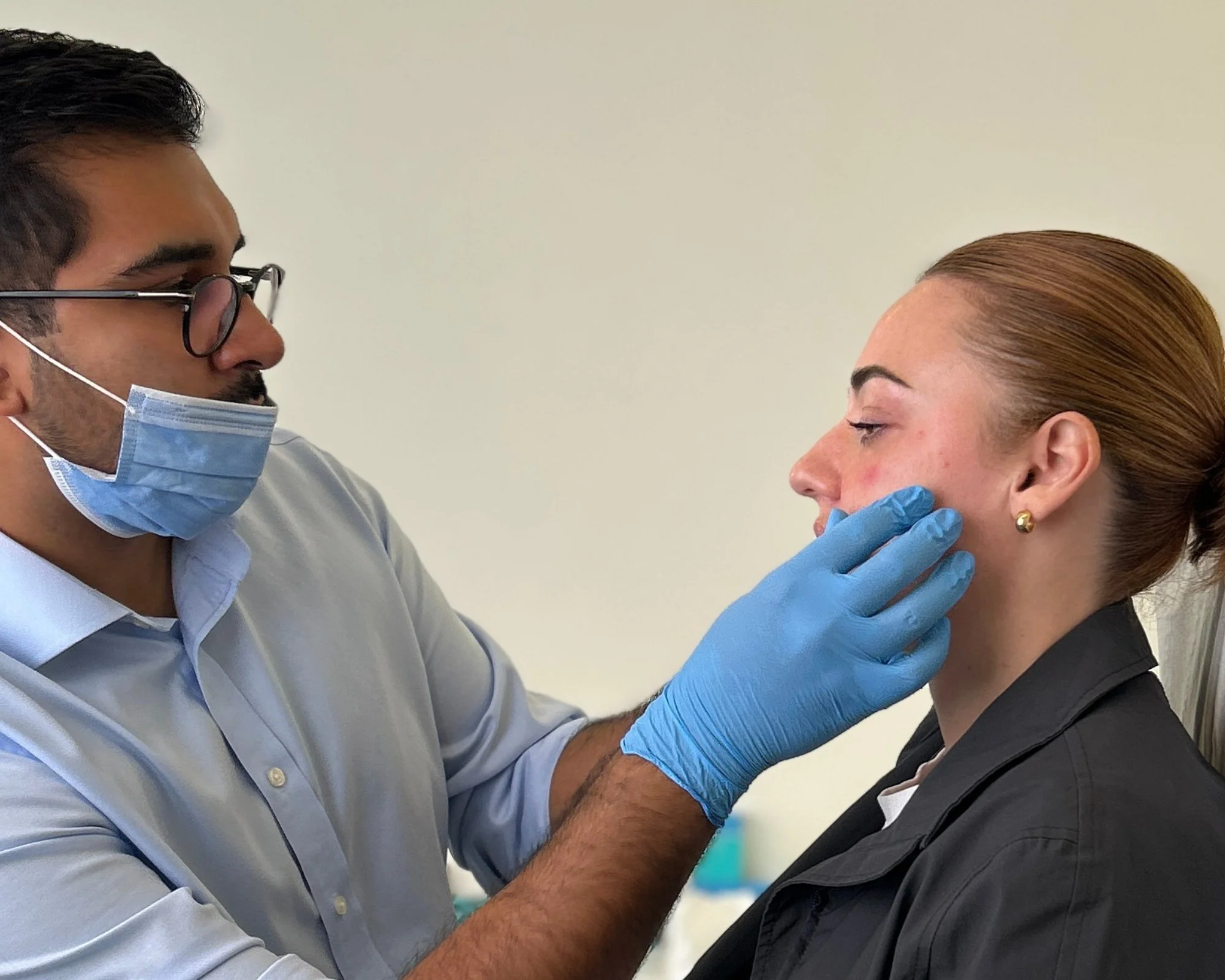
Cheek filler can create more defined, sculpted cheekbones and restore contour where the mid-face has flattened. Placed along the lateral cheek, over and around the cheekbone, it adds projection and structure, sharpening the angles of the face and creating the lifted, contoured look many patients ask for. It suits those who have never had strong cheekbone definition just as well as those noticing early volume loss, and because the focus is contour rather than fullness, the result is defined and lifted rather than puffy.
Anterior Cheek Filler
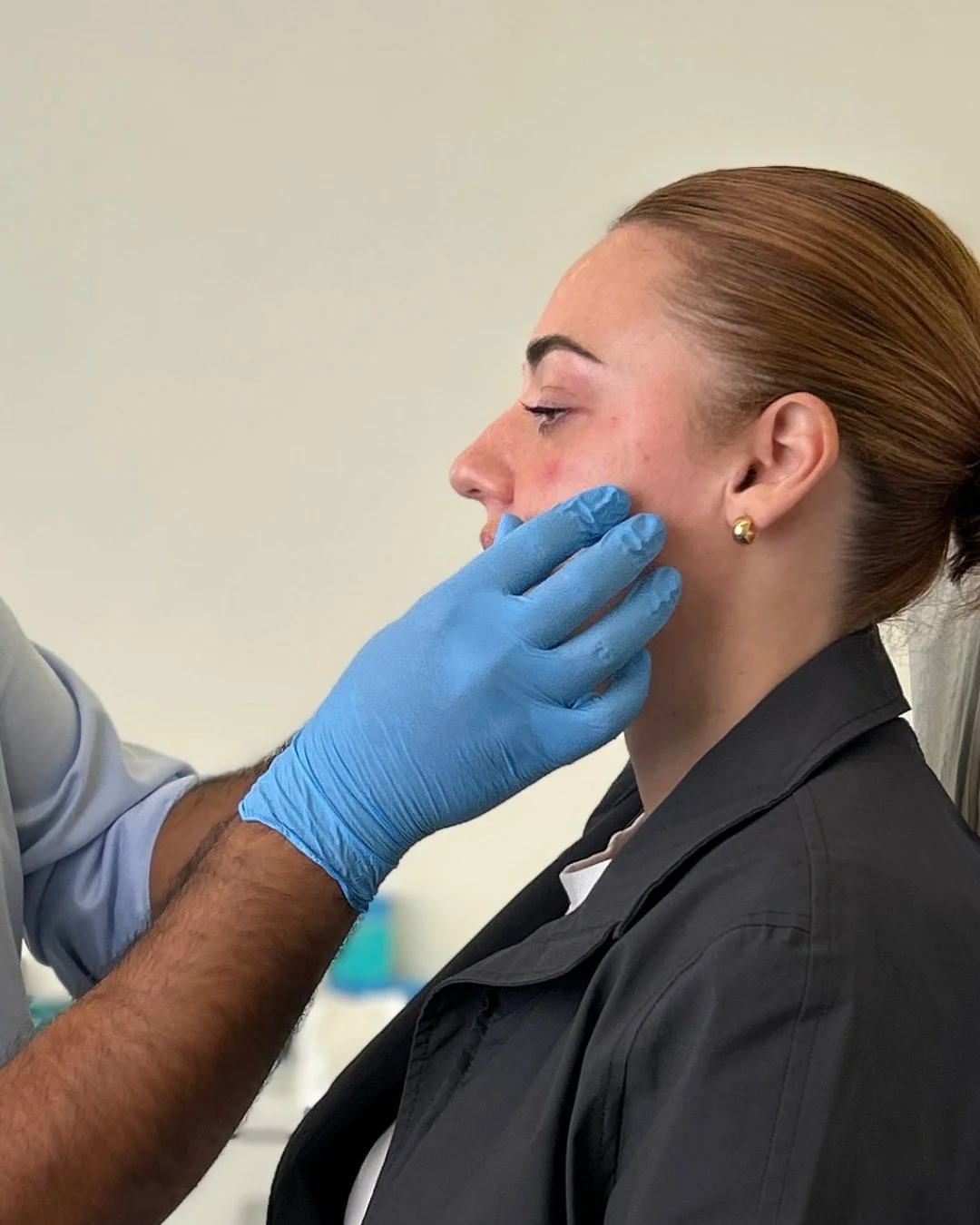
While lateral cheek filler builds contour and definition, anterior cheek filler restores volume to the front of the cheek, the area that supports the transition between the under-eye and the mid-face. It is often the right choice for patients troubled by under-eye hollowing or a tired, deflated look, and is frequently combined with tear trough filler for a smoother, more rested under-eye area. Dr Karwal will assess which parts of the cheek to treat at your consultation, and in some cases a combination of both gives the most balanced result.
Why Do Cheeks Lose Volume?
From our late twenties onwards, the mid-face gradually loses the scaffolding that gives cheeks their youthful fullness. The cheekbone itself slowly remodels and loses projection, the deep fat pads that sit over it shrink and drift downwards, and the skin produces less collagen and elastin. The result is a flatter mid-face and a gradual softening of the cheekbone contour that once defined the face. Cheek filler works by replacing this lost structural support at its source, restoring the projection and definition that time takes away.
Our Prices
-
£450
-
£850
-
£1200
Achieving the V-Shape Face
The V-shaped face pairs fuller upper cheeks with a narrower, more defined lower face, creating a lifted inverted-triangle silhouette that is particularly popular in Korean and Asian beauty aesthetics. Adding volume across the upper and mid cheek creates the wider part of the V and draws the eye upwards, which makes the lower face appear slimmer by comparison. Precise placement along the cheekbone can also create a subtle lifting effect.
Results and How Long They Last
You will see a difference immediately, though mild swelling can take a week or two to settle. The final result is usually apparent after two weeks once the filler has integrated. In the cheeks, HA filler typically lasts 12 to 24 months. How long your result lasts depends on the product used, the volume placed and your own metabolism. Rather than working to a fixed schedule, we recommend a top-up when you start to notice volume returning to where it was.
Cheek Filler for Men and Women
The technique is tailored to your anatomy and goals, and these differ between men and women. For women, filler is typically placed higher on the cheekbone to create soft, lifted curves and a gently heart-shaped face. For men, placement is lower and more lateral, building angular definition along the cheekbone rather than fullness, for a stronger, more sculpted look. Dr Karwal assesses your facial structure as a whole before recommending placement and volume.
Why Choose Karwal Aesthetics?
Karwal Aesthetics is a doctor-led clinic in Mayfair. Dr Karwal treats the face holistically, focusing on the cheekbone contour and using conservative volumes rather than overfilling the inner cheek, which is what causes the "pillow face" look. The aim is always natural-looking results that enhance your own bone structure, not artificially sharp cheekbones that announce themselves. Our priority is a refreshed, balanced result that suits your face, and every treatment begins with an in-person consultation so the plan is built around your anatomy and goals.
FAQs
-
Most healthy adults are suitable. Cheek filler is not offered during pregnancy or breastfeeding, and certain medical conditions or medications may mean treatment is not appropriate. Dr Karwal reviews your medical history at your consultation before any treatment goes ahead.
-
Most patients start with 1 to 2ml, though the right amount depends on your anatomy, the degree of volume loss and the result you want. Dr Karwal will recommend the right volume at your consultation.
-
For the first 24 hours, avoid touching or pressing on your cheeks, intense exercise, alcohol, saunas and extreme heat. Avoid makeup for at least twelve hours, be gentle when washing your face for the first 48 hours, and it's advised to sleep on your back for at least a week to avoid compressing the treated area. For two weeks, avoid facials, facial massage and dental work where possible. Full guidance is on our aftercare page.
-
Most patients feel mild pressure or a slight pinch. A numbing cream is applied before treatment and the filler itself contains a local anaesthetic, so discomfort is minimal and short-lived. Downtime is minimal too. Most people return to normal activities straight away, with some mild swelling, redness or bruising possible for a few days.
-
Immediately. Mild swelling can exaggerate the result at first, and the final outcome is typically visible after two weeks once the filler has integrated and any swelling has settled.
-
Temporary swelling, redness, bruising or tenderness at the injection sites is common and settles within a few days. Serious complications are rare, and choosing an experienced medical practitioner significantly reduces these risks.
-
This treatment typically lasts for approximately 12–24 months before requiring a top-up. The longevity of results varies based on several factors.
-
Metabolism: People with faster metabolisms break down fillers more quickly.
Treatment area: Areas with more muscle movement break down filler faster. The forehead is highly mobile, as the muscle beneath it works every time you raise your brows, which is why combining filler with anti-wrinkle injections can help results last longer.
Type of filler: Dense fillers tend to last longer than soft fillers. The forehead requires a soft filler.
Lifestyle: Sun exposure, smoking, saunas and intense physical activity can reduce longevity.
Injection technique: The technique required can affect how long results last.
-
Not with the right practitioner. The "pillow face" look comes from overfilling the front of the cheek and ignoring facial proportions. Dr Karwal focuses on the cheekbone contour, uses conservative volumes and treats the face as a whole, so results look defined and natural rather than obviously filled.
-
The injections themselves take around 20 to 40 minutes. Allow 45 to 60 minutes for the full appointment, including consultation, preparation and aftercare guidance.
-
Our clinic is in Mayfair, central London, at 2nd Floor, 15 Dover Street, W1S 4LP, a short walk from Green Park station. Please note the clinic is on the second floor with stair access only. All treatments begin with a consultation with Dr Karwal, which you can book online.