
Ultrasound Guided Filler Dissolving
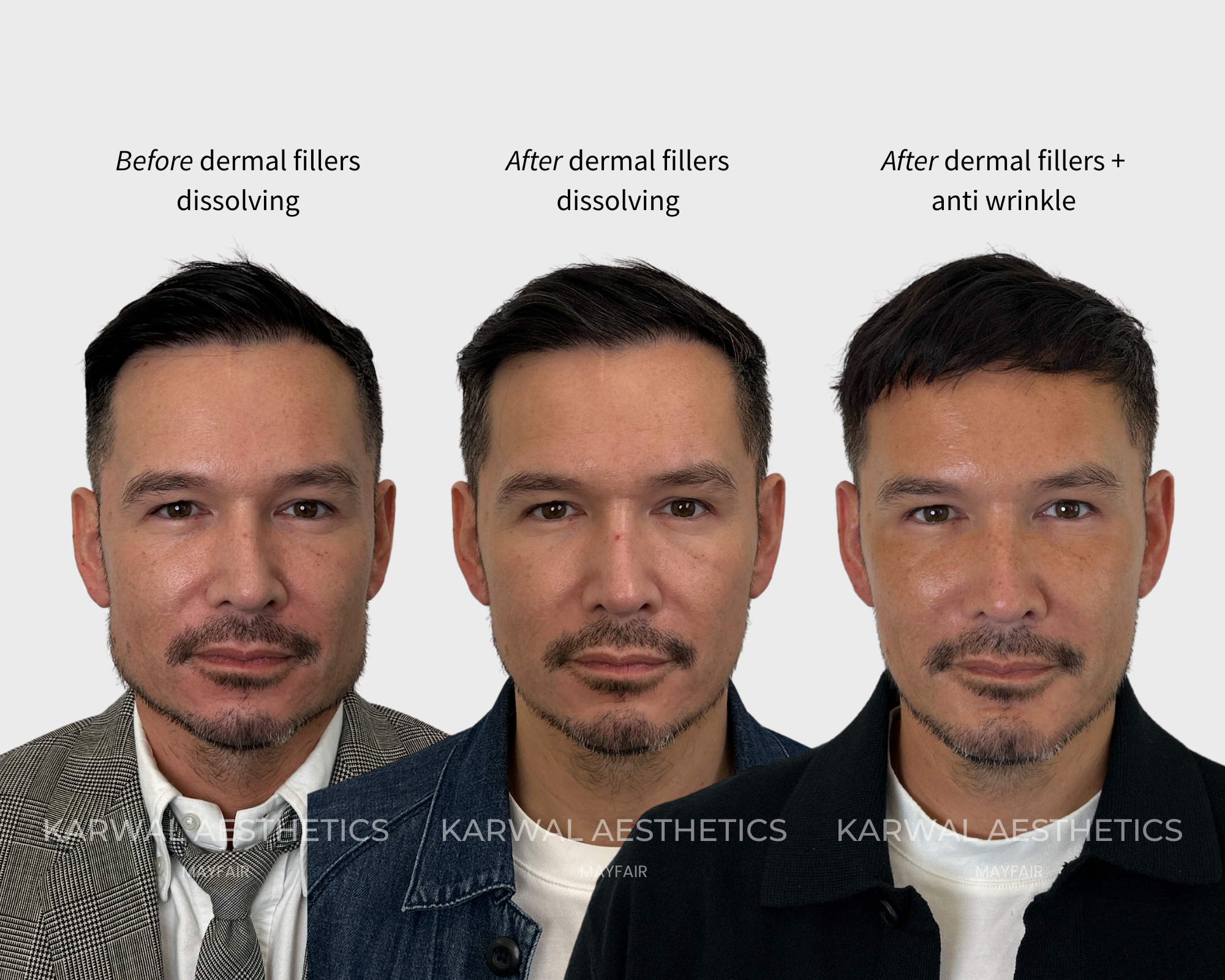
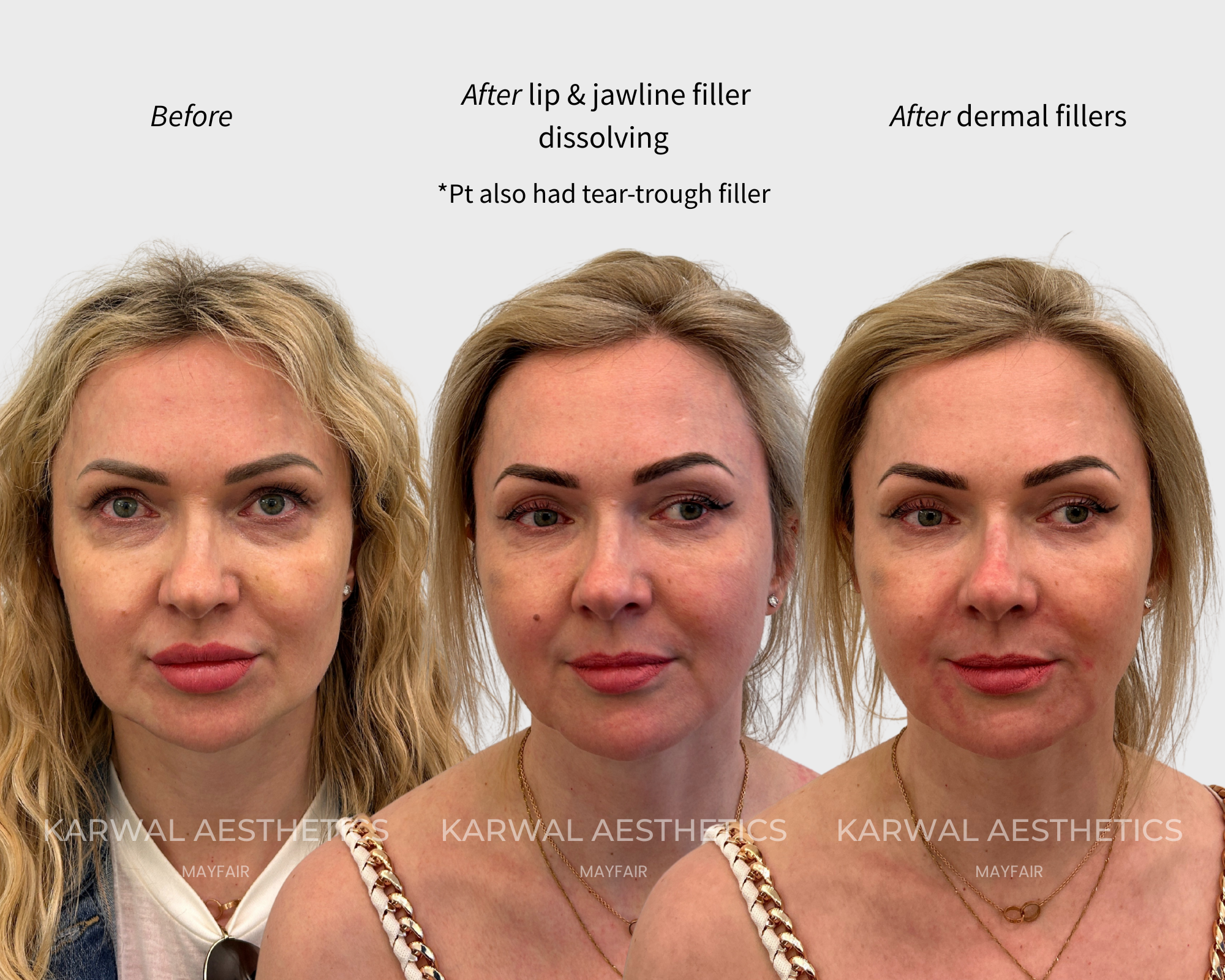
Perhaps your lip filler has migrated and blurred your lip border. Perhaps you can feel a lump that never settled, your tear trough filler has left you looking puffy, or you simply look in the mirror and no longer recognise the result you were promised. Whatever has brought you here, the good news is that hyaluronic acid filler is reversible, and it can be removed safely and precisely.
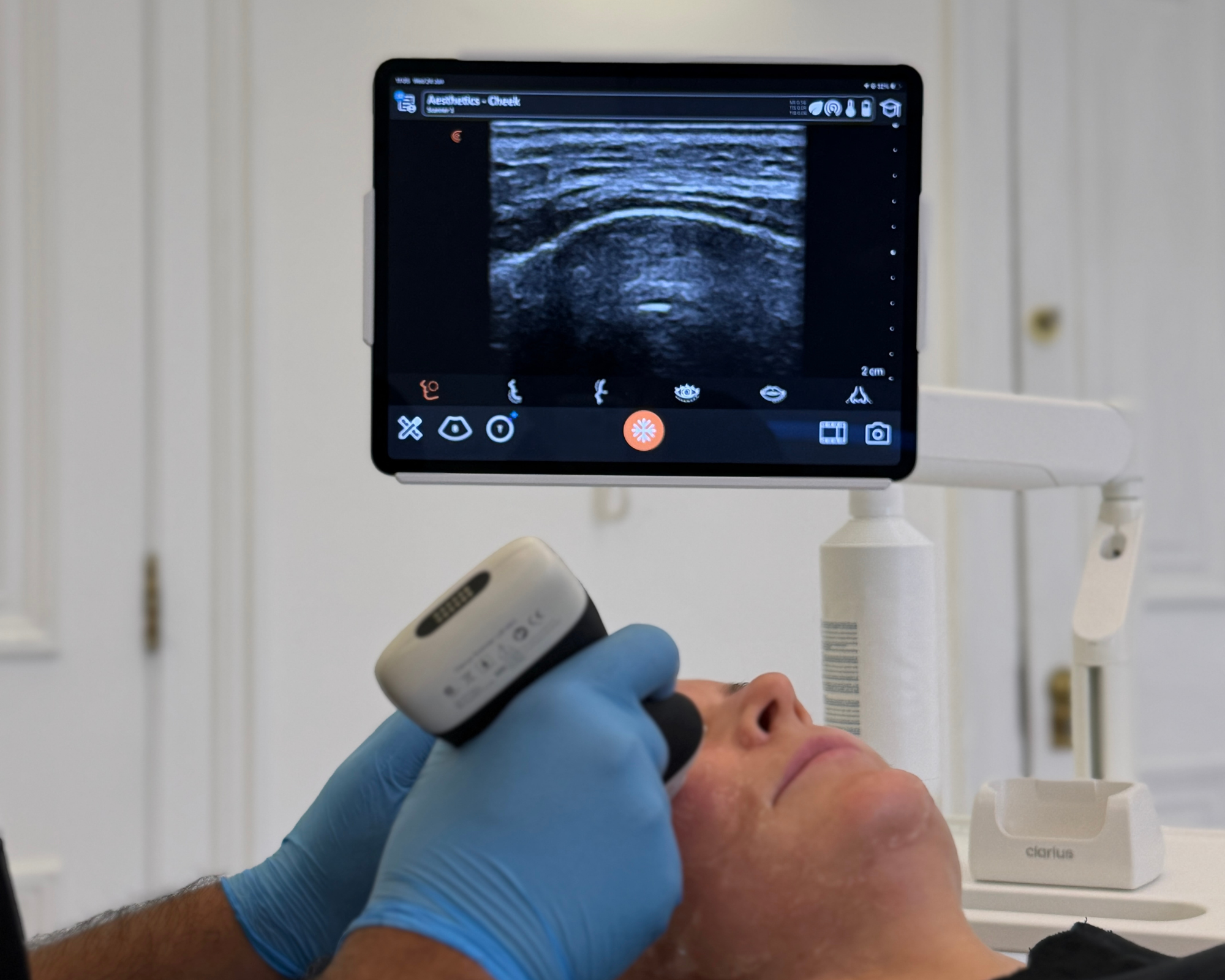
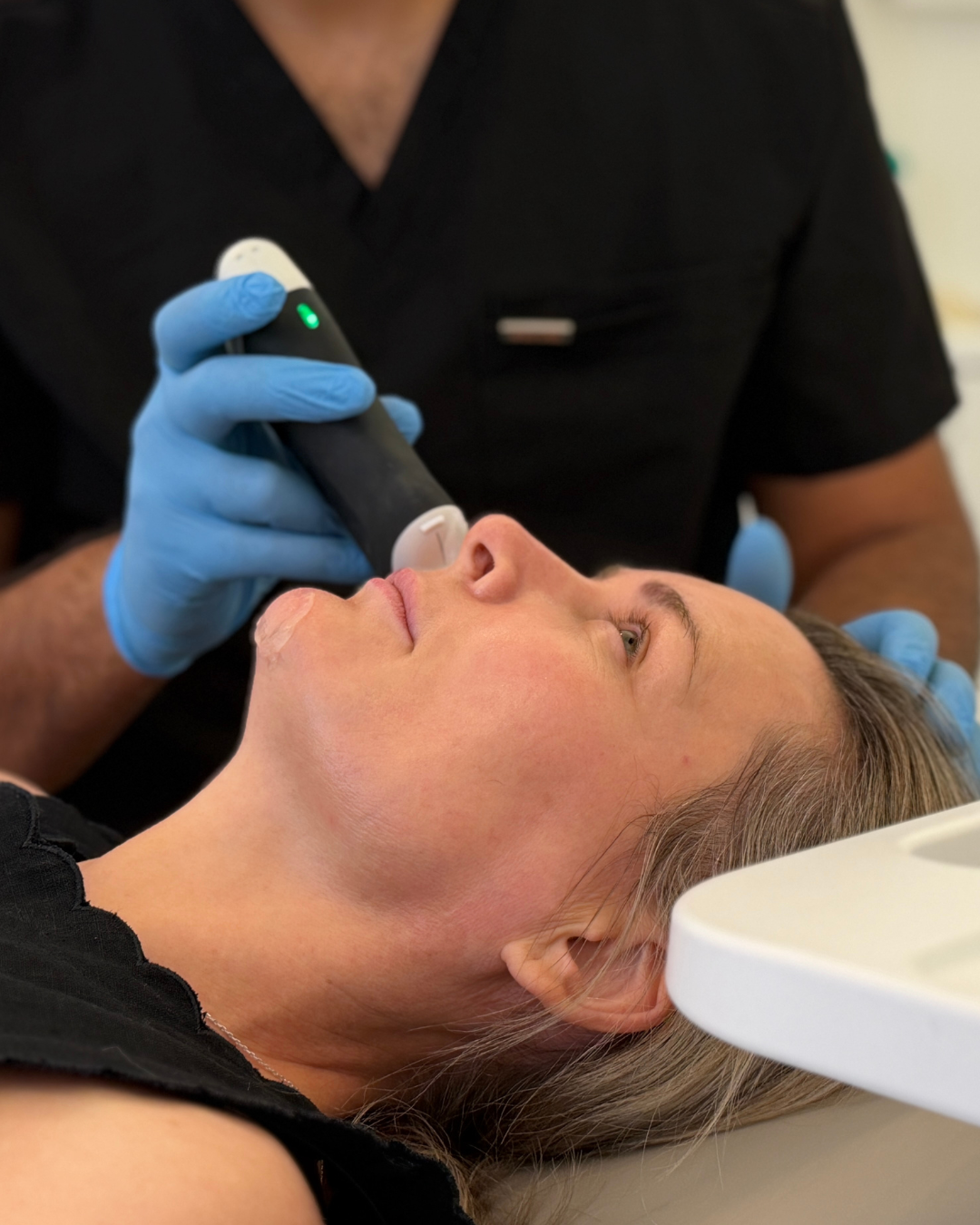
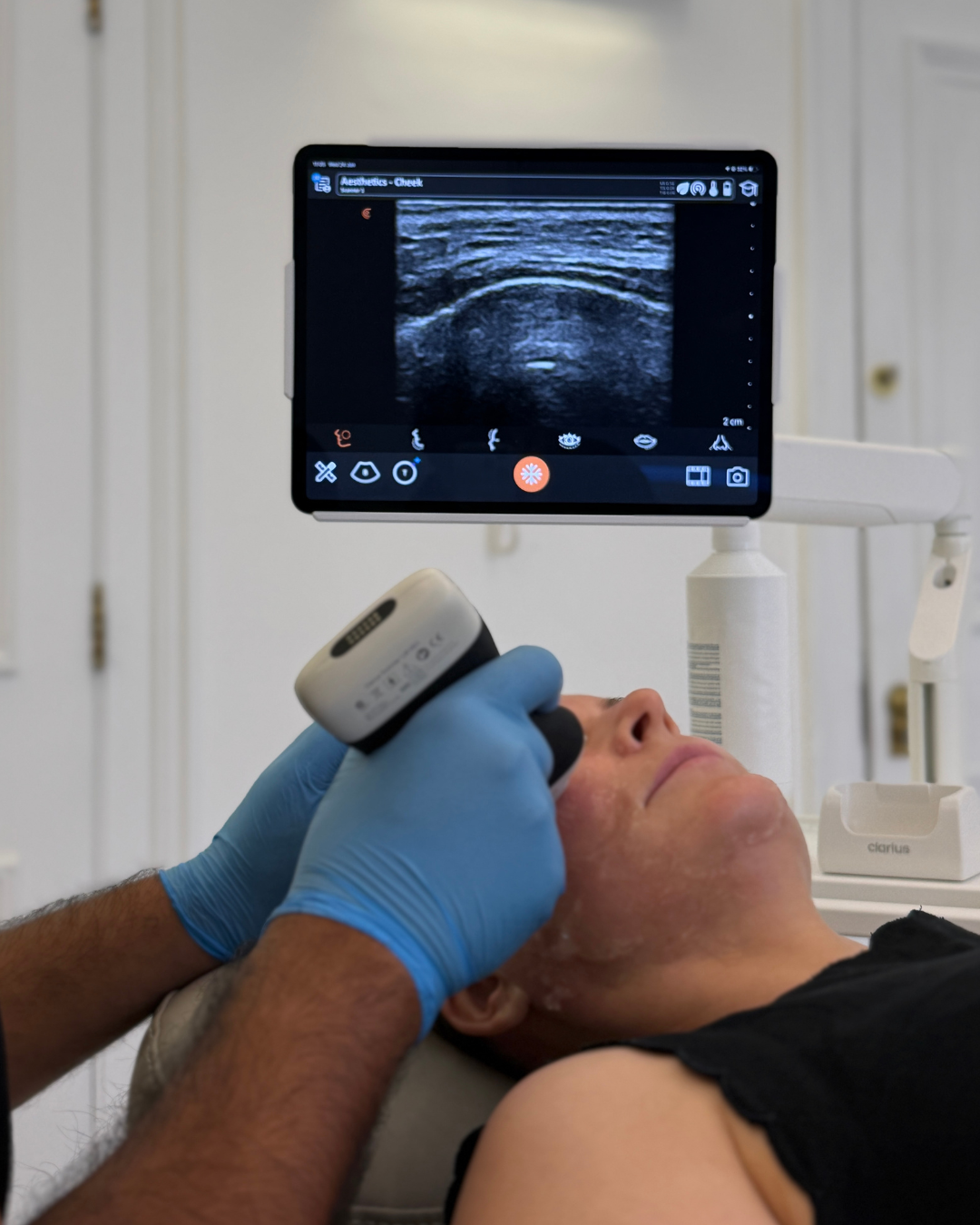
At our Mayfair clinic, Dr Karwal uses real time ultrasound imaging to see exactly where your filler sits beneath the skin before dissolving it. Rather than injecting hyaluronidase blindly and hoping for the best, ultrasound guidance means the enzyme is placed only where the filler actually is, protecting the surrounding tissue and giving you a predictable result. Many of the patients we treat are correcting work carried out elsewhere, and a thorough assessment is always the first step.
If you are unsure whether dissolving is right for you, an ultrasound examination on its own can show you exactly what is happening beneath the skin before you decide anything.
At Karwal Aesthetics, we exclusively use hyaluronic acid dermal fillers for all our cosmetic enhancement procedures.
A key benefit of these fillers is their complete reversibility, providing our clients with peace of mind and enhanced safety.
Hyaluronic acid (HA) fillers can be dissolved when necessary using hyaluronidase, a naturally occurring enzyme that specifically targets and breaks down the HA molecules in the filler. Hyaluronidase works by cleaving the bonds within the HA structure, allowing the body to naturally metabolise and eliminate the dissolved material. This reversibility represents a significant safety advantage of choosing hyaluronic acid-based fillers for cosmetic procedures.
Ultrasound technology plays a crucial role in our filler dissolution process at Karwal Aesthetics. The high-frequency ultrasound scanner allows us to:
Visualise the exact location and volume of hyaluronic acid fillers beneath the skin's surface
Distinguish between filler product and surrounding tissues, including facial arteries and veins
Ensure precise placement of the hyaluronidase enzyme directly into the target area
Monitor the dissolution process in real-time, confirming complete breakdown of the filler material
Minimise the amount of hyaluronidase required, reducing potential side effects
This ultrasound-guided approach represents the most advanced and safest method for filler dissolution currently available. By combining ultrasound visualisation with cannula delivery, we can dissolve fillers with unprecedented accuracy whilst minimising trauma to surrounding tissues. This technique is particularly valuable when addressing complications such as vascular occlusion, where rapid and precise dissolution is essential.
Our Prices
-
one area: £600
two+ areas: £800
-
Examination only - £400
-
£400
Why filler dissolving should be doctor led
Hyaluronidase is a prescription only medicine, not a cosmetic product. It can only legally be prescribed by a qualified prescriber, and the decision to use it, how much to use and where to place it are medical judgements. If the practitioner who injected your filler is not medically qualified, they cannot lawfully obtain or prescribe hyaluronidase themselves, which is why so many patients seeking correction come to a doctor for the first time at this stage.
There is also a small but genuine risk of allergic reaction to hyaluronidase, including, very rarely, anaphylaxis. We believe you deserve to know this rather than discover it in the consent form. What matters is not that the risk exists but that it is anticipated and can be managed. Dr Karwal is a GMC registered doctor with a background in emergency medicine, and the clinic is equipped to recognise and respond to an adverse reaction immediately. Your medical history is reviewed at consultation, and the ultrasound guided approach means the smallest effective dose of hyaluronidase is used, placed only where the filler actually sits.
Dissolving is, in many ways, a more delicate procedure than the original filler treatment. Choosing a doctor led clinic for it is not an upgrade. It is the appropriate standard of care.

FAQs
-
Every dissolving treatment begins with a consultation. Dr Karwal takes a full medical history, discusses what was injected, when and by whom if known, and listens to what is concerning you about the result. If you have previous treatment records or product details, bring them, although we can proceed without them.
Next comes the ultrasound examination. Dr Karwal scans the area in real time to map exactly where the filler sits, how deep it is, how much is present and whether it has migrated. You can see the images yourself on screen as he explains what he finds. For some patients this scan alone is valuable, and if you would rather take time to think before dissolving, you are welcome to stop here.
If you decide to go ahead, we complete the consent process and Dr Karwal administers hyaluronidase directly into the mapped filler under ultrasound guidance. Because he can see precisely where the product is, only the smallest effective dose is needed. The injections themselves take a matter of minutes, and some softening of the filler is often noticeable almost immediately, with the full effect developing over the following 24 to 48 hours.
Around two weeks later you return for a complimentary review appointment. Dr Karwal rescans the area to confirm the filler has fully dissolved, checks how the tissue has settled and, if you are planning to refill, discusses the next step. If any stubborn filler remains, a further session can be arranged at this point.
-
We dissolve unwanted hyaluronic acid filler in all commonly treated areas, including the lips, tear troughs, cheeks, chin, jawline, nose and nasolabial folds. Lip filler dissolving is the treatment we are asked about most often, usually because of migration above the lip border or a lumpy, overfilled appearance.
Two areas deserve particular mention. The tear trough and the nose are among the most delicate places to inject filler, and they are equally delicate to correct. In the tear trough, filler often sits close to the orbital rim in thin tissue where swelling and puffiness are difficult to assess by eye alone. In the nose, filler lies near important blood vessels, and precision matters enormously. In both areas, ultrasound guidance allows Dr Karwal to see exactly where the filler and the surrounding structures are before any hyaluronidase is placed, which is why patients seeking correction in these areas so often travel to us specifically.
-
This is one of the most common worries we hear, and it is a fair question. Hyaluronidase does temporarily break down some of your natural hyaluronic acid in the treated area as well as the filler. The important difference is what happens next. Your body produces hyaluronic acid continuously, so your own supply replenishes within days. Filler, on the other hand, is cross linked so that it resists this natural turnover, which is why it lasts for months or years and why it does not come back once dissolved.
In practice, this means dissolving returns the area to its natural baseline rather than leaving it worse off. At our Mayfair clinic, Dr Karwal uses ultrasound guidance to locate the filler precisely, so hyaluronidase is placed only where it is needed and the amount used is kept to a minimum.
Want to understand this in more depth, including what the research says about skin recovery after dissolving? Read our full guide: Does Dissolving Filler Affect Your Natural Hyaluronic Acid?
-
The filler dissolving procedure takes approximately 30 minutes and you can carry on with the rest of your day as normal. Results will be apparent immediately after your filler dissolving treatment.
-
Immediate Recovery (First 24-48 Hours)
Swelling: Temporary swelling is common and usually peaks within the first 24 hours.
Redness: The treatment area may appear red immediately after the procedure.
Tenderness: The injection sites might feel tender to touch.
Bruising: Some patients experience bruising that can last 3-10 days.
Lumps or bumps: The area might feel uneven temporarily as the hyaluronidase works.
Short-Term Recovery (3-7 Days)
Most visible side effects resolve within a week after treatment:
Decreased swelling: Most swelling subsides within 72 hours.
Resolved redness: Any redness typically fades within 2-3 days.
Improved comfort: Tenderness generally improves within a few days.
Tissue remodelling: The treated area continues to adjust as the filler breaks down.
Complete Recovery (1-2 Weeks)
By the 1-2 week mark, most patients experience:
Full resolution: All side effects have typically resolved.
Final results: The complete dissolution effect is visible.
Return to baseline: The area returns to its pre-filler appearance.
-
Following proper aftercare instructions after having dermal filler dissolved is essential for optimal healing and results. Here's what you need to know:
Immediately After Treatment (First 24 Hours)
Avoid touching or massaging the treated area: This helps prevent infection and allows the dissolving agent to work effectively.
Avoid strenuous exercise: Skip intense workouts for at least 24-48 hours to prevent increased blood flow to the area.
Stay hydrated: Drink plenty of water to help your body process and flush out the dissolved filler.
First Few Days (24-48 Hours)
Skip makeup if possible: Avoid applying makeup to the treated area for at least 24 hours to reduce infection risk.
Avoid alcohol: Refrain from drinking alcohol for 24-48 hours as it can increase swelling and bruising.
Take paracetamol if needed: If you experience discomfort, take paracetamol rather than aspirin or ibuprofen, which can increase bruising.
First Week
Monitor for side effects: Some swelling, redness, tenderness, and bruising are normal. Contact your practitioner if you experience severe pain, excessive swelling, or signs of infection.
Avoid dental work: Postpone dental treatments for at least a week if the treated area is near your mouth.
Be patient with results: It may take several days to see the full dissolving effect. The enzyme (hyaluronidase) works gradually.
Avoid facial treatments: Skip facials, chemical peels, microdermabrasion, and laser treatments for at least 2 weeks.
When to Contact Us
Seek medical attention if you experience:
Severe or worsening pain
Excessive swelling that doesn't improve
Signs of infection (warmth, pus, fever)
Unusual discolouration or skin changes
Vision changes or severe headache
Any other concerning symptoms
-
The number of sessions required to dissolve dermal fillers depends on several factors:
Amount of filler present: Larger volumes of filler may require multiple sessions.
Type of filler: Some fillers dissolve more readily than others.
Location of filler: Areas with denser filler or in certain anatomical regions may need more than one treatment.
Individual response: Each person's body responds differently to hyaluronidase.
Most patients require only 1-2 sessions, but some cases may need up to 3 sessions for complete dissolution. Sessions are typically spaced 2-4 weeks apart to allow for assessment of results and healing between treatments.
-
Lumps/bumps or areas of asymmetry
Migration of filler sometimes occurs in areas such as lips when the area has been overfilled or injected erroneously.
Disliking the result
Vascular occlusion is an extremely rare case when the filler has blocked a blood vessel.
-
Results are typically visible within 24-48 hours.
-
When dermal fillers are dissolved, either naturally over time or through medical intervention, they break down and are processed by the body. Here's what happens:
Natural Dissolution Process
Hyaluronic acid fillers: These are the most common type and naturally break down over time (typically 6-18 months). The hyaluronic acid is metabolised by enzymes in the body called hyaluronidases.
Absorption by the body: Once broken down, the filler components are absorbed into the bloodstream and processed through the body's natural metabolic pathways.
Elimination: The degraded material is eventually eliminated through normal bodily processes, including through the kidneys and other excretory systems.
Medical Dissolution (Hyaluronidase Injection)
Enzyme injection: If immediate dissolution is needed, hyaluronidase can be injected to rapidly break down hyaluronic acid fillers.
Quick breakdown: This enzyme accelerates the natural process, breaking down the filler within 24-48 hours.
Same elimination route: The dissolved material follows the same metabolic pathway as natural dissolution.
The body treats dissolved filler material as it would any other naturally occurring substance, processing and eliminating it safely without leaving permanent traces.
-
Not all dermal fillers are dissolvable. At Karwal Aesthetics, we exclusively use hyaluronic acid fillers, which are completely reversible and can be safely dissolved if needed. This provides an important safety measure and peace of mind for our clients.
If you're considering treatment elsewhere, we strongly recommend verifying that your practitioner uses only hyaluronic acid fillers and avoids other types such as permanent or semi-permanent fillers. These alternative fillers cannot be dissolved and may carry additional risks.
Why Hyaluronic Acid Fillers?
Safety: Hyaluronic acid is a naturally occurring substance in the body, making it biocompatible and well-tolerated.
Reversibility: Unlike permanent fillers, hyaluronic acid can be dissolved using hyaluronidase if you're unhappy with the results or experience complications.
Natural results: These fillers integrate smoothly with your tissue, providing natural-looking enhancement.
Temporary duration: Results typically last 6-18 months, allowing you to adjust your aesthetic goals over time.
Questions to Ask Your Practitioner
Before any filler treatment, always confirm:
What type of filler is being used?
Is it hyaluronic acid-based?
Can it be dissolved if necessary?
What is the practitioner's experience and training?
Your safety and satisfaction are paramount. At Karwal Aesthetics, we're committed to transparency and using only the highest quality, reversible products for your treatments.
-
We offer dermal filler dissolving at our London , Mayfair clinic.
-
Ultrasound-guided dissolution of dermal fillers has become an increasingly preferred method in aesthetic medicine for several important reasons:
Enhanced Safety and Precision
Accurate visualisation: Ultrasound allows practitioners to see exactly where the filler is located beneath the skin, including depth and proximity to blood vessels and other structures.
Targeted treatment: The dissolving enzyme (hyaluronidase) can be injected precisely into the filler deposit, minimising unnecessary treatment of surrounding tissues.
Reduced risk of vascular complications: By identifying blood vessels in real-time, practitioners can avoid accidental intravascular injection, which could lead to serious complications.
Improved Treatment Outcomes
Complete filler removal: Ultrasound guidance ensures that all filler deposits are identified and treated, rather than relying on surface palpation alone.
Fewer treatment sessions: More accurate initial treatment often means fewer follow-up sessions are needed to achieve complete dissolution.
Better management of complications: In cases of filler migration or vascular occlusion, ultrasound helps identify the exact location and extent of the problem.
Specific Clinical Situations
Deep filler placement: When fillers have been placed in deeper tissue planes, they may not be easily palpable, making ultrasound guidance essential.
Filler migration: Ultrasound can locate filler that has moved from its original injection site.
Emergency situations: In cases of vascular compromise, ultrasound guidance enables rapid and accurate treatment to prevent tissue damage.
Unclear filler location: When patients are unsure of previous treatment details or multiple filler types have been used, ultrasound provides clarity.
Patient Confidence and Satisfaction
Evidence-based approach: Patients can see the imaging evidence of filler location before and after treatment.
Reduced anxiety: The increased precision and safety measures provide reassurance to patients concerned about the dissolution process.
Minimised swelling and bruising: More targeted injection reduces unnecessary trauma to surrounding tissues.
Whilst ultrasound-guided filler dissolution may incur additional costs compared to blind injection techniques, the enhanced safety profile and improved outcomes make it the gold standard for many practitioners and an increasingly expected standard of care in aesthetic medicine.
-
Choosing ultrasound-guided dissolving before facelift surgery offers several compelling advantages that contribute to superior surgical outcomes and patient safety:
Enhanced Surgical Precision
Ultrasound guidance provides real-time visualisation of filler placement, allowing practitioners to identify and dissolve all filler deposits accurately. This precision ensures that the surgeon works with your natural facial anatomy rather than altered tissue, leading to more predictable and aesthetically pleasing results.
Comprehensive Filler Removal
Unlike traditional dissolving methods that rely on palpation or guesswork, ultrasound technology can detect fillers in deeper tissue planes that would otherwise be missed. This thoroughness is crucial because even small amounts of residual filler can affect surgical outcomes or cause complications.
Real-Time Filler Mapping and Dissolution Monitoring
By visualising the filler on ultrasound, we can precisely map its location and distribution throughout the facial tissues. Once the dissolving agent is administered, we can observe the filler breaking down in real time on the ultrasound screen, ensuring complete and effective removal.
Optimised Treatment Planning
With fillers removed, your surgeon can accurately assess your true facial structure, skin quality, and degree of ageing. This authentic baseline allows for better surgical planning and more tailored techniques specific to your needs.
Cost-Effectiveness
Although it adds an initial step, ultrasound-guided dissolving can save money in the long run by reducing the likelihood of revision procedures or treatments for complications caused by residual filler.
For these reasons, ultrasound-guided dissolving has become the gold standard amongst experienced facial plastic surgeons who prioritise optimal outcomes and patient safety.
-
Hyaluronidase starts working almost immediately and most of its effect is complete within 24 to 48 hours, although swelling can take a little longer to settle. We invite you back for a complimentary review around two weeks after your treatment, once the true result is visible. If some filler remains, particularly with larger volumes or firmer, heavily cross linked products, a further dissolving session can be carried out at this point. Most patients need one to two sessions in total.
If your goal is to have the area refilled, we recommend waiting at least two to four weeks after your final dissolving session before new filler is placed. This allows any residual swelling to resolve fully and ensures the hyaluronidase is no longer active, so your new filler is not broken down prematurely. It also gives Dr Karwal a clear, settled baseline to assess, which is essential for planning a natural result. At your review appointment we can confirm whether the area is ready and plan your next treatment.