CO2 Laser Resurfacing in London: The Complete Guide
If you have spent years trying to improve acne scarring, deep lines, sun damage or uneven skin texture with creams and gentler treatments, you will know how frustrating it is when nothing seems to make a visible difference. Skincare can maintain and protect, and lighter treatments can refresh, but some concerns sit too deep in the skin for surface-level approaches to reach.
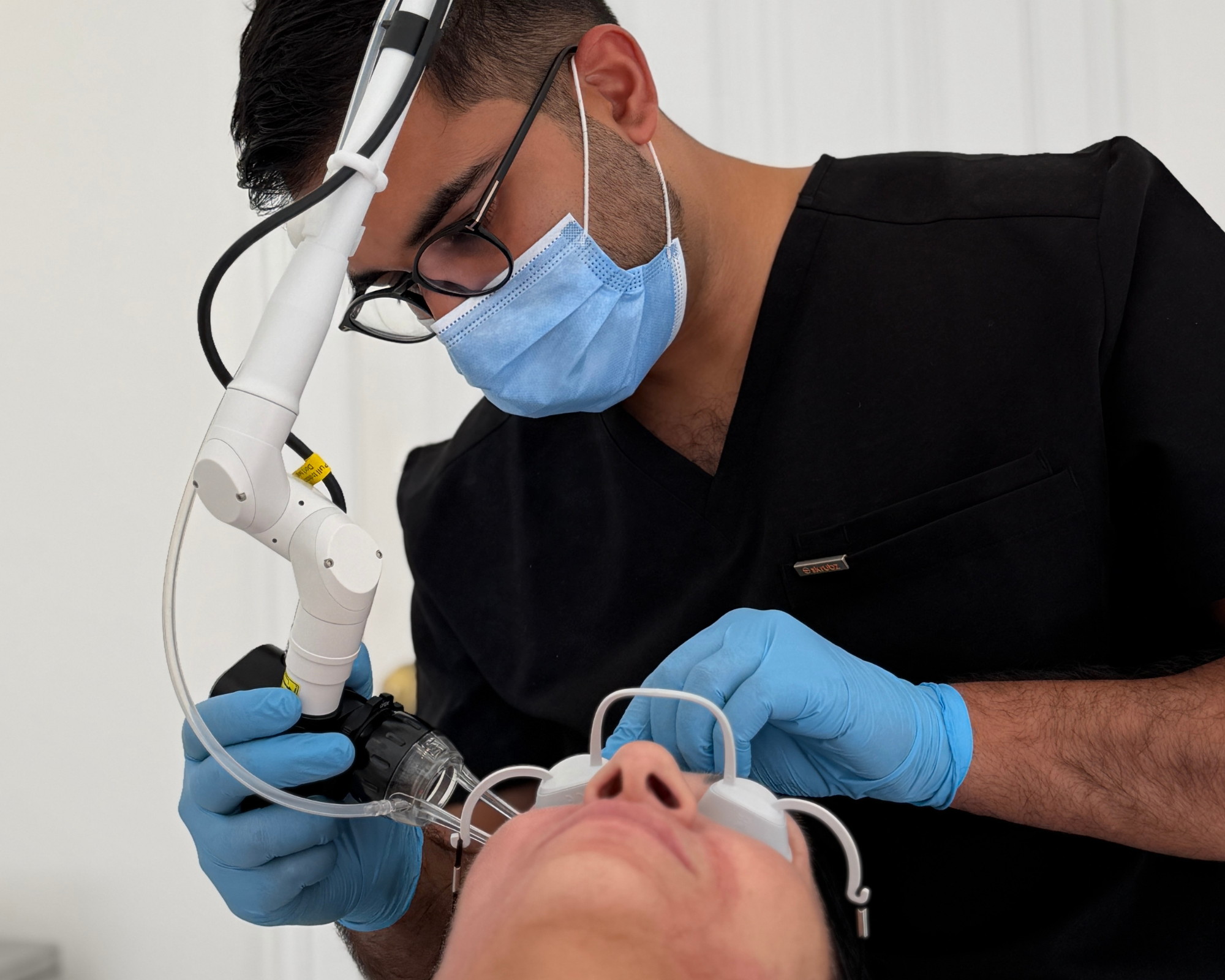
This is where CO2 laser resurfacing comes in. It is widely regarded as the gold standard for skin resurfacing, and it remains one of the most effective non-surgical treatments available for scarring, wrinkles and sun-damaged skin. At Karwal Aesthetics in Mayfair, CO2 laser treatment is performed by Dr Karwal, a GMC-registered doctor, using the Lumenis AcuPulse, one of the most established and versatile CO2 platforms in aesthetic medicine.
In this guide we explain exactly what CO2 laser resurfacing does, why the technology behind it matters, what treatment and recovery actually involve, and answer the questions patients ask us most often, including whether you can have CO2 laser in the summer.
What is CO2 laser resurfacing?
CO2 laser resurfacing uses a carbon dioxide laser to deliver precisely controlled energy into the skin. The laser removes damaged skin cells and creates targeted micro-injuries in the deeper layers, which triggers the skin's natural healing response. As the skin repairs itself, it produces fresh collagen and elastin, the structural proteins responsible for firmness, smoothness and elasticity.
The result is skin that is genuinely renewed rather than temporarily improved. Old, damaged tissue is replaced with healthier skin, scars are remodelled from within, and texture and tone improve progressively over the weeks and months that follow as collagen continues to rebuild.
Modern CO2 lasers are fractional, which means the laser energy is delivered in a grid of microscopic columns rather than treating the entire surface at once. The untreated skin between these columns acts as a reservoir of healthy cells, which dramatically speeds up healing and reduces downtime compared with the fully ablative lasers of the past. Fractional delivery is what makes CO2 resurfacing practical for people with busy lives, without compromising the depth of results the technology is known for.
The laser we use: the Lumenis AcuPulse
Not all CO2 lasers are the same, and the platform your practitioner uses has a direct bearing on both your results and your recovery. At Karwal Aesthetics we use the Lumenis AcuPulse, a fractional CO2 laser from Lumenis, the company that pioneered CO2 laser technology in medicine.
The AcuPulse matters for a few reasons. It offers a wide range of treatment modes, from superficial resurfacing with minimal downtime through to deep fractional treatment for significant scarring and skin laxity. This means your treatment can be tailored precisely to your skin, your concerns and the amount of recovery time you can accommodate, rather than a one-size-fits-all setting.
Its SuperPulse technology delivers high peak energy in very short pulses, which allows the laser to work at depth while minimising unwanted heat spread into surrounding tissue. In practical terms, that means effective treatment with more comfortable recovery and a lower risk of side effects when used by an experienced practitioner.
The AcuPulse is a Class 4 medical laser and is used in hospitals and specialist dermatology clinics worldwide. At Karwal Aesthetics it is operated exclusively by Dr Karwal, whose background in emergency medicine underpins a meticulous, safety-first approach to every treatment.
What can CO2 laser treat?
CO2 laser resurfacing is remarkably versatile, which is one of the reasons it has remained the benchmark resurfacing treatment for decades. It is particularly effective for acne scarring, including rolling, boxcar and ice pick scars that have resisted other treatments. It softens fine lines and deeper wrinkles, especially around the eyes and mouth where skin is thin and creases form early. It improves sun damage, pigmentation irregularities and rough, weathered texture, and it tightens mildly lax skin by stimulating collagen in the deeper layers.
Patients also come to us for CO2 treatment of surgical scars, stretch marks, enlarged pores and overall dullness. Because the AcuPulse allows Dr Karwal to adjust depth, density and energy across different areas of the face, a single session can address several concerns at once, treating deeper scarring on the cheeks more intensively while resurfacing the rest of the face more lightly.
If you are unsure whether your concern is suitable for CO2 laser, this is exactly what your consultation is for. Dr Karwal assesses your skin in person and will tell you honestly whether CO2 laser is the right treatment, whether an alternative would serve you better, or whether a combination approach would achieve more.
Ablative depth, tailored to you
One of the most misunderstood aspects of CO2 laser is the idea that it is a single treatment with a single recovery. In reality, CO2 resurfacing sits on a spectrum.
A lighter fractional treatment resurfaces more superficially, freshens texture and tone, and typically involves a few days of redness and flaking. A deeper fractional treatment targets established scarring and more significant sun damage, with a recovery of roughly a week to ten days. The most intensive settings, reserved for the right candidates, deliver the most dramatic remodelling with a correspondingly longer healing period.
At your consultation, Dr Karwal will discuss what you want to achieve and how much downtime you can realistically take, then plan your treatment depth accordingly. Some patients prefer one deeper session, while others choose a course of lighter treatments spaced several weeks apart. Both routes are valid, and the right choice depends on your skin, your goals and your diary.
What happens at your appointment
Every CO2 laser journey at Karwal Aesthetics begins with a consultation with Dr Karwal. This is a medical assessment, not a sales conversation. Dr Karwal examines your skin, takes a full medical history, discusses your goals and explains what CO2 laser can and cannot achieve for you. The consultation fee is £100, which is redeemable against treatment on the day.
On the day of treatment, your skin is cleansed and a strong topical anaesthetic is applied and left to take effect, usually for around 45 minutes to an hour. Protective eyewear is worn throughout, in line with our laser safety protocols. The treatment itself typically takes between 20 and 45 minutes depending on the area and depth being treated. Most patients describe the sensation as heat with a prickling quality, uncomfortable in places but very manageable with the anaesthetic in place.
Immediately afterwards your skin will feel hot, similar to strong sunburn, and will look red and slightly swollen. A soothing balm is applied, and you leave with detailed written aftercare instructions and direct contact details so you can reach the clinic with any questions during your recovery.
Recovery: what to expect day by day
Recovery is the part of CO2 laser treatment patients most want to understand before committing, and rightly so. Here is an honest picture of a typical recovery from a medium-depth fractional treatment. Your own experience will vary with the depth of your treatment, and Dr Karwal will give you a personalised timeline at your consultation.
In the first 48 hours your skin will be red, warm and swollen, with swelling usually most noticeable on the second morning. Tiny pinpoint dots from the fractional pattern may be visible, and the skin may weep slightly. This is the stage where diligent aftercare matters most, keeping the skin clean, moist and protected exactly as instructed.
From around day three to day five, the skin becomes rough and bronzed in appearance and begins to flake or peel as the treated micro-columns shed. It can feel tight and itchy. It is essential not to pick or peel the skin manually, as this can cause pigmentation changes or scarring.
By day five to seven, most of the peeling has completed and fresh pink skin is revealed underneath. Many patients feel comfortable returning to work at this point, and mineral makeup can usually be worn once the surface has fully healed, typically around a week after treatment.
Over the following weeks the pinkness gradually settles. New collagen production continues beneath the surface for three to six months, which is why results keep improving long after the skin looks healed.
When will I see results?
You will notice an early improvement in brightness and texture once the skin has healed, usually within two weeks. The more significant changes, softened scars, firmer skin and reduced lines, develop progressively as collagen remodelling continues, with the full result typically visible at around three to six months.
For deeper acne scarring, some patients benefit from a course of two or three sessions spaced eight to twelve weeks apart. Dr Karwal will give you a realistic expectation of what your skin can achieve and how many sessions that is likely to take. Individual results vary, and we will always tell you honestly what is achievable rather than what you might hope to hear.
Who is suitable for CO2 laser?
CO2 laser is suitable for most adults with concerns relating to scarring, texture, lines or sun damage. Suitability is always confirmed at consultation, because a small number of factors make treatment inadvisable or require it to be postponed.
Treatment is not appropriate during pregnancy or breastfeeding, on skin with active infection or active acne flares in the treatment area, or for those who have taken oral isotretinoin recently, as this affects how skin heals. A history of keloid scarring, certain autoimmune conditions and some medications also need careful assessment. If you have a history of cold sores, antiviral medication is prescribed around treatment to prevent a flare.
Skin tone is an important part of the assessment. Deeper skin tones carry a higher risk of post-inflammatory pigmentation after ablative laser, which does not necessarily rule treatment out but does change how it is planned, including settings, preparation and aftercare. This is one of the areas where having a doctor assess and treat you personally makes a genuine difference.
Why have CO2 laser at a doctor-led clinic?
CO2 laser is a powerful medical treatment. In skilled hands it delivers results that few other non-surgical treatments can match. Used incorrectly, it can cause burns, pigmentation change and scarring. The single most important decision you make is not which laser, but who is holding it.
At Karwal Aesthetics, every consultation and every treatment is carried out personally by Dr Karwal, a GMC-registered doctor with a background in emergency medicine. Your treatment is planned around a proper medical assessment, performed within strict laser safety protocols, and followed up directly by the doctor who treated you. If anything about your healing concerns you, you speak to Dr Karwal, not a call centre.
The clinic is located on the second floor at 15 Dover Street in Mayfair, a short walk from Green Park station, and is open Tuesday to Friday from 10:00 to 19:00 with select Saturday appointments from 10:00 to 15:00.
How much does CO2 laser resurfacing cost in London?
The cost of CO2 laser in London varies with the area treated, the depth of treatment and the number of sessions required, which is why we price treatment after consultation rather than quoting a single figure that may not reflect your plan. Your consultation costs £100, redeemable against treatment on the day, and you will leave with a clear written quotation and no obligation to proceed. You can also view our full price list for a guide to treatment costs across the clinic.
For patients who prefer to spread the cost, 0% finance is available through Plim, subject to status. Details are provided at consultation.
Frequently asked questions about CO2 laser resurfacing:
Does CO2 laser treatment hurt?
Treatment is performed under strong topical anaesthetic, which is applied around 45 minutes to an hour before your laser begins. Most patients describe the sensation as heat with occasional sharper prickling, uncomfortable in more sensitive areas but very tolerable. Afterwards the skin feels hot, similar to sunburn, for the first day or so, and this settles with the aftercare provided.
How long does CO2 laser recovery take?
For a typical medium-depth fractional treatment, expect redness and swelling for the first two to three days, flaking and peeling from around day three to five, and fresh healed skin by day five to seven. Most patients return to work within a week. Lighter treatments heal faster, and deeper treatments take longer. Dr Karwal will give you a personalised recovery timeline at your consultation so you can plan around it.
Can I have CO2 laser in the summer?
Yes, you can have CO2 laser in the summer, provided you follow two rules carefully. First, there must be no tanning of any kind for at least four weeks before treatment, which includes sun exposure, sunbeds and self-tan on the treatment area, because laser treatment on tanned skin significantly increases the risk of pigmentation problems. Second, for four weeks after treatment you must be able to fully avoid direct sun exposure on the treated skin, wear a wide-brimmed hat when outdoors and apply a broad-spectrum sunscreen of at least SPF 50 every day. If you can genuinely commit to this, summer treatment is perfectly possible. If you have a beach holiday booked within a month either side of your appointment, it is better to schedule your treatment for after you return, and we will happily plan your dates with you.
How many CO2 laser treatments will I need?
Many patients see a significant improvement from a single session, particularly for texture, tone and fine lines. Deeper acne scarring often benefits from a course of two or three sessions spaced eight to twelve weeks apart. The right number for you depends on your skin, your goals and the treatment depth you choose, all of which is mapped out at your consultation.
How long do CO2 laser results last?
The collagen your skin produces after treatment is your own, so results are long lasting. Improvements in scarring are considered lasting, as the scar tissue itself has been remodelled. Improvements in lines, texture and firmness typically last for years, although your skin continues to age naturally and sun exposure, smoking and lifestyle all influence how well results are maintained. Good skincare and daily SPF will protect your investment.
Is CO2 laser suitable for darker skin tones?
CO2 laser can be used on a range of skin tones, but deeper skin tones carry a higher risk of post-inflammatory pigmentation after ablative treatment, so the approach must be adjusted accordingly. This may involve more conservative settings, preparatory skincare to stabilise pigment activity, and stricter sun protection. In some cases Dr Karwal may recommend an alternative treatment that achieves your goal with a better safety profile for your skin. This is assessed honestly and individually at consultation.
Can CO2 laser treat acne scars?
Yes. Fractional CO2 laser is one of the most effective treatments available for atrophic acne scarring, including rolling and boxcar scars. The laser breaks down tethered scar tissue and stimulates new collagen to lift and smooth the depressions. Deeper or more extensive scarring usually needs a course of treatments, and results build over several months as remodelling continues.
What is the difference between CO2 laser and microneedling or chemical peels?
All three stimulate skin renewal, but they work at very different intensities. Chemical peels and microneedling create relatively superficial stimulation and suit milder concerns and maintenance. CO2 laser removes damaged tissue and delivers energy to a controlled depth with far greater precision, which is why it produces more significant change in scarring, deeper lines and established sun damage, at the cost of more downtime. For some patients a combination over time is the right answer, and Dr Karwal will advise on the most effective sequence for your skin.
What are the risks and side effects of CO2 laser?
Expected effects include redness, swelling, heat, flaking and temporary sensitivity, all of which are part of normal healing. Less common risks include prolonged redness, pigmentation changes, infection, cold sore reactivation in those prone to them and, rarely, scarring. Risk is minimised by proper patient selection, correct laser settings, sterile technique and diligent aftercare, which is precisely why treatment at Karwal Aesthetics is performed only by Dr Karwal following a full medical assessment. All risks relevant to you are discussed openly at your consultation before you decide to proceed.
How should I prepare for CO2 laser treatment?
Avoid all tanning, including self-tan on the treatment area, for at least four weeks before your appointment. Stop retinoids and exfoliating acids in the days before treatment as directed at your consultation. Arrive with clean skin, and let us know in advance if you have a history of cold sores so preventative antiviral medication can be arranged. Dr Karwal may also recommend preparatory skincare depending on your skin tone and pigment history.
When can I wear makeup after CO2 laser?
Once the skin surface has fully healed, usually around a week after a medium-depth treatment, mineral makeup can be worn to cover any residual pinkness. Applying makeup before the skin has healed risks irritation and infection, so please follow the timeline in your written aftercare plan.
How do I book CO2 laser at Karwal Aesthetics?
All appointments are booked online at karwalaesthetics.com. Your journey starts with a £100 consultation with Dr Karwal, redeemable against treatment on the day, at our clinic on the second floor of 15 Dover Street in Mayfair.
Ready to renew your skin?
If scarring, lines or sun damage have been on your mind for years, a conversation with a doctor is the right place to start. Book your consultation with Dr Karwal at Karwal Aesthetics in Mayfair via karwalaesthetics.com, and find out exactly what the Lumenis AcuPulse CO2 laser could achieve for your skin.