The Complete Guide to Polynucleotides
Polynucleotides have emerged as one of the most exciting developments in aesthetic medicine and skin rejuvenation. This comprehensive guide covers everything you need to know about this innovative treatment.
What are Polynucleotides?
Polynucleotides are long chains of nucleotides, which are the building blocks of DNA and RNA. These molecules are derived from salmon DNA, which has been found to be highly biocompatible with human tissue.
The treatment works at a cellular level to stimulate tissue repair, promote collagen production, and improve overall skin quality.
How do polynucleotides work?
Polynucleotides function through several mechanisms:
Cellular regeneration: They stimulate fibroblast activity, encouraging the production of new collagen and elastin fibres.
Hydration: The treatment improves the skin's ability to retain moisture, resulting in better hydration levels.
Tissue repair: Polynucleotides promote the repair of damaged tissue and accelerate healing processes.
Key benefits of polynucleotides
Polynucleotides treatments offer numerous advantages for skin health and appearance:
Aesthetic Benefits
Improved skin texture and tone
Reduction in fine lines and wrinkles
Enhanced skin firmness and elasticity
Brighter, more radiant complexion
Reduction in pigmentation and dark circles (particularly around the eyes)
Minimised appearance of scars and stretch marks
Overall skin rejuvenation
Which areas can be treated with polynucleotides?
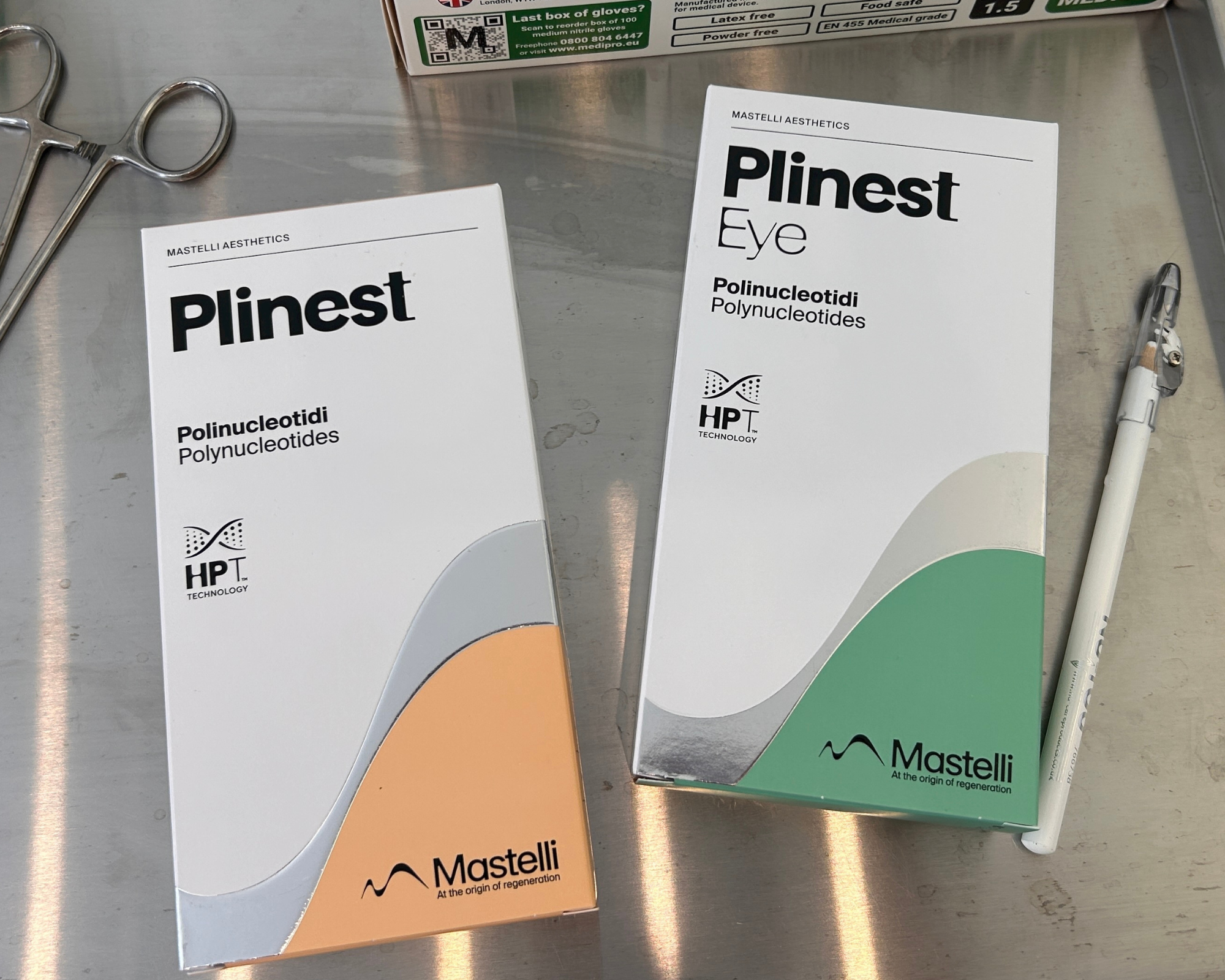
At Karwal Aesthetics, we offer Plinest polynucleotides for various areas of the face and body:
Face: Mid-face and lower face
Eyes: Under-eye area, crow's feet, upper eyelids
Neck and décolletage: For addressing crepey skin and horizontal lines
Hands: To improve skin quality and reduce visible signs of ageing
The Treatment Process
Consultation
Before treatment, you'll have a consultation with a qualified practitioner who will assess your skin concerns, medical history, and suitability for the procedure. They'll recommend the most appropriate product and treatment plan.
At Karwal Aesthetics, we use Plinest polynucleotides, however, we have other treatment options that could be considered based on your suitability and concerns during a consultation with Dr Arun.
The Procedure
The treatment typically takes 30-45 minutes and involves:
Cleansing and preparing the treatment area
Applying topical anaesthetic if needed (though many patients find the treatment comfortable without it)
Injecting the polynucleotide solution using fine needles or cannulas
Multiple injection points are used to ensure even distribution
Gentle massage to distribute the product evenly
Post-Treatment Care
After your polynucleotides treatment, you should:
Avoid touching or rubbing the treated area for 6-8 hours
Stay out of direct sunlight and avoid heat (saunas, steam rooms) for 48 hours
Avoid strenuous exercise for 24 hours
Keep the area clean and moisturised
Avoid makeup for 12-24 hours if possible
How many polynucleotide sessions are needed?
The number of treatments required varies depending on individual concerns and goals:
Initial course: Typically 2-4 sessions spaced 2-4 weeks apart
Maintenance: Follow-up treatments every 6 months to maintain results
Severe concerns: May require more intensive treatment protocols
When will I see results from polynucleotides?
Results from polynucleotide treatments develop gradually:
Immediate: Some hydration and subtle glow may be visible straight away
2-4 weeks: Noticeable improvements in skin texture and tone
4-8 weeks: More significant improvements as collagen production increases
3-6 months: Optimal results become apparent
Results typically last 6-12 months, depending on individual factors such as age, lifestyle, and skin condition.
Potential side effects
Polynucleotide treatments are generally well-tolerated, but some temporary side effects may occur:
Mild swelling at injection sites
Slight bruising (more common in sensitive areas)
Redness or tenderness
Small bumps at injection points
These effects typically resolve within 24-48 hours. Serious side effects are rare when performed by qualified practitioners.
Who is suitable for polynucleotides treatment?
Polynucleotides are suitable for most adults looking to improve their skin quality. Ideal candidates include those who:
Have early to moderate signs of ageing
Want natural-looking rejuvenation without fillers
Have sun-damaged or dehydrated skin
Are looking for preventative anti-ageing treatments
Have realistic expectations about results
Who should avoid polynucleotides?
Polynucleotides may not be suitable if you:
Are pregnant or breastfeeding
Have active infections or inflammation in the treatment area
Have a known allergy to polynucleotides or salmon products
Have certain autoimmune conditions
Are taking blood-thinning medications (discuss with your practitioner)
Have a history of keloid scarring
How Does Plinest Compare to Other Treatments?
Plinest Polynucleotides vs. Profhilo
Both Plinest Polynucleotides and Profhilo are bio-remodelling treatments that stimulate natural skin rejuvenation, but they differ in their composition and approach:
Active ingredients: Profhilo contains highly concentrated hyaluronic acid (HA), whilst Polynucleotides Polynucleotides uses polynucleotides derived from salmon DNA.
Mechanism of action: Profhilo works through bio-remodelling with HA to stimulate collagen and elastin production in four different types of collagen. Polynucleotides works by directly stimulating fibroblast activity and has additional anti-inflammatory and antioxidant properties.
Injection technique: Profhilo typically uses the BAP (Bio Aesthetic Points) technique with 5 injection points per side of the face, whilst Polynucleotides requires multiple injection points distributed across the treatment area.
Spread: Profhilo's unique formulation allows it to spread more easily under the skin after injection, whilst Polynucleotides remains more localised to the injection sites.
Hydration vs. regeneration: Profhilo primarily focuses on intense hydration and bio-remodelling, whilst Polynucleotides emphasises cellular regeneration, tissue repair, and anti-inflammatory effects.
Treatment areas: Both can be used on similar areas, though Profhilo is particularly noted for its lifting and hydrating effects on the face and neck, whilst Polynucleotides offers targeted formulations like Plinest Eye for specific concerns.
Results: Both provide natural-looking improvements. However, Profhilo is the preferred product at Karwal Aesthetics between the two. Profhilo delivers a natural glow, plumpness, and hydration to the skin.
Plinest Polynucleotides vs. Sunekos
Both Polynucleotides and Sunekos are bio-revitalisation treatments, but they differ in their composition and mechanisms of action. Sunekos contains a patented formula of hyaluronic acid combined with a specific blend of amino acids, whilst Polynucleotides uses polynucleotides derived from salmon DNA.
Key differences include:
Active ingredients: Sunekos relies on hyaluronic acid and amino acids to stimulate the extracellular matrix, whereas Polynucleotides uses polynucleotides for cellular regeneration and tissue repair.
Mechanism: Sunekos works by providing the building blocks for collagen and elastin synthesis, whilst Polynucleotides actively stimulates fibroblast activity and has additional anti-inflammatory and antioxidant properties.
Treatment areas: Both can be used on similar areas, though Plinest Eye is specifically formulated for the periorbital region, whilst Sunekos has different formulations (Sunekos 200 and Sunekos 1200) for varying levels of skin laxity.
Results: Both provide natural-looking improvements. However, Sunekos is the preferred product at Karwal Aesthetics, delivering more dramatic results and better improvement in hyperpigmentation, fine lines, and skin texture—especially crepey skin.
Conclusion
Polynucleotides represent an innovative approach to skin rejuvenation, offering natural-looking results through bio-stimulation rather than synthetic volume enhancement. With minimal downtime, broad applications, and scientifically-backed mechanisms of action, they've become a popular choice for those seeking to improve their skin quality and address signs of ageing.
As with any aesthetic treatment, success depends on choosing a qualified practitioner, having realistic expectations, and following a proper treatment plan. If you're considering Plinest, schedule a consultation with a registered professional to discuss whether this treatment is right for your specific concerns and goals.
Where we offer Plinest treatments
We offer Plinest polynucleotide treatments at our clinic in London Mayfair. Our practice is conveniently located in the heart of Mayfair, one of London's most prestigious areas, making it easily accessible for clients across the capital.
Clinic Location
Address: 15 Dover Street, London, W1S 4LP
Our Mayfair clinic provides a luxurious and discreet environment where you can receive your Polynucleotides treatments from Dr Arun, an experienced aesthetic practitioner. The clinic is equipped with modern facilities and adheres to the highest standards of safety and hygiene.
How to Find Us
By Underground: Green Park station (Jubilee, Piccadilly, and Victoria lines) is just a short walk away
By Bus: Multiple bus routes serve the Mayfair area
By Car: Limited paid street parking available; several car parks nearby
To book your polynucleotide consultation or treatment, click here to schedule an appointment.