

Profile Balancing
The Ricketts aesthetic plane, or E-line
The most widely used reference for the side profile is the aesthetic plane described by Robert Ricketts, an American orthodontist, in 1968. It is usually shortened to the E-line, and it is a straight line drawn from the tip of the nose to the most forward point of the soft tissue chin.
In Ricketts's adult norms, the upper lip sits a few millimetres behind that line and the lower lip sits slightly closer to it, with the lower lip typically around two millimetres behind and the upper lip around four. That relationship is what many clinicians mean when they talk about a balanced profile. It is a useful tool because it captures the interaction between all three features in one measurement. If the lips sit well ahead of the line, the cause may be lip position, but it may equally be a nose that under-projects or a chin that sits back. If the lips sit far behind it, a prominent nose or a very forward chin may be responsible rather than the lips themselves.
The E-line is a guide, not a rule. Ricketts derived his figures from a specific population, and lip position relative to the line varies considerably across ethnic backgrounds. Fuller lips that sit closer to or slightly ahead of the line are entirely normal in many faces and are not a deficiency to be corrected. The line also shifts naturally with age, because the nose continues to lengthen and the lips lose projection over time, which changes the measurement without changing what suits the face. Dr Karwal uses it as one reference among several, alongside the angle between the nose and the upper lip, the angle between the forehead and the nose, the depth of the crease between the lower lip and the chin, and the vertical proportions of the lower face. The measurements inform the plan. They do not dictate it.
What does profile balancing mean?
The lower two thirds of the face read as a single curve when viewed from the side. The nose sets the forward limit at the top of that curve, the chin sets it at the bottom, and the lips sit between them. When those three points sit in a comfortable relationship, the eye moves smoothly across the profile and does not settle on any one feature. When one point sits too far forward or too far back, the eye catches, and the feature that stands out is often blamed for a problem that belongs to the whole.
This is why treating a single feature in isolation can be disappointing. Adding volume to the lips when the chin is set back can push the lower face further out of proportion. Softening a nasal hump when the chin lacks projection can leave the profile looking flatter without looking more balanced. Assessment first, treatment second, is the order that produces a natural result.
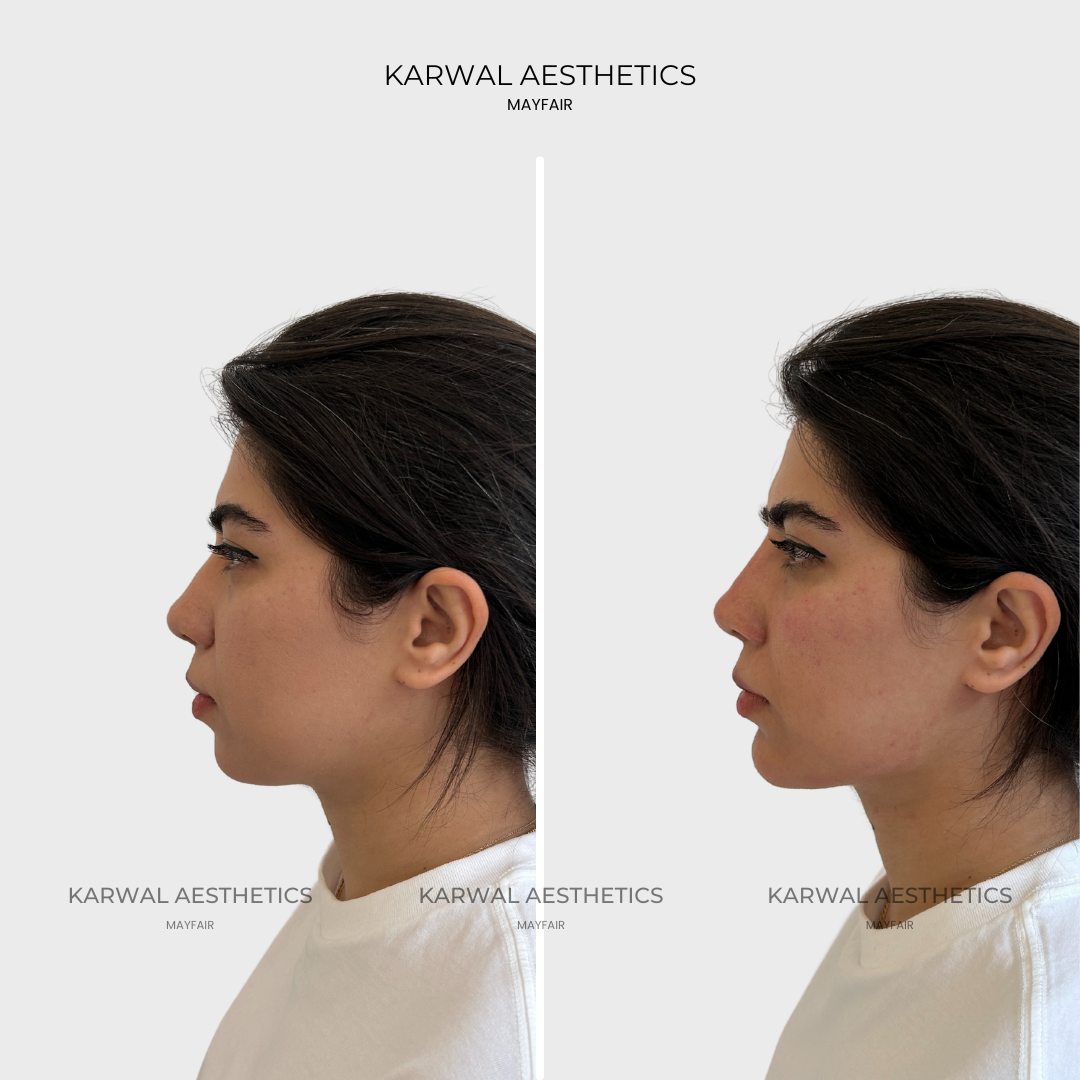
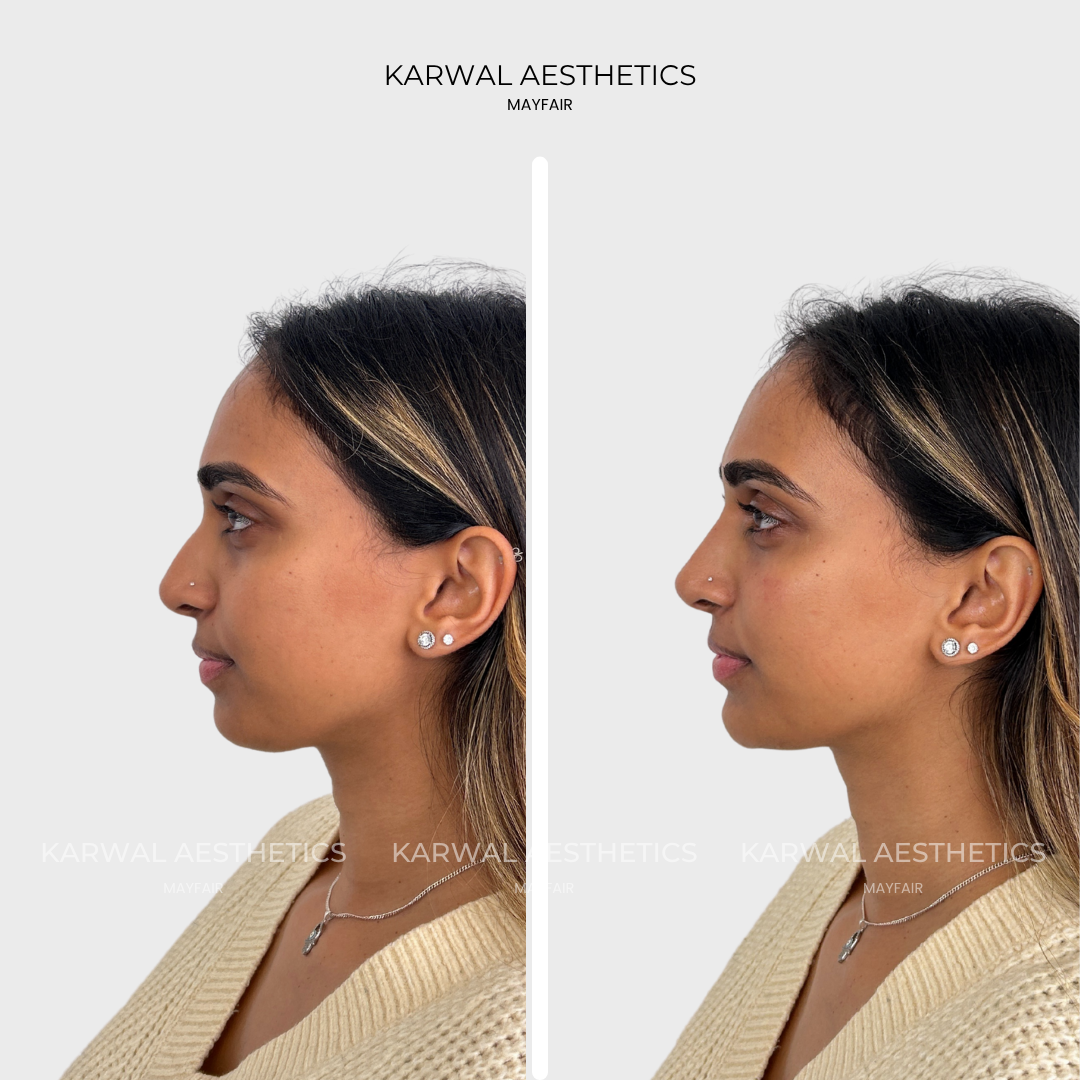
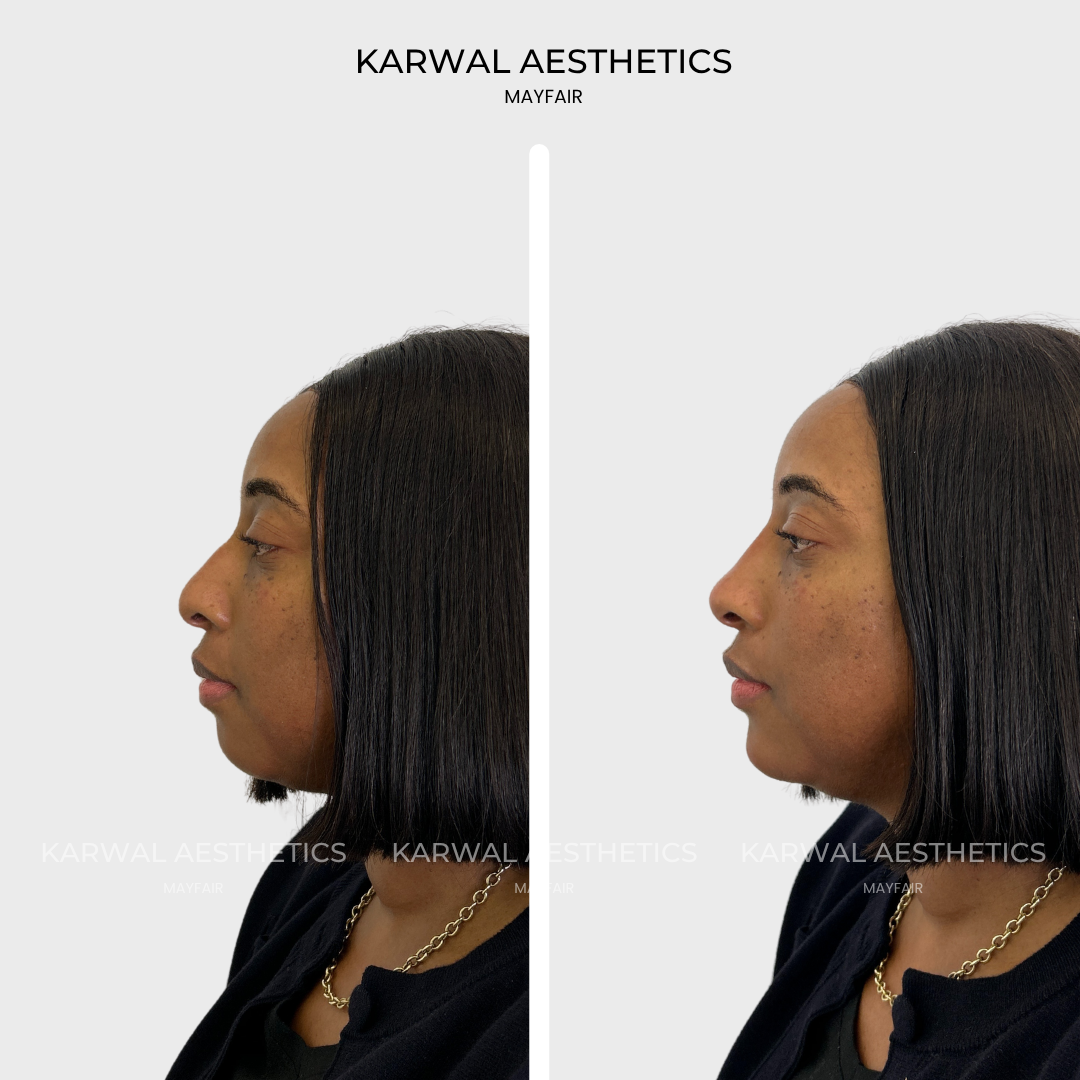
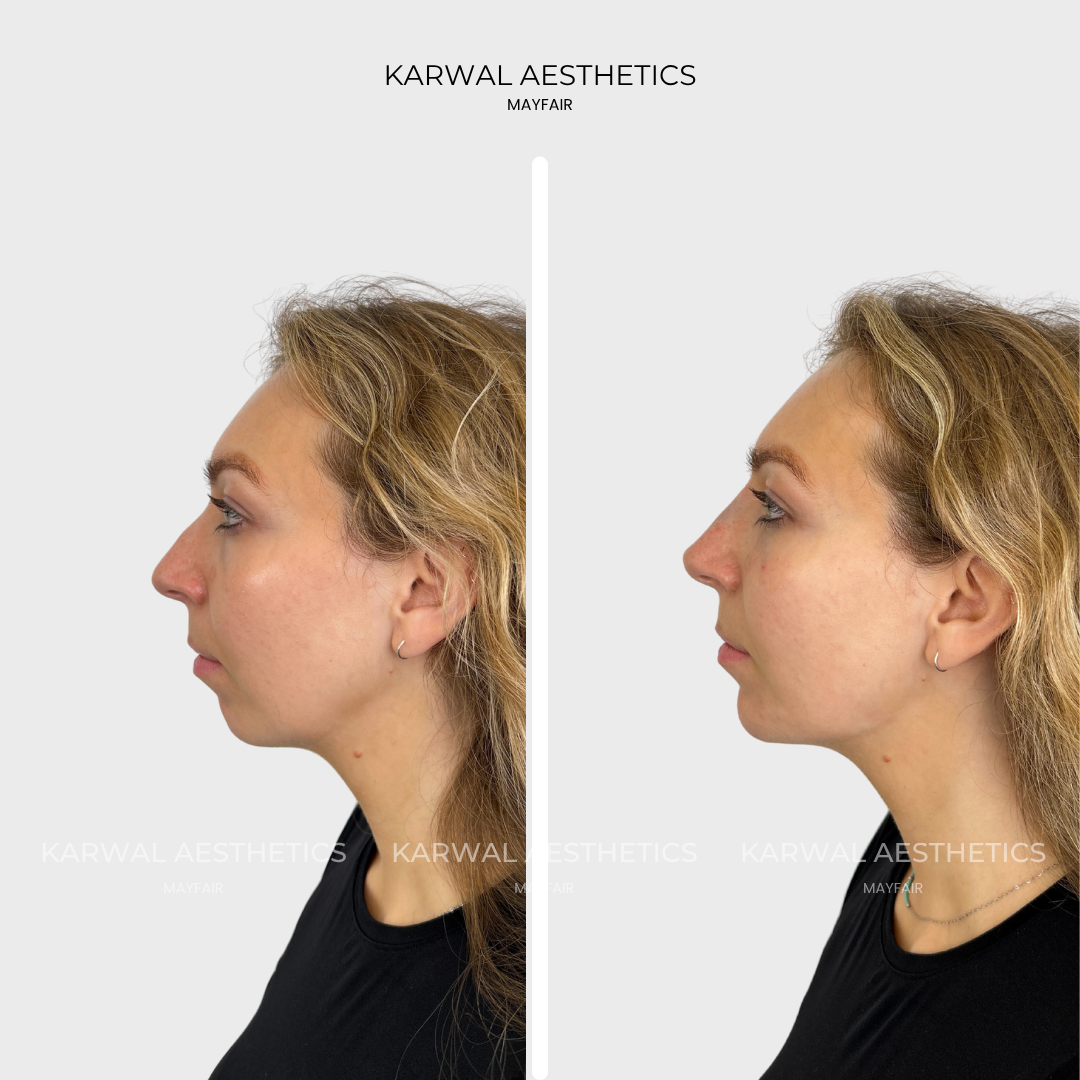
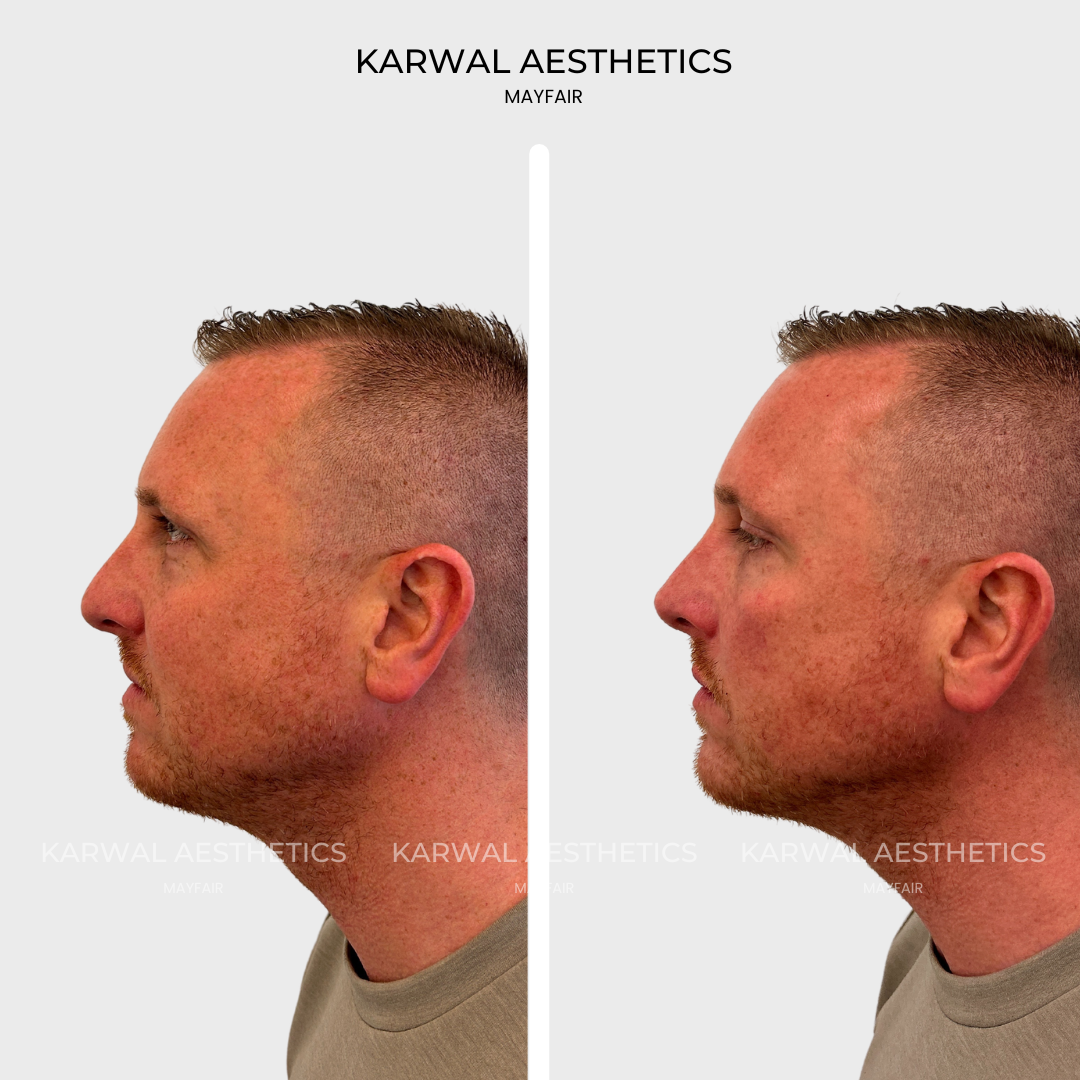
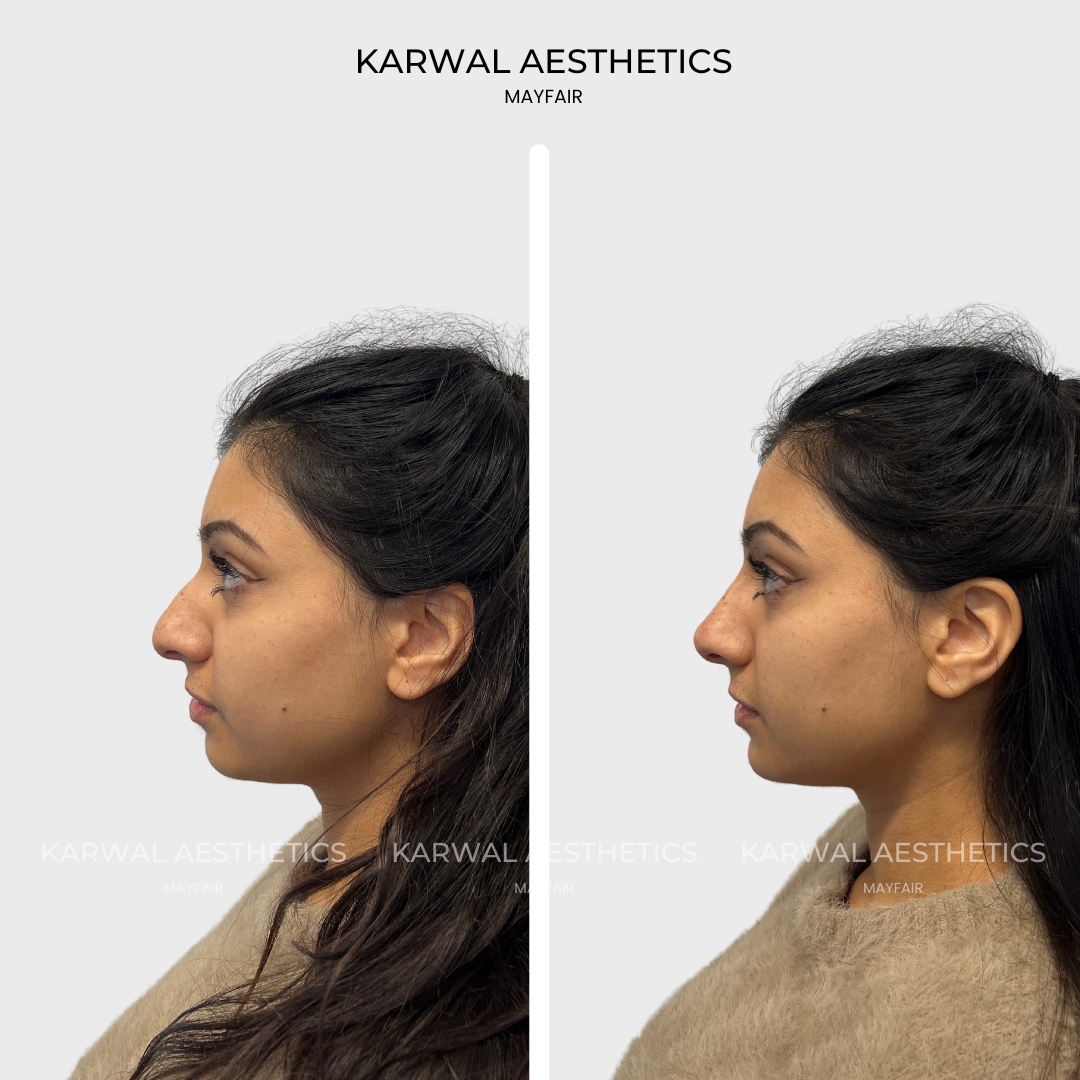
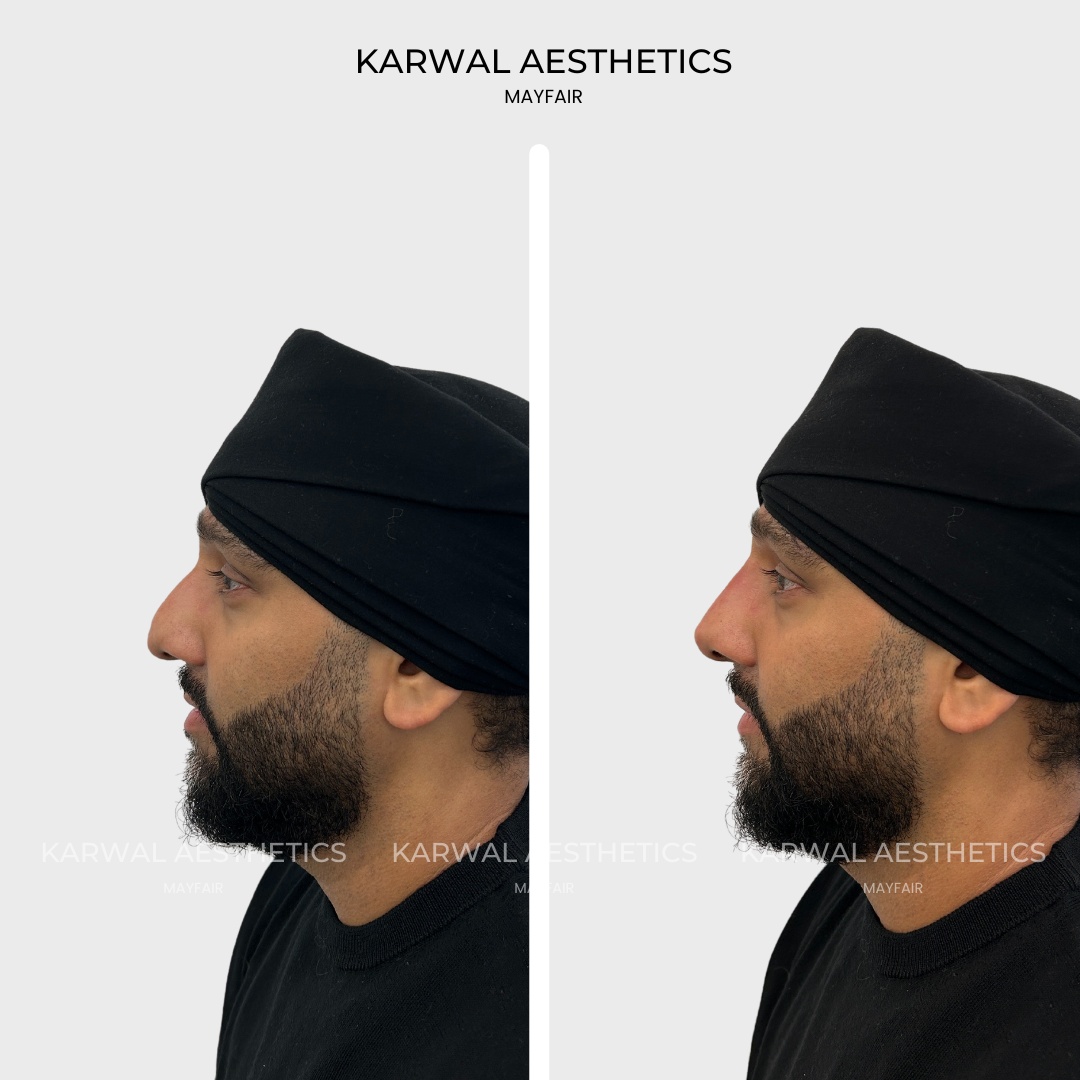
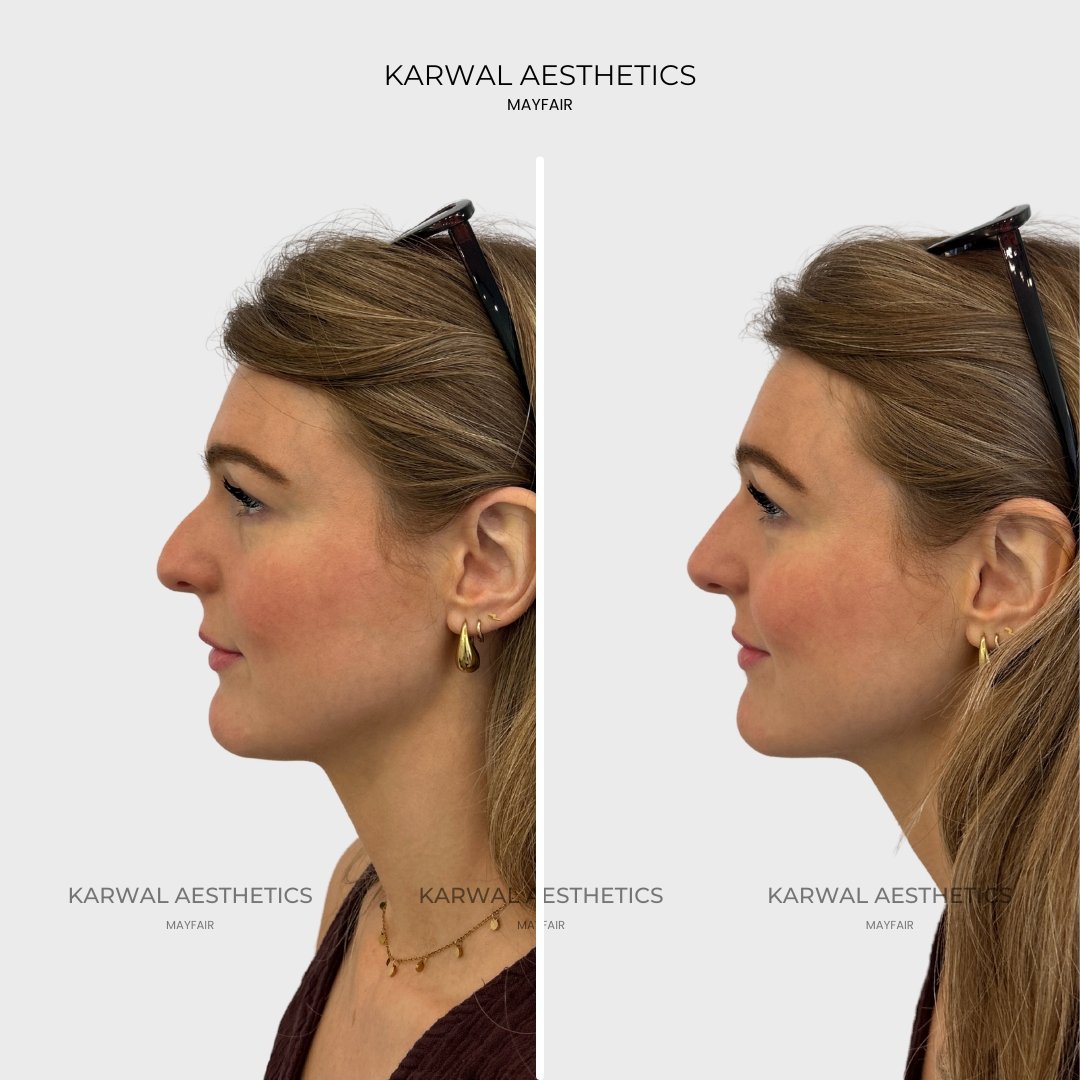
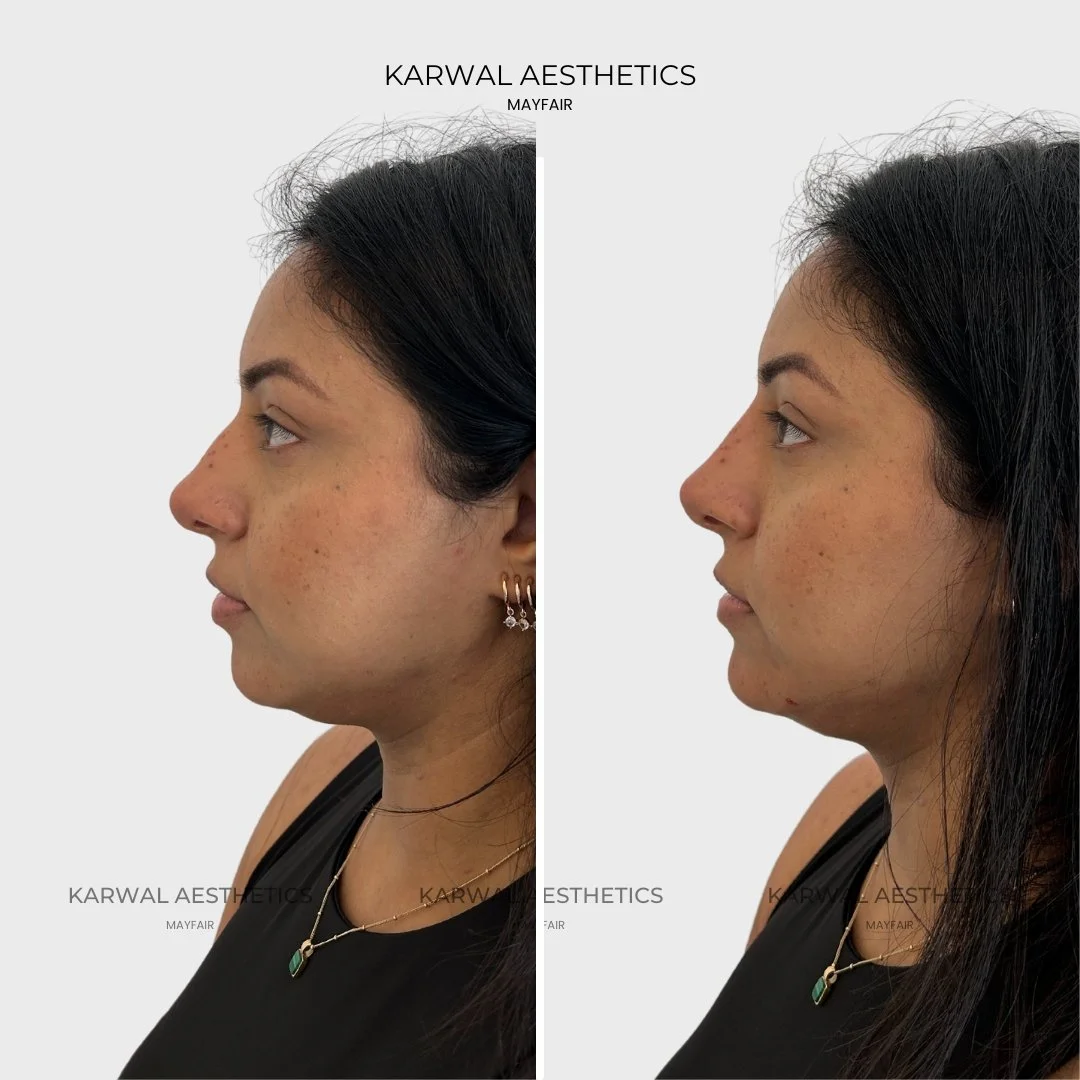
Non-surgical rhinoplasty
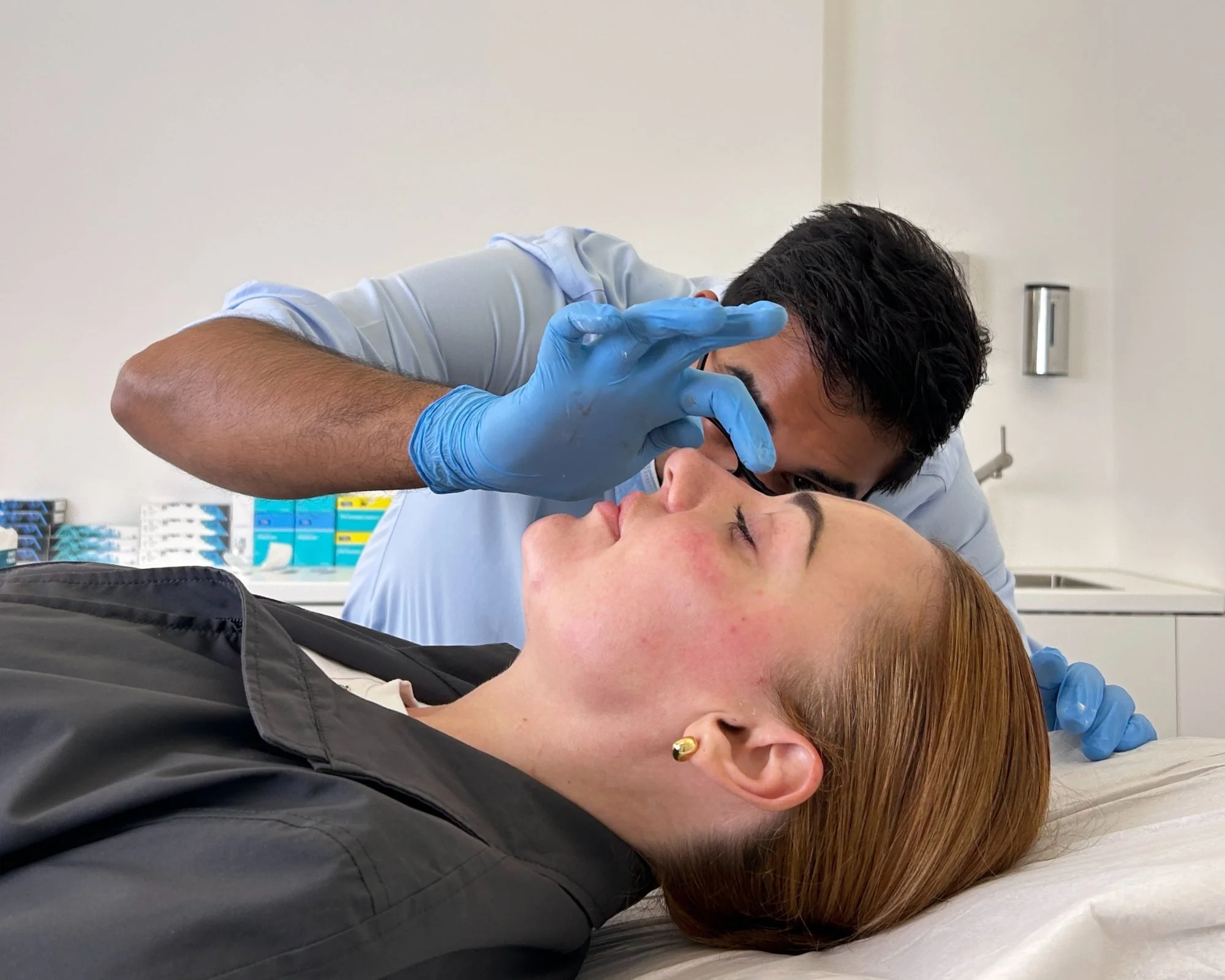
Non-surgical rhinoplasty uses small, precisely placed volumes of dermal filler to change the shape of the nose without surgery. It sounds counterintuitive to add volume in order to make a nose look smaller, but in profile the eye reads the outline rather than the mass. Filler placed above and below a dorsal hump creates a straighter line from the bridge to the tip, so the hump stops casting a shadow and stops drawing attention. Filler at the base of the columella can lift and rotate a drooping tip. Filler at the radix, the deepest point between the eyes, can correct a bridge that starts too low and makes the tip look disproportionately projected.
What it does not do is make a large nose smaller, narrow a wide nasal base, or improve breathing. If the concern is size or airflow, surgery is the appropriate route and Dr Karwal will say so rather than treat.
The nose carries more vascular risk than almost any other area treated with filler, because the blood supply is dense, the skin is tight, and the vessels connect to the ocular circulation. This is the strongest argument for having it performed by a doctor who assesses the anatomy, injects slowly in the correct plane, and has hyaluronidase and an emergency protocol immediately available. Results typically last around twelve to eighteen months. Read more on the non-surgical rhinoplasty page.
Chin filler
The chin is the feature most often overlooked and most often responsible for a profile that does not sit right. A chin that lacks forward projection makes the nose look larger than it is, shortens the appearance of the neck, softens the jawline, and can make the lower face look heavier even in someone slim.
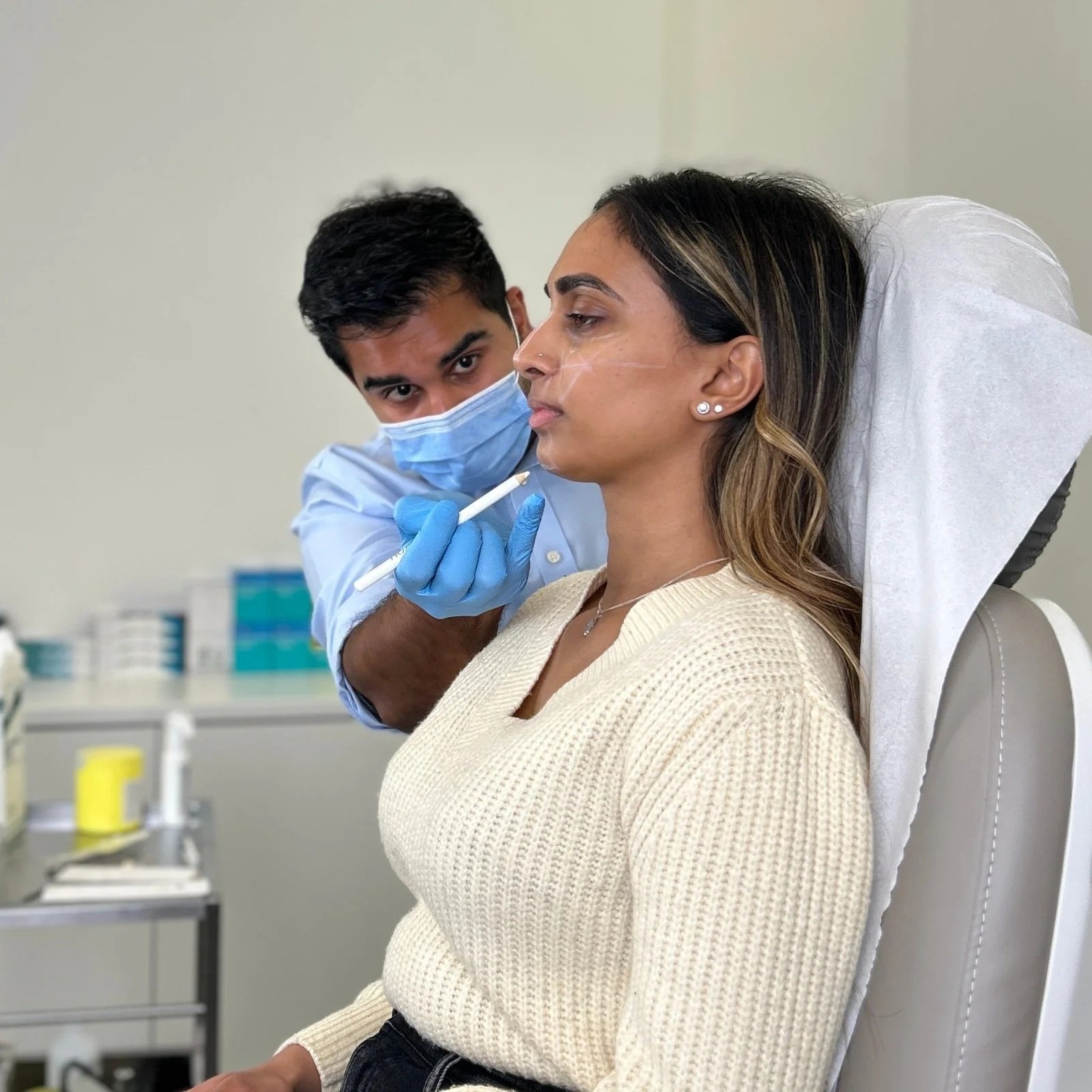
Chin filler addresses projection, vertical length and shape. A firmer, more structural filler is placed on or close to the bone to build forward projection at the point of the chin, and can be extended to lengthen a short chin or to square a rounded one where that suits the face. Because the chin anchors the bottom of the E-line, small changes here shift the entire measurement and often reduce or remove the need for anything at the nose. Increasing chin projection also tightens the angle between the chin and the neck, which is why patients frequently comment on the jawline and neck rather than the chin itself.
Where a strong mentalis muscle causes dimpling or pushes the lower lip upwards, a small amount of anti-wrinkle injection alongside the filler settles the area and lets the shape read cleanly. Read more on the chin filler page.
Lip filler
In the context of profile balancing, lips are treated for position and proportion rather than volume. The relevant questions are how far the upper and lower lip project relative to the nose and chin, how the two lips relate to each other, and whether the upper lip is long and flat enough to hide the teeth at rest. A commonly referenced proportion places the lower lip slightly fuller than the upper, in the region of one to one and a half. Treatment might involve defining the vermilion border, supporting the philtral columns, restoring a cupid's bow that has flattened with age, or everting an upper lip that rolls inwards when smiling.
Where the lips already project appropriately and the imbalance sits elsewhere, the right decision is to leave them alone. Lips are also the area where overtreatment is most visible in profile, because a lip that projects beyond the E-line reads as filler rather than as a fuller lip. Conservative volumes, spaced over more than one appointment where needed, produce the better long-term result. Read more on the lip filler page.
FAQs
-
Profile balancing is the assessment and treatment of the nose, chin and lips as a related group rather than as separate features, so that the side profile reads as a smooth, proportionate line. It usually involves dermal filler at one, two or all three areas.
-
The E-line, or Ricketts aesthetic plane, is a straight line drawn from the tip of the nose to the most forward point of the chin. In balanced adult profiles the lips typically sit a small distance behind it. It is used as a guide to work out which feature is responsible for an imbalance, not as a target every face should meet.
-
No. Many patients need only one. The purpose of the assessment is to identify the smallest change that improves the profile as a whole, which is often chin projection alone.
-
It can make the nose look proportionally smaller by bringing the chin forward, which shortens the visual distance between the two and changes how the nose reads in profile. The nose itself is unchanged.
-
The nose is one of the higher-risk areas for filler because of its blood supply, which is why it should be performed by an experienced medical practitioner with hyaluronidase and a complications protocol immediately to hand. At Karwal Aesthetics all injectable treatments are performed by Dr Arun Karwal.
-
Yes. Hyaluronic acid fillers can be dissolved with hyaluronidase, and ultrasound guidance can be used to locate existing filler accurately before dissolving.